Why the Construction Experience Matters More Than Budget or Schedule
When evaluating project success, most construction leaders fixate on budgets and schedules. However, a deeper operational shift reveals that the overall construction experience—encompassing the daily workflows of project managers, superintendents, and subcontractors—is the true engine behind successful project outcomes and sustainable business growth.
Key Takeaways
- Traditional metrics like budget and schedule are lagging indicators of project health, while the daily construction experience is the true driver of long-term success.
- Reducing administrative friction for project managers, superintendents, and subcontractors directly impacts staff retention and project execution quality.
- Technology should act as a force multiplier that simplifies workflows rather than adding digital complexity to already heavily regulated environments.
Moving Beyond the Lagging Indicators of Success
For decades, the construction industry has measured project health primarily through financial ledgers and calendar milestones. If a commercial general contractor brings a project in under budget and hands over the keys on time, it is universally declared a victory. Yet, behind the scenes, that same project might have been a grueling exercise in administrative chaos, employee burnout, and adversarial relationships.
When project teams endure a miserable construction experience—marked by endless compliance chasing, fractured communication, and manual data entry—the human toll eventually shows up on the balance sheet. Teams that are constantly firefighting administrative bottlenecks make more mistakes in the field, experience higher turnover rates, and struggle to maintain collaborative relationships with owners and subcontractors. Shifting the focus from merely surviving budgets and schedules to actively improving the construction experience changes how leaders approach daily operations.
The Hidden Cost of Administrative Friction
Ask any project manager or superintendent what frustrates them most about their day, and they rarely point to the physical act of building. Instead, they will list a barrage of peripheral tasks: processing Certificate of Insurance (COI) requirements, collecting lien waivers, tracking down contract signatures, and manually updating disconnected spreadsheets.
This administrative friction acts as an invisible tax on productivity. In a high-stakes, highly regulated industry like commercial construction, project teams are often expected to play business on hard mode. They manage complex supply chains and demanding stakeholders while carrying mountains of redundant paperwork.
When companies fail to address this friction, they create an operational ceiling. Talented professionals spend their evenings drowning in emails and approval workflows instead of focusing on quality control, trade coordination, and risk mitigation. Streamlining these workflows is not just about saving time; it is about protecting the cognitive energy of the people delivering the work.
Building Systems Around Human Workflows
Technology is frequently pitched as the ultimate silver bullet for construction operational challenges. Yet, many software implementations fail because they add digital complexity rather than removing human friction. Tools are often selected by executives who are far removed from the job site trailer, leaving field teams to wrestle with clunky interfaces that do not match how construction projects actually run.
To truly improve the construction experience, software and internal processes must be built around the realities of the people using them. This requires looking at every phase of a project—from estimating and bidding to contract execution and closeout—and identifying the exact pain points that trigger frustration. When systems are designed to automate repetitive compliance tasks and connect project-based accounting with field operations, data becomes a proactive warning system rather than a retroactive report.
Leadership Sets the Operational Standard
Operational excellence and healthy company cultures do not happen by accident; they are driven from the top down. Construction leaders often talk about the importance of their people, but true cultural alignment requires executives to model the behaviors and standards they expect from their teams.
When leadership embraces new systems, takes full ownership of mistakes, and actively works to remove daily obstacles for their staff, a culture of psychological safety and accountability naturally takes root. Employees stop hiding behind defensive postures and start collaborating to solve problems. By fostering an environment where continuous improvement is encouraged and judgment-free problem-solving is the norm, construction companies can attract and retain top-tier talent in an increasingly competitive market.
Conclusion
The biggest problem in construction is not simply a matter of managing numbers on a spreadsheet; it is about transforming how the work is experienced by everyone involved. When leaders prioritize operational simplicity, thoughtful technology adoption, and human-centric workflows, better financial and schedule outcomes naturally follow.
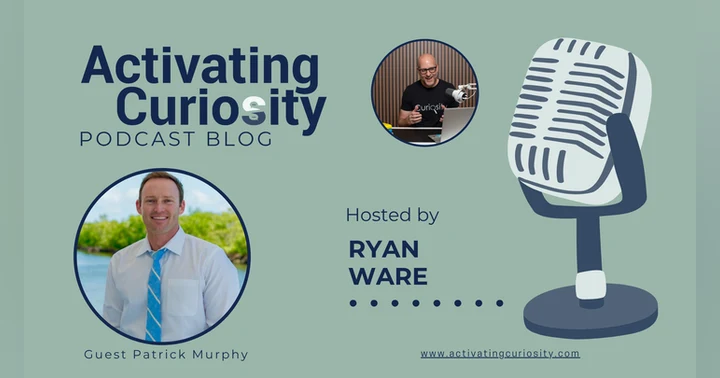
To dive deeper into this perspective and hear expert insights on transforming construction operations, Listen to the full episode of Activating Curiosity to discover how innovative leaders are building stronger businesses from the ground up.

CEO/ Change Management & Leadership Coach/ Key Note Speaker & Podcast Host
Ryan Ware is Founder and CEO driving construction leadership development. With over two decades of experience across every segment and level of management in the construction industry, Ryan’s career journey began in architecture and expanded into construction and prefabrication manufacturing. Throughout, he encountered consistent challenges with change management implementation.
Driven by passion and purpose to advance the construction industry, Ryan took to the stage to support as many leaders as possible. He helps audiences build stronger relationships with change and challenges the way leaders think about change, innovation, and leadership. His mission as a speaker, coach, and consultant is simple: to help the construction industry evolve by empowering those who shape it to better navigate change.
Why Construction Leaders Must Move Past The 'Hit the Ground Running' Onboarding Myth
 Apple Podcasts
  Spotify
  Amazon Music
  Youtube Music
  Goodpods
  iHeartRadio
  Deezer
  Castro
  Castbox
  PocketCasts
  Audible
  RSS Feed