

 Apple Podcasts
 Spotify
 Amazon Music
 Youtube Music
 Goodpods
 iHeartRadio
 Deezer
 Castro
 Castbox
 PocketCasts
 Audible
 RSS Feed
 AI Is Personal: Why the Human Still Matters in Construction

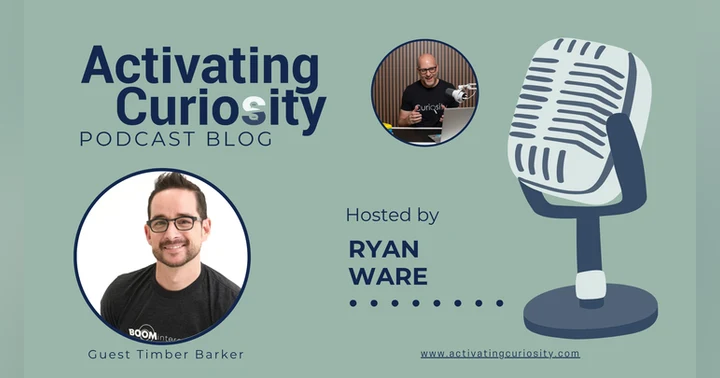
Artificial intelligence is rapidly transforming the construction industry—but technology alone won't determine who succeeds. In this episode of Activating Curiosity™, Ryan Ware sits down with Timber Barker to explore why successful AI adoption starts with people, not software. Rather than asking whether AI will replace jobs, this conversation challenges leaders to ask a different question: How can AI help people do their best work? From architecture and engineering to construction and facilit...
Key Takeaways
- Successful artificial intelligence adoption in construction and the AEC industry must start with people rather than software, keeping the human in the loop to drive real value.
- Rather than replacing jobs, the greatest opportunity for AI in the built world is unlocking hidden private data to help professionals eliminate repetitive work and make better decisions.
- A true digital twin is not just a static 3D hologram or point-cloud scan, but a live, interactive operating system that connects fragmented project phases and systems.
- Focusing AI implementation on individual team pain points and workflows before scaling to the enterprise level ensures better organizational adoption and higher ROI.
- Timber Barker and Boom Interactive demonstrate how connected data and AI tools can transform complex AEC workflows, such as security design and as-built management, from hours-long tasks into instantaneous results.
Artificial intelligence is rapidly transforming the construction industry—but technology alone won't determine who succeeds.
In this episode of Activating Curiosity™, Ryan Ware sits down with Timber Barker to explore why successful AI adoption starts with people, not software. Rather than asking whether AI will replace jobs, this conversation challenges leaders to ask a different question:
How can AI help people do their best work?
From architecture and engineering to construction and facility management, AI has the potential to eliminate repetitive work, improve decision-making, and return valuable time to the people solving complex problems. Together, Ryan and Timber explore digital twins, connected data, workflow automation, and why keeping humans "in the loop" remains essential as AI capabilities continue to evolve.
This episode challenges construction leaders and AEC professionals to rethink AI implementation, digital transformation, and innovation. Because the future won't be defined by the organizations with the most technology—it will be shaped by the leaders who help people use it well.
What You'll Learn
- Why AI adoption is more about people than technology
- What "Human in the Loop" means for construction leaders
- How digital twins improve project intelligence and decision-making
- Why connected data is the foundation of effective AI
- How AI can eliminate repetitive work without replacing human expertise
- Practical ways to introduce AI without overwhelming your organization
- Why curiosity is a competitive advantage in an AI-driven future
- How AI improves collaboration across design, construction, and facility management
Who This Episode Is For
Architects, engineers, contractors, owners, facility managers, technology leaders, innovation teams, and AEC professionals interested in artificial intelligence, digital twins, BIM, construction technology, workflow automation, and leading digital transformation in the built environment.
Chapters
00:00 – AI Is More Human Than You Think
01:46 – From Ranch Kid to AI Entrepreneur
05:26 – Why Construction's Biggest AI Opportunity Is Hidden Data
08:21 – AI Isn't Software. It's Your Personal Operating System.
14:16 – Solving Construction's As-Built Crisis
22:38 – The Live Digital Twin: Connecting Every Phase of a Project
26:34 – How AI Can Design a Security System in Seconds
30:20 – From Five Hours to Fifteen Minutes
34:00 – Why Construction Still Fears AI
37:18 – AI Is Personal: Start with One Person, Not the Whole Company
54:24 – Building Your Company's AI Brain
59:49 – The Cost of Waiting
1:06:41 – AI Won't Replace Curiosity
Guest
Timber Barker is the Founder and CEO of Boom Interactive, where he helps organizations harness artificial intelligence, digital twins, and connected data to transform how buildings are designed, constructed, and managed. With a background spanning technology, software development, and the built environment, Timber focuses on making AI practical, accessible, and human-centered. His work helps AEC firms improve decision-making, streamline workflows, and unlock the value of their existing data while keeping people at the center of innovation.
Learn more: https://www.boominteractive.io/
Overcast Innovations
Helping project teams coordinate building systems earlier for more predictable outcomes.
New Lyfe Accounting
Free Diagnostic ($500 value) for Activating Curiosity Listeners by NLA, to help your financial goals
Have feedback or stories to share? Drop us a note or leave a VM—we’re listening!
Follow Ryan at the following:
https://www.linkedin.com/in/ryankware/
https://www.linkedin.com/company/connective-consulting-group-llc
https://connectiveconsultinggrp.com/
https://connective-coaching.com/
https://ryanware.me/
Don't miss out on future episodes! Follow & subscribe now to our newsletter and stay informed about the latest trends and insights in the construction industry.
If this show helps you, please consider supporting it. Just $3/month helps cover production and keeps the conversations going.
⭐ “Love the show? Toss some stars my way, it’s the easiest applause ever.
Frequently Asked Questions
What is the As-Built crisis in construction?
The As-Built crisis refers to the massive waste of time and money caused by inaccurate final building documentation, as projects often end up built slightly differently than the original architectural drawings.
How does Timber Barker define a live digital twin?
A live digital twin is a living, breathing 3D digital model of a property that connects multiple disparate systems, updates automatically as changes occur, and allows teams to interact with real-time data.
Why is 'human in the loop' important for AI adoption in AEC?
Human in the loop ensures that professionals remain actively involved in verifying outputs, guiding workflows, and maintaining expertise, recognizing that AI should empower people rather than operate entirely autonomously.
Timber
The architect just wants to move to the next phase. This is business as usual. You that's your your career. You do something, you get paid, and you walk away. Goes to the next team, they get they do something, they get paid, and walk away. Construction alone is extremely complex. There's so many different contractors and subcontractors that touch it. And then when they hit their milestone, they pass it off, get paid, and they move on. Because that's their business. That isn't going to change. I believe AI will actually help people realize that everything is a little more holistic and the end customer is what we should be thinking about. That end asset is what we should be thinking about.
Ryan
And if you're enjoying the podcast, be sure to follow, subscribe on YouTube, and share it with your network so that we can continue to grow the podcast and get to listeners who might also enjoy these conversations that we have on activating curiosity. Today is going to be a conversation that we're all talking about, we're all hearing. We all have different opinions about it and how it's going to impact our lives, our businesses, and the world around us. And that has to do with AI. But the one thing that I think is constant in all of this is the humans as it relates to artificial intelligence. And this gentleman, he has spent his career within technology, but has been focused a lot with the AEC industry and how we're beginning to look at our projects, designing and integrating uh designs and working along with technology. And I have Timber Barker. He is the CEO and founder of Boom Interactive. Hey Timber, how are you? Great. Thanks, Ryan. Thanks for the thanks for the invite. Yeah, no, I'm looking forward to the conversation. I know we've got a chance to connect a few times. But before we dive in, I don't want to tell too much of your story and how you you got into working alongside the AEC industry and all of the work that everyone's doing within their areas of focus. Tell a little bit about your history, kind of what got you into the technology piece, and then also just how you you started to look at the AEC industry, and then we'll dive into the episode.
Timber
That's uh loaded. I could start like uh like Chunk did and Goonies and start at seventh grade on a on a on a stage. It all started in seventh grade. No, it's it's a it's a really big story. It's a great story. I'll I'll be pretty quick. I um gosh, let's just start with Boom, right? So Boom Interactive is an AI company based out of Salt Lake City, Utah. And we also have a satellite team out in uh Manchester in the UK. Um and that's just because we we have some customers uh out there and uh we needed to service them, so that's where we're at. But the journey, like where did I where did I come from? Where did I get this? And uh grew up pretty pretty blue-collar, white collar, uh, you know, on a ranch and uh built things with my hands. My grandfather taught me how to cut and weld when I was young. So we were logging, we were ranching, hence the name Timber. It's actually uh short for Timberline. And I got into computers, yeah, Timberline, and uh some people call me Tim. And I'm like, no, no, Timber's already short. So now you've read you've shortened it, and then I have a few friends that call me T. So they even shortened it even more than that. They're all choosing how to call you, call you what you are. So I I was always a nerd growing up, and I got into computers, mainly hardware, in mid-90s, just playing around. Parents got a PC, just kind of like all of us, and it was something that was pretty expensive back then, and so it was a big deal to get, and I just dove into how it worked. And um, you know, fast forward, I've had uh many roles in a lot of different companies. I was good with numbers, so I worked at Ernst and Young. Uh, I was in a design-related field with uh instructional design, um adult learning methodologies, and how can you take all this data and get people to understand it? So that's been most of my career. Um a video game company as well as a film school for kids. Those just kind of fell in my path, and I was able to pick those up very nicely. And uh now I have Boom Interactive. Um, those companies run and operate themselves. Um uh help uh you know my wife has an architectural firm. And so in comes why we're focusing in the in the AEC world in the built world. The built world for me was easier to understand. And uh sometimes when I'm speaking in and you know to schools and and to some some groups, I talk about why we even have AI, like what is AI? You know, and there's the confusion of what it is. We're all trying to treat it like it's something that we've already dealt with, like, oh, I just need a website, right? Let me just Web 1.0, and if I don't catch up to Web 2.0, then my company's gonna be behind. And um, it's it's it's actually much different than that. And we're all just scratching the surface. Every single one of us is scratching the surface with uh with AI, and we're like, okay, I what do you use?
Ryan
Do you use anything in AI? Yeah, yeah. No, I I've got a number of different like chat, obviously, I've used Claude. Um you know you name the any of the large language sort of models that are out there, and then everybody's embedding it, right? But yeah, yeah.
Timber
Yeah, and ever everybody's using it. I don't know a single person who hasn't used it or is using it actively right now. And that is scratching the surface. So LLMs, the only reason we have those is because we're also narcissistic with typing to each other in social media and what we had to breakfast and all of these things. Uh that's all public data. And most of that is pulled from public data. And we saw the really the biggest opportunity with AI is in the private data. And there's nothing more private than the built world. So all the way from design to uh procurement, estimation, uh, to the actual build or install to then delivery, handoff, punch listy type stuff, and then handover to manage this property, this asset now. And land and property is the most expensive thing anyone's ever gonna own or manage. Um it's a huge part of a lot of different portfolios out there. And so we're like, man, if we could tap into that and tap into that data and start unlocking some of that data, what could it do? Mainly if you had the information, what could you do with that? But I'll be honest with you, we didn't really start with what I'm talking about right now. It's really only because the advancement in AI and people's adoption of it that I'm now talking about in this way.
unknown
Right.
Timber
Meaning what we built six and a half years ago, um, and you know, we got a full-time team working on this, what we built back then was was really like a a simpler way to design.
unknown
Right?
Timber
I don't want to go learn SketchUp, I don't want to go and learn Revit, I'm not a 3D modeler, uh, I use Pinterest and I can show my friend a picture. That's what I want, right? That's yeah. So in that world, it was very much so like I got a Pinterest board, I kind of know what I want, here you go. And we were just we were just aiming to make a simpler way to communicate those designs in a very simple kind of 3D world. Um, you know, just just let's let's level set the information, and then with the information, let's take it to that next level. And uh we've evolved uh and we've evolved quite quite well. We have multiple patents behind our technology. Um we have 10 filed, uh actually 11 filed, and uh five issued at this point, and we're pursuing the rest. And a lot of those have AI components inside of those patents. You know, three of them are image recognition patents uh that use AI to help go from a 2D image to a 3D scene. And then we have we have multiple patents around, okay, well, once you get the data and people are using it, what can they now then do with it? And our goal really was to just launch kind of a SaaS model, you know, because that was like the hot then the hot thing. Everyone's SAS, SAS, SAS, and investors love to invest in SaaS. And we were like, yeah, let's do a SaaS model. This is a kind of a one-to-many solution that we can just off the shelf, people could use it and do this. Well, with AI, that's really changed a lot, not only for us, but for our customers, but also people we engage with on a daily basis right now. Uh so everyone out there knows who Jensen is, right? Yeah. Jensen Twang, we soon, CEO, really great guy. I've had a privilege of uh waving to him. And uh he's uh you know CEO of NVIDIA, the wealthiest company in the world. And he said, you know, last year, he just said this is AI is the greatest technology equalizer of all time. So AI will equalize every single building uh uh uh business. And if that's the case, so if you're a small business all the way to a large business, you now have the opportunity to jump on that bandwagon and be like the first to test drive the new automobile because we're all riding horses. And that that's kind of the stage that we're at. And there's nothing more human than that. And so we shifted from just throwing software at people into more of a managed services to say, look, you want to get here as a company and you're right here. We have to build a foundation first. Where's all your data? Where's all your information? Where are all your workflows? So let's document those workflows. And until we have that data, you really can't use the next level of AI. Sure, you could use the LLMs that everybody's using, and you're trying to, you know, embed that into your into your lives and into your uh your personal lives and your work lives, sure. And um, and that's great, but for you to move to the next phase, the next level, which everyone's trying to get to right now, like rapidly, and they're throwing a lot of money at it, is kind of that AI workflow phase. And then from that phase, they're trying to get to agentic. So agentic is where you're gonna start to see some massive, massive ROI and time-saving elements, but you're not gonna get there by throwing $500 million at a bunch of tokens. I don't know if you saw that news article, but so that's kind of so I know I'm I've I'm saying a lot, I know I'm talking a lot about things, but I think the message is look, AI is personal. It's personal, and AI is an operating system, and it could be yours. So you can build your own dashboards, you can build your own AIs to manage your workflows in your life. I'm very uh uh adamant about human in the loop. Human in the loop is key. AI will not do 100% of everything. I don't believe it ever should. And if you figured out how it could do 100% of something, well, you have to look at it to know it did 100%.
unknown
Right?
Timber
It's still your human brain and your eyes, right? So nothing really is a hundred percent, right? Um so if that's the case, then we have to start at the individual level. And oftentimes companies buy software at the corporate level, at the top level, and then they make everybody use it. Like, nope, you're gonna use this CRM now, you're gonna use this DMS or BMS or this or that or this. And it kind of force that in, and we're coming in kind of reversed. We're saying, look, if AI is personal, why don't we work with the individual on a team that's struggling and there's a pain point with something that the handoff isn't as accurate, or so many issues with something. Let's let's start there, individual, impact a team, that impacts a uh organizational unit, which then of course impacts the entire uh company. Uh and that's very hand-holding. That's very much coming in. And I don't know if you've seen the stat where people are like uh or businesses for every dollar a business spends on SaaS, they spend six dollars and managed services. Yeah, it's kind of all over right now.
Ryan
Yeah, well, and I think that's a no, I think that's a fair ending on that. I think that statement is that's a fair point because the human piece of the technology, right? As you just said, we do think that, hey, we're just gonna throw, I'm I'm not even gonna pick on AI, I'm just gonna say any, like pick an ERP, right? You put this software in, they are at an enterprise level or at least a departmental level that then has to feed somewhere else. But the humans, you know, if there's 10 or 5 or 30, you know, or a thousand different humans that have to sit there and do it, like they've all have different experiences, you know, with any kind of technology, let alone what you're what we're starting to talk about now, which is which is AI. But, you know, I find it interesting that so you've had construction sort of in your background. You're you're you know, working with your hands as a kid, you brought up um, you've kind of been around it. Um, your your wife, as you said, is in the architectural side. That starts to drive the spark for you to say, hey, I want to get involved in some of these areas or pain points that you see, you know, you saw within the industry, or an opportunity to kind of help resolve. Six years in with boom, you guys have, you know, like any startup, you've gone through sort of your your growth and understanding of of who you were situationally has changed. Um, even since I think we've we've talked, things are sort of changing on on that approach and perspective of how we should be talking and thinking about you know AI, artificial intelligence. And you mentioned, you know, kind of go-to-market strategies between the you know, software as a service, or you know, thinking even back to how most of us in the industry, like when AutoCAD came out, right? Like you paid for, you got a disk and everybody just loaded on the computer, and then suddenly it became a SaaS model, um, you know, early 2000s. But AI is so different than a lot of those other technologies. So let's take a step back then. You mentioned some of these areas, but like for you, Timber, like when you started Boom and as you've evolved, really dive into those key problems that you're aiming to solve. You talked about it at the human level. So dive deeper into that because I think that's critical. But those real deep problems you're aiming to solve to help the AEC industry with with AI and AI adoption.
Timber
Uh yeah, great question. Like, I mean, the first thing we need to solve is it was very painful just to get the data that a customer already paid for out of them so that we could even put an idea together or a design together for them. And so if you go if you went out to our website, uh you'd see kind of a couple mission statements and what we really do. So we're we're AI technology for the built world. And so we have various technology pieces that can support the built world. However, the key thing that we saw was the as built crisis. Yeah, the as built crisis is hundred, what is it, hundred million, hundred billion actually, uh, waste of just time by not having uh accurate as built.
unknown
Right.
Timber
And I think people, if they're listening to this and they they've either done a survey or a walkthrough, or they had to come do a test fit in an existing building. Um, or even when they're done with a project, what they're delivering isn't really the true As built because it was built just a little differently because the team out in the field had to build it a little differently than drawn. That means that data already is inaccurate. And so we felt, look, let's solve the as built crisis. Let's be the new floor plan solution for every single building in the world. And let's let's let that as built solution be the central hub that can connect into any system, regardless of the building, regardless of the building systems that it has. And if that central hub, if you will, can connect into every single system, even a facilities management system or an FM system, a drafting system, even it can, even if that central hub could connect into every single one of those, let's now wrap an AI strategy around that central hub, that then any team and anyone coming to visit or having to do a new bid for something now has access to all of that data. Because who likes to stare at a floor plan drawn by an architect to build a building, and that's the best asset you have. So we first want to unlock your drawings. So let's unlock your drawings and your Asvil solution. Let's build that into a digital twin, a real true digital twin. Because everyone throws digital twin word around they have for 20 years. And to me, a digital twin isn't really a digital twin unless it's alive. So just looking at some image or like a matterport scan of something, like a like a point cloud scan of something, that's still just a 3D hologram that I can pinch and zoom and rotate around. It's not really alive, so it's not really a true twin. It's just a like a photograph.
unknown
Right.
Timber
Um so let's unlock your drawings. Let's now build your twin. So let's build your building or your land uh in digital in digital form. Then let's connect all your systems and all your whatever you're doing, whatever your workflows are, whatever your systems are, and then let's power that with AI. Let's take a look at that and say, none of these systems talk to each other, by the way. Right. So we aim to be that central hub and and and more of a holistic approach, meaning you can use this central hub for a planning and design session, for estimation and bidding, for again a map of install map that has OM manuals tied to it, and also the specs or the specifications of what you're even installing. And then when you deliver it or when it's done, when the project's done, the as built is automatically updated. Now that data never dies, it never gets old, it stays current up to date. That's naturally going to speed up all bidding and estimating of anything, regardless of what AIs you're using and different things that each team is using. Having that data set is key. And I'm a visionary, so now imagine that data, you're able to talk to it. So you're able to prompt or speak to all the information in your property or your properties or your portfolio. And again, it doesn't matter if you have a tiny, small mom and pop shop or even your home, all the way up to I have a portfolio of thousands of buildings, and they all use different systems. So the same thing for everybody. And if you can level set that, you will have the richest data set in the world that AI does not have right now.
Ryan
So you're like diving diving a little deeper into it, because I think something you said is interesting there about it being live, right? One, the digital twin being live, and then the talking to and being able to prompt to that. Because getting, you know, thinking about all of these things. Yes, As built had generally been a book as you know, a book, a binder that was handed over that has gone to digital, but they're all digital formatting of file systems. Not so much where a facilities manager can, as you're saying, like go into a digital twin, click on something, see what that piece is, and you know, we we can all talk about yes, there's changes in the field and who did record what to get onto the drawing as as an as build, right? So there's that is a huge undertaking to for any architect and contractor to wrap up that piece of closeouts, right? And it tends to be something that no one wants to do because you want to get on, as especially designers, right? Architects want to get onto that next project. They don't want to look backwards and compile this. But the reality is it can be compiled as the project is going on, right? Which which we're seeing more and more of as data or as technology really advances that. But just dive deeper into you know your your concept is this live thing that you're speaking to uh just a little more, um kind of sharing with sharing with listeners.
Timber
Sure. Um absolutely like I love talking about as you can tell, I'm extremely passionate about this. Um I love what I do and I obsess over the problem. And I think a lot of a lot of people I know obsess over the solution too much, and so they turn really sales-y. And I'm I obsess over the problem. Because only through the problem and failing or fast failing that problem have have we learned and even built this thing that we're even talking about, right? So so diving deeper into yeah, I could take that in a couple different directions. Um yeah, where which which part of that specifically would you like me to harp on? Because I will go on.
Ryan
I'd say I'd say just describe, you know, the digital twin piece. Like go go deeper into your your concept or idea and what you're doing with the live piece, right? As you're saying, like it's not just the generic term of digital twin. So that yeah, again, I think it's your background and kind of what you're doing. It's a unique term to use, it's live, and what does that mean to uh architects? But what does it actually mean to facilities managers and everyone sort of involved from that piece?
Timber
Yeah. I mean I st I still see myself as a student in the whole AEC and the built world and and and um even FM. And I've learned a lot about FM over the last uh I'd say 18 months. Right. Um where to a point where I could do it. So I've learned a lot about it from really smart, smarter people than me in that field. And so um yeah, connecting everything into a digital twin, why, and it kind of goes back to look, we have a film school for kids, teaches how to communicate in a very creative way. We have a video game company. And so we're as kind of an outlier, as kind of like a fish out of water a lot of times in a lot of the rooms that I'm in, I actually have a very different perspective in even just the AC and the digital twin space. You mentioned the architect just wants to move to the next phase. Well, this is business as usual. You that's your your career. You do something, you get paid, and you walk away. Goes to the next team, they get they do something, they get paid and walk away. Construction alone is extremely complex. There's so many different contractors and subcontractors that touch it. And then when they hit their milestone, they pass it off, get paid, and they move on. Because that's their business. That isn't going to change. So I believe AI will actually help people realize that everything is a little more holistic and the end customer is what we should be thinking about. That end asset is what we should be thinking about. So we said, look, let's build a sandbox. And in the sandbox, this this platform, because we call it a platform, it isn't your typical off-the-shelf little solution that you're gonna you're gonna be able to grab and really know what to do in it. Um you can do it, can do a lot of stuff, but it's more about well, great, all of the hard stuff is done in the software and the technology that we built. Now add on your pieces to it. We're gonna help you connect into that. That's what turns that live. And a really simple example is our software or platform that we've built. It's called Core Spec 3D. And we named it Core Spec 3D because the core of a building is that floor plan. And uh spec is specification, and then it's in 3D, so that just tacked that on. We just we a lot of times though, we just say core spec. So we we generate and create a core spec where it can actually flow through an entire process. Like flow flow through an entire holistic build. Uh an example of this is an architect who's using Revit, and they pass off the RVT or the Revit file to the next group that doesn't have Revit. So the designers design in 3D, then they produce 2D, and this team comes in, estimates, does all this stuff. They come in and they build from that 2D blueprint, and they do a fantastic job at it. That's never gonna change. I don't think you can build from a 3D model very effectively or efficiently. I just I don't I don't see it. Maybe I could be wrong. Uh but then it goes from 2D and then it and then it just gets passed over in 2D, and the FM team left, unless they want to spend a lot of money, they're not gonna have a 3D digital twin that they can interact with or that they can learn how to use easily and uh have it as a day-to-day thing. That's what we built. We built an entire thing that can flow through every single project. It may not be that effective going back and forth with Revit and CAD and Bluebeam and the things that everyone's using kind of in the middle there. But the bookends, absolutely. If I can get people to start using that and understanding how to more effectively communicate in a live digital twin, um, and I'm gonna harp on that a lot, it has to be a living digital twin. So it has to work on every device and it has to be easy for everyone to use. I don't want to have to go learn something new. I'm not a 3D modeler, I don't want to learn how to be a 3D modeler. But it's very easy to just kind of rotate something, click on something, or tap something, type something in, or say something, take a picture, and then move on. And the reason we love 3D is because it's more accurate and AI needs 3D. If you're gonna do AI at the end, you have to have X, Y, and Z coordinates if you're if you're gonna be accurate at all. Otherwise, you have to train an AI to figure out how tall your ceilings are and what does the ceiling look like? And it's it's uh that's a that's a big ask for AI. It really is. Um, I think we're we're really focusing in with uh FM and construction right now, working with some pretty big players. Uh and at the same time, we're also working with some designers that are very specific designers in the security space. So a security integrator, security designer, they have a painful job of trying to get these as built. And a lot of times they don't even have floor plans. So they have to walk through, document what they see to the nines, even to estimate, estimate it. So they're spending all this money trying to estimate something, boots on the ground, eyes up there, this is what we're doing, uh, put it into this, this work. We think this will be a good quote. We'll add a little patigon to it, send it in. Nine weeks later, the the group buying for it gets a bunch of quotes they got to sift through, figure out who to go with and what system they're gonna they're going to do. We're already impacting that industry and we've sped that up. And I will give a very specific practical example of this is a CoreSpec digital twin. So you got a 2D image, or even just that person walking around can draw it on a napkin, take a picture of it, comes up in 3D. Now I can actually use that to do my quick survey to do a very quick and rapid design. Now, if Core Spec had my products in it, or my product line, or how I bid and how I estimate, basically while I'm building it out, it's generating and building in real time uh that estimate. Right. And now if I can tie into a product catalog, say Hanwhile cameras, now I can actually be bringing each one of those in, which is now building my spec sheet. And I can show the customer live. I can share it with them. Say, hey, here's a view-only link to a 3D model of a design that I've we've done. Um who do you think's gonna win the bid? That group. That group. So it's a good sales tool, it's a good marketing tool, it's a good tool to design with things. Now, fast forward, say the design is done, it's all installed, and I hand it over to the owner, and now uh the owner has a facilities management team, um, whether that's in-house or they outsource it. And and now they have this data, this information. If we have the that information already, and if we combined all the data into one, we now have the ability, or AI has the ability, to uh manage that system and look at blind spots that aren't covered, uh, throw alerts, do different types of things, tie into the VMS or the access control system, and look at it a little more holistically. There's a lot of AI being pushed in cameras right now, and public safety is extremely important to all of our big customers. So they're like, hey, CoreSpec, hey boom team, what are you guys doing for security? And so we're able to show these things and say, hey, this digital twin isn't just a fancy uh aggregate of all of your documents and photos of where things are at. It's living and breathing, which means any live data can now be shared into it. And when that live data is shared into it from multiple systems that don't talk to each other, now we're talking. And a time-saving design effort that we have done with Hanwa, because I can now say that, is over the last nine months been working with them. And we're like, look, if we have a if we have the digital twin, if we have a core spec digital twin, and now I have all the cameras and all the products, we have 1200 products that are embedded into Core Spec that are camera systems and access control systems. Well, we have the megapixels of cameras, we have the field of view, the length of view, we can represent that in 3D very quickly, rapid 3D environments. And then if you know security design standards, which there are design standards out there, so we grab those three data sets and we generated a system that can design out an entire security solution coverage in a nanosecond. So I can hit a button, say, generate me a security system. I can do a survey and say, you know what? That wall isn't even there. Tap the wall in core spec, delete it, rerun. That's gonna change your security system and your requirements. So all within a second. That's how it's impacting design. And so this is what I say to a lot of people. I'm like, look, once you have the data, you are now empowered to do a lot with it. That is one example. Another example is we took a five-hour task with an FM team recently. Uh, by the way, this is just for an individual. So remember, it's at the personal level. Somebody at least the facilities. Yeah, someone at the facility level that has 107 different issues. And I said to her, I said, What's your biggest one? What's your biggest pain point right now? And you know, she she told me what it was. And I said, Okay, let's take a look at your workflow. Looked at her workflow and how to get that one planning, just the planning of that task done. Five hours. So we took that five-hour task down to 15 minutes. And so we gave her that time back with human in the loop. A huge, huge win. And she did it on her own pretty much, right? She's just like, well, I do this, and then I use this. We get a spreadsheet that does this, then it comes back, and then I have to see if we even have it in stock, and then I have to use this tool to create a maintenance ticket, and then and then I submit it, and then the team gets assigned to this, and all those administrative tasks, that's where AI is going to impact the most. But AI doesn't know what you do. You have to teach it.
Ryan
Right. And I think that's one of the things. I mean, those two examples, I mean, obviously, are are different. One individual, you know, person, which you multiply that across, you know, a whole company, right? Or think about firms and think about those administrative things. To as you mentioned before, it's like the the cost of construction is increasing. But you mentioned like the the security piece. Well, sometimes you know, security is a contract that is take, you know, it's taken on by the owner outside even a basic construction schedule or construction budget and construction contract, right? So there are owner-provided things, but those things continue to drive the costs up on owners, which also mean the total budget for a client or you know, a client that an architect and engineer are designing for, like, there's going to be push and pulls throughout if we aren't looking at ways to remove some of the friction and get through design faster uh with some of these systems. So, you know, thinking about it not just in the security, I can think about like, well, how can you how can you do it with fire alarm systems, right? Or even fire suppression. And something you you kind of just said this at the end there, the data piece. Because and and I want to get into some of these obstacles and barriers that that you're hearing most often, you know, through these last six and a half years, and especially now that you know AI is really, you know, at the forefront when even then it wasn't quite so much. But a lot of times we'll bring any kind of technology in, whether whether it's just a software or platform that we're putting over top or trying to now it's now it's AI, built within a system and a process, we will overlay that in a bad process, or we won't know. We won't know what we don't know yet, right? Because we haven't been asked the right questions, or we're not asking the right questions. So, you know, I'm curious as you've been exploring these things, trying to remove what I'm hearing is removing friction, removing a lot of of tasks that don't bring high value to what we do in our in our profession, right? Within architecture and engineering, but also in construction and facilities managers. So what are some of those obstacles and barriers that you've heard from the human side? Because now you're focused on right, you're focusing back into the human piece. But how are you helping them understand that data? How are you helping them understand so that they're if there is a broken process potentially that needs to shift because of how the you know this AI or the platform that you're talking about can can enhance or any technology really? Um, what are some of those things that you've heard and how are you starting to think about them differently uh from a human perspective as it relates to AI and the integration and adoption?
Timber
Yeah, I mean, the you know, the typical stuff, the normal stuff, people are afraid of it, right? People are afraid of change. They're like, oh, I don't want to put all that in there because then AI will know. I hear that a lot. And the the other thing is we have cybersecurity standards out there. Um, and and I actually helped build those. So when I was at Ernst ⁇ Young for a long period of time in the mid-2000s, uh, I was part of a lot of teams with SOC SOC 2, ISO 2701, cybersecurity standards. We already have these frameworks in place to protect data and protect information. And so it's not that hard of a conversation to say, well, what is your your IT team? How are you protecting your own data right now? Is it sitting local? Is it sitting in the cloud? And if it is, is it protecting you have you know SOC compliance around these types of things? And and uh they all do. So I'm like, okay, well, there you go. Um AI is not gonna go outside those bounds. And um if it's sitting in in those systems, it's not gonna go outside those bounds. The second thing they say is, well, we already use like Pro Core, we have uh you know, have we have this tool over here, and and they already have an AI module in what they're doing. I'm like, great, fantastic, use it. All these big companies are are now adding in certain AIs, whether that's like a rag search engine type of a of a tool or whatever. So so they're already adding all these things in. I'm like, fantastic, you should use the feature, even if it says, hey, we're beta, go use it. Because that one software and that one thing, AI will help that one thing do it. And what I'm saying is a little different. I'm saying you need a central brain to bring all of those softwares in, even if those softwares use AI. And so I do hear a lot from people who are like, ah, well, we already have a system and we already have AI, and we're we're gonna do this and we're gonna do that. And uh I'm like, that's fantastic. You still need to bring and build your company's AI brain. And any one of us can build it, and it has to be personal because if it's not personal, then the individual or the human isn't probably gonna trust it, are they? Which means they need to build it from the ground up. So we're a very different uh AI company in how we kind of approach those things, and it's been well received. Um, it's been well received, and every company I talk to, big and small, and some massive companies actually consulting with them, they're they're kind of facing the same thing. They're they're they're worried if they don't use it, they're not gonna be as efficient, and then they're gonna be obsolete, and then their competitors are gonna skyrocket uh beyond them, and they're gonna be able to do that because they have more cash and capital to do that. So everyone's afraid of that, right?
Ryan
Well, and they're being told that, right? I mean, more and more that's all people are talking about. It's like if you don't do this, you're gonna be left behind, and that that is not a very human approach. No, it's not, it's fear mongering.
Timber
Fear mongering. And it's although it might be a true statement, it shouldn't be the statement to get someone to listen. Right. Right? You're not saying, you know, there's I believe everybody should hop on. Absolutely. This is this is not a typical thing happening. This is a massive, massive movement. And there are, yes, a lot of naysayers, and they're like, you know, it's the worst thing in the world, and it's it's you know, I read an article the other day where the guy was like, this isn't something we even asked for, but then I'm helping somebody save four hours a day in their task, and then now they can one one statement on our website we talk about is um it's actually one of my favorites. It's you know, we build AI so you can focus on what matters to you. We're not gonna tell you what that that is. You might want to go drum up more business, you might want to use AI and and restructure your whole team. You you might want to do more social value stuff or more philanthropic stuff. Uh, you might want to spend more time with your family. That's up to you. But AI will help you do that if you dive in. Like every single person, by the way, that I have met has the ability to learn how to vibe code. Period. Learn it. You don't even know how to need to know how to code to do half of these things. And it doesn't take long to learn how to do it. Just pick something simple in your life and go build a dashboard for it. It'll cost you $17 in tokens, barely. So you get you get what I'm saying, you kind of get where I'm going with that.
Ryan
Yeah, I you know, I think it's um, you know, just diving into the the first statement you made, like people fear it, right? I mean, yeah, they're they are being told these things, and I think it's the misconception on what it is, you know. I've I've seen, you know, seen posts out there, videos, and then people talking about like especially around construction, it's like, well, it's not AI will never do the plumbing. Well, that's not what we're talking about with AI and what you're talking about, right? It's yeah, it's trying to go through this fourth industrialized revolution and decreasing the amount of time that we're spending on things again that we don't need to be. That we whether you decide to work 40 hours or keep going 60, or, you know, as we did, you know, post-second industrialized revolution, or as you said, like can we get to a place in society where it is a three-day work week, it is a four-day work week, we're putting out the same amount of you know, output and gross domestic product is increasing, our livelihoods increasing, and we're getting back, we're getting back a way to live within a society. So you choose, but you choose, right? The humans can choose that piece of it, how far they you know want to take it.
Timber
But um What do you think is gonna happen though? Like with that statement right there, because that's an interesting. I had a uh a thought experiment with the with a group the other day, and we're talking about what you just said, and we're like, man, we hope that people will choose quality of life, like spend a little more time helping others, uh, right? I mean, we all hope that. We hope that the the natural capitalist in all of us is is like, will that will that happen?
Ryan
Well, I think, yeah, well, what do I think about it? I think that we tie our identity to what we do, and I don't know if that is the right as a human. That's for me and you know, now turning 50 this year, like I don't need an identity, but I need a purpose and finding a way to, you know, define work, right? What does work really mean? Does it have to mean that that's what I'm doing five days a week? Or is working within my community or helping coach of soccer team or starting a nonprofit organization over here, plus having the business, right? Like I think as humans, that's up for us to, you know, to define again. I do think the younger generation wants something different than my generation, Gen X, and the way we were taught, right? The way we were taught about work and how work, you just go get a job and you just gotta you gotta make sure you you have money to put a roof over your head and food on the table. All those things can be true, but we weren't the second industrialized revolution was always said, Oh, we should be work, we should be able to get to a 24, 32-hour work week. Well, we didn't, like you said, capitalist society drove us. So that is the people you know who want to continue to drive and make more and more money versus a core group that's probably gonna say that's not how we we just don't see the need for that anymore. Um, we want to give back um some of our time and figure out a purpose. Anyway, that takes it down into this this relationship between our work, our our relationship with AI, our relationship with, well, I'm gonna say change because you were talking about some of these, you know, people are are they fear change and these things that are kind of being brought to them by executives or by the leaders in their company because they have to do it. Well, the real answer is is how do you go from a task that was taking five hours to 15 and the value of what you could do with those other four, you know, four plus hours, right?
Timber
Right, just just for her, too. Like, but they have they have a portfolio of thousands, thousands of properties. Right. And they're all a ton of other FM. Yeah, there's a ton of other FM. And and on that point too, is like just having a digital twin that's live with with accurate data in it is saving 26 hours on average a month. Just having the data, forget, well, actually, let me take the let me take the live piece out of that without it being live, is saving 20 to 24 hours right now.
Ryan
For us for that one. For those in facilities management, yeah.
Timber
Yeah, just for facilities management. Um, but any really project, right? Any any right any any project. But I agree with you. Like we yeah, the gen, the gen now is is growing up and and I don't I don't think they want to work and crank. you know, forty five, fifty hours a week till they're sixty-five.
Ryan
No, I don't and I and I hear it all the time in our industry, like you gotta cut your teeth. You just gotta grind through it. And you just, you know, this is what you're supposed to do. And that's what I tell my kids. I mean Right. Well, and I think, you know, part of it is is crushing. But I think the reality is you you can work really hard at something. It doesn't mean that it's it's got to bury you in hours and it's the only thing that's absorbing who you are. Right. And I think the problem is that because we the construction industry has a shrinking labor force and and not just in the specialty trades, but inside the office as well as architects and engineers. Every industry is seeing that. And that's going to continue to you know to be the case. Right. There's just it doesn't matter. We don't have enough humans to do some of this work. So we have to exchange the things that we held on to or hold on to because we we find them to have value and that's us for you know it's for us to decide that but that we we can find ways to release it and not have to deal with it. But we can't build enough infrastructure by using yesterday's methodologies and yesterday's you know solutions. So the only way that we're going to even be able to build let alone maintain these facilities because I I do think the facility side is a is a tremendous opportunity. It's it's I think about as builds I think every time you went in to do a renovation of a project and as we continue to build buildings that last you know 500 years right that's what we're trying to do with everything. Smart buildings.
Timber
Right and smart buildings that everyone says that exactly where's your data how you can't have a smart building if you're building if you don't know where to think.
Ryan
Right. Well and it's you know the Internet of things like when it first started and I think of like building automation systems right that's 16 20 years old you know even the first access control hardware. So all of these things the live building you know and how that is coming together is a secure it's a security thing. It is a next gen and how that space might need to interact or change. It is a facilities manager's ability to know that that is actually something that is still there it's still functioning the warranty's running out on it or whatever, right? It's deferred maintenance which just again is a cost.
Timber
They're all cost to someone yeah alert me order it get it in get it installed get it done hit hit okay okay cool. Yeah it's done it's I yeah I I but you know we're not just FM and just that like we're we're also kind of the whole built world we're saying hey there's still a lot of different use cases in in in any one of these but we realized we have to handhold uh these groups to that they really do want to get to this up here they don't know how to get there. So let us be your your Sherpa if you will we're gonna guide you and handhold you to get to that we're gonna build you something you own that you get to run you get to manage you get to operate um and then at the same time we are also impacting education. So I earlier I said I have a film school for kids and uh when I was at uh you know Xerox and Ernst Young were some customers of of mine back in the days uh when I was doing instructional design which is how adults learn that adult so I brought all of that weird experience I have into now Boom Interactive and you know our product Core Spec 3D I brought all of my failures and all of my successes into this entity to say great if we're doing this in the built world we also need to impact schools and education. So we are doing a lot in the education world where Core Spec is a tool for education. Not for you know a very specific curriculum but let's just say construction or FM or even PCB board design there's a lot of features we have where our tool can actually help these students learn these topics quickly. And when these schools start to adopt other AIs which they're very slow to adopt right very very fearful in that in that industry. But when they start to do that and they start to integrate all these things these kids are going to learn as they watch their YouTube shorts, their TikTok shorts, their Instagrams that's the world of these kids they need a micro something to engage them very quick and then they move on and then they engage something and they move on. That's the force we have to train into cool let's slow down a little bit let's teach you the same way you consume but let's slow down a little bit and say here's the impact if you don't do this right in the real world.
Ryan
You know like if that makes sense.
Timber
No it does I know I jumped to I know I jumped to education and whatnot. I'm just letting you know we we kind of we're focusing on on both of those right now.
Ryan
Well and I think you you just kind of landed on the next area I wanted to kind of dive into which is you know what makes it so important for us to solve and we we we got into it a little bit but you just described something of the slowdown piece, right? Which I think goes back to the obstacles. Like I think a lot of times we try to rush through a change someone's forcing it we didn't want it. What did you say? We didn't ask for this right somebody said that. We didn't ask for this so one that feels like force compliance to them like we didn't ask for it. You're telling us we have to do it you're treading on me right so the slowdown piece is we we have fatigue we have change fatigue we have mentality our mentality is like you know we've tried everything this stuff doesn't work or you know like you said like we we already use this we we don't need anything else there all of those things can be true and at the same time you could still need it right like there's there there's not an or in some of these situations there can be ands that um will impact your business impact your life but I think about how what you just said with the education piece because that you know they are I mean we all are like we've since social media has come out like you gotta grab somebody's attention in six seconds or less they're gonna tell you if you're worth your time in six seconds or less right like you're going to scroll on move on and we're gonna judge everything very quickly and we're gonna miss like we're gonna miss a lot of things and that is true as you're and I'm assuming this is the case you're seeing it too is like that slowdown period. Um but I'm gonna you know talk a little bit about that but talk about this this importance like what makes this from your perspective Tamber like you got into this you're into this area like what makes it so important to solve this problem that you're aiming to solve and and not only that like getting through some of these these obstacles and barriers to do that well yeah I I mean it does take focus obviously with what we're doing um finding the right customer base and the right use cases takes a lot of focus.
Timber
We can't do everything we can't build something that's an end all be all for everything. However AI is making that a lot easier to do a lot more than just one one thing. That's kind of why we're looking at the education side of things. And the slowdown is equally as important. You know if I'm saying hey AI is here to stay it's going to be massive you need to jump in. So I'm a huge fan of it. I use it daily uh it impacts my life daily for example today I literally built an entire Vanta SOC2 ISO 271 dashboard for myself. Yeah I have no idea what you just said but I know it's just it's just a compliance framework that uh I you know I helped pioneer in the early 2000s but but then it today you have to spend so much money as a company to get SOC2 compliant and ISO 271 cyber compliant. I'm just telling you I was like frustrated with that and so I I went and built my own yeah that's the that's the slowdown piece is it interested me to go build my own. And when companies tell me they're like ah we already have something and we're already going to be deploying it or they're like we tried it and it didn't work. Well it didn't work because you treated it like everything else that has come before you can't do that with AI. If AI is personal you have to go down to the personal level and this one person how they do things in their workflow. And if it works for the rest of the FM world or the construction world fantastic share it you know share that with the rest of the groups and say hey I did this and it worked for me on that oh well I don't use I don't use Google Drive I use OneDrive like oh okay we can still tie you can still tie into that you know and and the the key thing also I'll jump back to the fear thing because I know I'm not answering your question but I'll jump back to the fear thing because it just popped in my head is um you know we come in and we we uh consult with groups first and we say hey look you you need to protect all that data protect all that information that second brain because AI is doing like every 90 days is something changing. Like what if in8ing gets bought out by Claude or what if ChatGPT gets merged into something else and then it gets bought by a conglomerate and now they're you get what I'm saying like so much is changing and that fear in people and these huge data centers are being built now to do all this so it's like it what protect that that central core and that's that takes a platform of data and information. That's what we built. So we built the thing that's going to help you gather the information gather that data protect that no matter what happens around it you'll be able to tie into it.
Ryan
So kind of going into that and then I know I didn't answer your question so kind of coming back to your question a little bit um is uh you know kind of what we're doing with just um uh well I jumped over the education thing actually uh uh as well didn't I so I I'd answered two questions you didn't ask I jumped I jumped over around to those other things because I felt like those were important to well and I think yeah just just you you're getting to it um but it's really that like what makes it so important right I mean this it's important to you but like what makes important to like if you were you're talking to your clients you're talking now you got the listeners here like what makes it so important that you know they are thinking about it in the way that you you know you're talking about it from that personal perspective because I I do before you dive in that something you just said I think is so critical is that if AI is personal that's that is a huge difference between as you said before the one size fits all rubber stamp just put it over top of the whole company or or a department and that's where most technologies are right it's like it's either out of the box or we change the ERP to work with one group and that might not work with everyone else. And that's just so so be it.
Timber
You got to go no it might not I mean that's actually yeah okay so met with a group yesterday and they're like well we have an old system that has no API. We know it has no API so there's no other system that can get that data that can do that thing. Well AI right now can go read every single screen and manage a computer as you sleep. So it can grab all of that data and all that information and put that into that brain I was telling you about so it can do that. So to answer your question why is it important? So I'm not saying change anything that you do I'm just saying bring it all into one brain. So we're not coming in saying this is huge digital transformation thing and it's this big you got to get on board and I am saying it's important to get on board that's me saying it. You know the world's saying if you don't you're gonna be left behind and it's gonna replace your job and it's gonna do that. Fine like whatever jump in try it use what you currently do organized a little bit better and AI can work as you sleep and show you things in the morning you know it's impacting marketing and PR massively film right now I don't know if you've seen what's going on in that industry as it gets really big government's gonna come in and try to regulate it now and it's like so why is it important now to get involved and do this so you can be a part of that movement. Be a part and be relevant in that movement. Build your own like I said anyone can learn how to do it. Yeah you don't you don't have to be a back end engineer or front end engineer. Cloud code you can build any dashboard or anything that you want it to do. Tie it into all of your socials tie it into your CRM tie it into no matter what it is and it will you'll say your dashboard will grow with you. I actually envision a world where we're all going to be wearing like a Jetson nano and that's going to be your own personal AI not connected to the cloud. Right. But that's what that thing right there is going to uh be like my personal assistant and I forget stuff all the time I go on 80 tangents no one asked for I I you know to have a second brain that can do these things and um I even made a second brain of of my my partner my partner passed away a few years ago and uh I haven't been able to replace him he's creative director art director well I grabbed all of his art I grabbed all of his his writings and everything that he did and I made a little dashboard for me. No one else will ever see this. And I can even use his voice because I have his voice recorded on multiple things that we did and I can go on there and ask and talk to him on and it'll pull his style first it'll pull his writings first it'll pull his voice to me. And yeah he's not a hundred percent there but at least I asked him first and he might help me get 15% of the way 20% of the way or help spawn something and that that's coming from his creation what he did. Some people think that's weird.
Ryan
I don't know no I mean dive in do it yeah well I think that's the main thing I think it's we're we're fearing something like we're already defining what it is before we've even tried it. And it it maybe it's because of what we hear what we've heard from people that are close to us or just in general because it's everywhere right like everyone's talking about it. But I I do think I do think the way you're stressing it is like you know AI is personal. I do I think it the same way like I have tried to create multi-mode you know working with it to get it to just support me because it's just me. Um but that's you know something you just said is like yeah we forget things like in fact the more and more we're utilizing we're getting old yeah well I'll get yeah you said you're 50 I'm I'm close. Yeah I'm close. Well it's getting worse uh for all of us right it's not just that I think we're old I think it's the the attention our attention is taking so it's taken so many different directions everything is trying to grab our attention these days. So having that central brain right you're like the way you're talking about it not only for yourself but like getting it implemented and and not thinking like this is a silver bullet for any reason but you can't you you can't know anything about it until you do try it. Like we we we got to get past the initial judgment made through our you know our tribe or our feed whatever we're seeing and whatever we're hearing like we don't know what you don't know until you actually try it. But don't jump think thinking about it then you know it's so important to solve like what do you think this is a this is a big question because this goes into that fear for a lot of people it's like well if I don't do it what's going to happen to me and I don't mean you know to that that result but like if we you know maybe there's something around AI that you've been thinking about like if it's not dealt with um could be a major problem or issue um for a business or for a person who isn't taking care of the right things as they're starting to implement AI into their business or or in an industry. But like what is it what do you think of um it means if it isn't solved right if the problem you're trying to solve as for yourself but also as as boom right like what do you think what do you think that means uh for people if it's not solved uh they will eventually build something that we've already built so we we're ahead of the game we're six years ahead of the game and we have something AI cannot do and so I think that's really important.
Timber
It's important to us obviously our investors right because everyone you know all the investment world now is looking at groups saying well can AI do what you just pitched me are you really just pitching me a paper fin wrapper around an LLM and trying to SAS that right they're looking at those things and so the biggest question that investors now are asking is what do you have that AI is not going to be able to do in the future show me that right that's that's investable. So I so I kind of answered your question in in reverse what like what is the risk of not doing it? Well don't do it. I mean the risk is how would that's a tough question to ask I I'm I'm a fan of of AI right um I but I also don't think it's gonna solve everything. I also you know tell people the the realistic and AI shouldn't do a hundred percent of of anything. And um you know can it maybe do a couple tasks 100% sure but it's not going to holistically do 100% of anything. And it needs human in the loop it has to have human in the loop and if it is personal make it personal. And somebody once told me it's a weird statement and it kind of bothered me when they said this to me and then I thought about it and I was like oh that's kind of genius. Don't wait around for AI to replace you replace yourself with AI. Yeah. No I like that. So if you can do that if you can dive in and learn it and uh I mean even for your business I mean in what you do when you say well it's just me you you can build a couple dashboards for you that is like a six person marketing team. Yeah it can run cron jobs at night come and do the post it can it can it your your lead gen all the way to lead qualifying it can do your qualifying and so it's it's getting you it and you can dive in and do it. And you know actually some uh one of my friends yesterday she said she's an architect and she goes all right I'm gonna dive in like you always say I'm gonna give it a shot I'm gonna try it you know skeptical of can AI help me in in you know what she does in in with code and all these other things in there and and I'm like just give it give it a shot you have nothing to lose not going to cost you much money. It's a little bit of time. She's like well I don't have the time to do it. Like you just worked 13 hours yesterday.
Ryan
Yeah.
Timber
So I'm telling you you know a wise person once told me as well you'll always find the time to do what you really want to do. And that stuck with me because you know when I kind of blow somebody off there's a reason I blew them off. So it's so it's kind of like yeah I'm gonna find time to do what I really want to do. And if you don't want to say if you want to keep working 13 hours a day then don't do what I'm saying. Don't do it. Just work 13 hours a day you'll still have a job you'll still do something something will be forced on you and then AI might replace you one day because you didn't want to pioneer something that's on you. But over the weekend Moonlight you know figure out how to replace three of those hours so you're only working 10 not 13. Now do that every day you know then start chunking away at that and bringing things to the table. You know most managers and groups I talk to they have no idea and their underlings are bringing ideas to the table nonstop with AI and they're like whoa we don't have an AI policy we don't have a data yes you do you have a data policy you have a protection policy. You know uh a group yesterday one group one guy in the in the room yesterday used ChatGPT another person used um uh co-workout of Claude another person uh uh used um in8n and they they're already each of them using a different AI for their own personal life that's impacting kind of the business and things and so put remember that central brain that central brain or second brain that second brain get that up and running protect that data let your people ideate you can wrap a a policy around it if you need to like okay fine we're all gonna use clot or we're all gonna use whatever you need to do. Right. Let them ideate let them bring things to the table let them fast fail. If something's not working dump it try to try something else and it might not uh solve it but you're not with AI you're not gonna spend a ton of money figuring out if it didn't work. You don't have to do a six months digital transformation for some new CRM that everyone's raving about.
Ryan
Well I think what what you just said about the whole you know what's the cost of not solving it bringing up one individual I you know those practicing architecture like all of the hours that we're putting in um you know I could think back when I was practicing like man I would have loved to have some weekends back right like sitting there doing code PTO that I lost whatever you know I didn't take take vacation because of whatever reason you know the projects were never done design's never done well we do as humans that eventually takes its toll on us so the cost is you know okay fine you're gonna always be working 13 14 15 hours or or like you said someone else is going to learn to solve it over here and they're gonna be able to deliver projects like if it's a whole firm and everybody's working that way the danger is there's another firm who has been able to maintain the human in the loop as you said, maintain their human agency, finding a way to cut the amount of time that it takes to generate more revenue with Less time and they're actually not thinking about hours anymore, and they're thinking about projects as that's the investment, right? This is the cost of getting a project built. So I think that's where our, you know, okay, fine, go back to hand drafting. Go back like we could take all of these things out of our lives and pull them out, but they were all done to enhance make life experience better. And I think with AI, the thing that you said is I think uh most important and and and a real danger if it's not solved is like thinking of it as being able to do everything all at once for everyone when the reality is is like just pinpoint one thing, start there and start breaking some of those things free. So Timber, what um I agree. What do you think the you know, not just for Boone, but just AI, you know, for you personally, uh AI, like what how do you think about success as it relates to all the different buckets that you're focusing on, or just pick the one you think is most important. Um what does success really look like for a for a good AI sort of implementation or an AI uh you know approach for an individual if if they're starting to think about it and want to kind of dive into it?
Timber
Just listening and asking questions and you know, I'm I'm a little I'm just a tiny bit ahead of that with that curve, so and I like to help people. So success to me is and you know, I'll keep the business side of it a little different. Obviously, we want our business to be successful, you know, we want our business to thrive, we want people to listen to what we're saying, and uh and and we're definitely getting there. Um and and we definitely have something that uh is needed, um, and we're definitely the right team to help them transcend to that next layer, that next level. So so that's that side of things. There's that answer. The on the other side of things, success is to me, like personally, is um if I can fundamentally help change the way people do something, I don't care what it is, then I would I feel success. Because to me, that right there is gonna help inspire them to build something that evolves humanity again. I'd love to see and and and maybe they're the ones to get free education, free STEM education for every man, woman, and child in the world, or maybe they're the ones to you you know what I'm saying? Like AI is here to help you right now do that and give you time back so you can figure something out, go learn something new, go inspire someone else. And I don't know if uh and I've always been like that. It's not like oh I'm getting older, so now I want to give back. I'm like like to me that's success. Right. And with AI has allowed me to even talk to you about it right now. So that's already success. That's already successful.
Ryan
Yeah. Well, and I think that's the thinking back to the problem that you're aiming to solve and why it's really about helping unleash something within each individual, right? It's like you're doing I I think about it from a coaching perspective. It's like how you, you know, when you're coaching an individual, like we believe they have everything within them to take the step that they want to take, right? Take whatever action step. You're you're looking at it from a different perspective of almost, you know, not necessarily a coach, but like, hey, I want to. AI coach. Yeah, you're an AI coach to help. I'm an AI coach. Exactly. People people get the most out of what they want. So um, yeah, that's good.
Timber
Actually, I'm gonna use, can I use that? You can use that. I'm gonna I'm gonna build a build my dashboard and you can use that. Yeah, I'll call it, we'll call it coach.
Ryan
Yeah, I'm serious.
Timber
Success to me would be you reaching out and saying, help me start my first dashboard. Here's some pain points I'm having in this one thing or something. If I can help you and you're doing it on your own and you're building it, you're understanding it, and that light bulb goes off, yeah, that makes me really happy.
Ryan
Well, that's the aha moment, right? That's a that's a coaching moment. So, well, look, we're um been able to talk quite a bit. I I'm hoping that um this has helped listeners think about that human loop and that central brain, as you've been talking about, uh keeping humans involved and getting them to understand, like, hey, that you don't have to be scared of it. Everyone else is telling you to be scared of it, but check in with yourself, maintain your agency to figure this out. Um before we wrap up, Timber, is there we'll put everything in the show notes, like the links to all of your stuff. But if there's anything else you want to share before before we let listeners go, or you know, something they can check out or something you want them to check out as well, let me know.
Timber
Yeah, I mean, reach out, reach out on LinkedIn. Um, you know, if you have questions, uh if I you know I have time to answer those. I like to answer questions on my own. I don't I didn't build an AI for that yet, but I do have friends that did. Um so yeah, reach out. I think the last thing is every single thing that I've said here has been pretty high level, but I can point to very specifics of any of these. So the central brain, what you'd use, how you connect that, what what is the best one to use, those types of things. Because right now I'm just trying to get the word, the message out that AI is personal and AI is an operating system. It is your own you can build your own operating system for you. That's my message right now. And yes, we're doing this stuff over here at Boom and with CoreSpec, and it's impacting the AC world and FM and stuff, and we are very proud of that. Um, but this isn't a platform for me to like pitch my my I'm not a salesman. Yeah, right. I I want to get the message out of you can do this. It's like uh yeah, and you don't have to be super nerdy to understand these things. You can literally ask ChatGPT, hey, give me a step by step. If you can follow a recipe, right? You can build your own dashboard. You can use versales, superbase, they're free, free versions of those, free version of Kit Git, free version of Google Docs.
Ryan
I mean lots of ways to test, lots of ways to build things. I I think you know what you're sharing is like you know, figure out your own level of fear by just trying. Because again, it and and and talking it over with people, not being afraid. I I think it's the I think it's the things that we're hearing constantly is like, oh, AI is gonna take your job if you're not trained in it. Well, like you said, find find a way to get AI to replace yourself first.
Timber
I mean, that's the way we should AI to replace your job, but a robot might.
Ryan
Yeah, yeah. That's that's a different conversation.
Timber
This right, that's not easy to replace, but the the robot uh movement is coming. And now that you have individual uh non-cloud-based training capabilities for robots, it's it's gonna be rampant.
Ryan
Yeah, no, and I mean it's it it's constantly gonna be coming, but yeah, it's another topic. But I think the future proofing of yourself is beginning beginning to understand your current state, as you said. Where's your data? How are you thinking about your data? Go through it, go through it as an individual, looking at those uh tasks that you're doing on a daily basis, things that you just don't want to do anymore, but are required to be done. Start there, start small, just start shipping away at this. So Denver, thanks for your time. Thanks for you know coming on and having a deeper conversation about AI and the human loop and the and what you're doing there with Boom and kind of your passion towards helping other people, as you said, sort of the AI coach approach to it. So I appreciate the time. Thanks for being on Activating Curiosity.
Timber
Appreciate it, Ryan. Uh till next time. Let's do it again.
Ryan
Yeah, thanks, Timber. Thank you. Thanks. So that is the episode with Timber Berker, CEO and founder of Boom Interactive. Um, wanted to have the conversation with Timber. Um, been following him, kind of having some conversations with him, and just his approach to AI to get us to think differently about it than I think a lot of the ways that we're we're hearing and learning about artificial intelligence or large language models. And his background coming from security, um, relationships with people you know within the industry. But it really just boils down to just, as he said, thinking about the fear that you have of it if you haven't tried it, not thinking in the term of, hey, this has to solve every single problem all at once, which I think is what traps a lot of us into a change fatigue and and hoping that this software, the change that we're about to make, and process change that we're about to make will solve everything. And the realistic side is to just sort of start at a personal level thinking about things that are in your way every day or things that you're you're not passionate about, but you know that have to be done. Like how can you get those sort of off of your plate or at least decreasing the amount of hours from five to 15 minutes, as he, you know, Timber explained with one of his clients. And I think what we're trying to get to with AI versus what we hear all the time is getting back those hours. And what you do with them and how you define work, that that is that is you. That is all personal. That is what you're able to do as a human. Um, but I do think that a lot of us, I know now that I'm I keep saying my age, but getting older in my career, I don't want to be sitting at a desk 40, 50, 60 hours a week. I want to get my work done so it's impactful for my clients. And I want to be able to do things like this podcast and go speak and uh meet people and network, but I also want to get engaged in the communities in which I'm living and start volunteering and giving back time. That's just me. You choose your personal, how you want to utilize any time that you get back because you begin to look at AI differently. You think about it from a personal perspective. As a business, you think about it from a personal perspective as well. And how each one of those humans that are there, like you're not trying to replace them, you're trying to give them something more uh than they currently have. That can also begin to increase uh revenue for your business. I don't know by how much. We that's independent of each business. But the reality is can we do more with less output needed and less energy and less time uh in ways that we're focusing on ourselves and our business. So again, these conversations can feel a little heavy for a lot of people. But our goal with the construction side is like we're not we're not saying that a lot of the AI is going to be able to go do plumbing for residential or repair and HVAC system, but it might be able to free up time for those individuals who are really good at that and that's what they do for the living, like to be able to go do more of it and helping more people within their community at a quicker pace. And that's what it's about. So I hope that you are able to, you know, take those things that you are looking at and thinking about with AI, and if you have begun to work on it, even reaching out to Tambra and others, and just trying to understand what's what's the next thing you could be doing to benefit yourself and benefit your business and your clients' um clients' lives and make sure that it's the best experience for all of us as we're we're out living in our communities. So until next time, I hope you continue to dive into those things, explore them. I hope you also continue to activate your curiosity as well as curiosity within the activating curiosity.
Timber Barker is the CEO and founder of Boom Interactive, a multinational AI company developing advanced image recognition and generative AI to transform how the world designs and understands physical spaces. With over 25 years in design, technology, and cybersecurity, Timber began experimenting with programming and AI in the late 1990s and has since become a published inventor with 10 patents in machine learning and generative AI. His work focuses on 2D-to-3D spatial intelligence and layered AI models that democratize complex technologies for architects, builders, and creators worldwide. A proud member of the Pembina Ojibway First Nations and a father of four, Timber is passionate about mentoring innovators and shaping the future of applied AI in construction, FM and design.