

 Apple Podcasts
 Spotify
 Amazon Music
 Youtube Music
 Goodpods
 iHeartRadio
 Deezer
 Castro
 Castbox
 PocketCasts
 Audible
 RSS Feed
 Construction Productivity: Reframing the Real Challenge

Key Takeaways
- The construction industry faces a fundamental productivity issue, not solely a labor shortage, leading to slower, more expensive projects.
- Time is the most undervalued variable in construction, with delays and sequential processes creating significant hidden costs and waste.
- Industrialized construction thinking, including Design Manufacturing Integration (DMI) and prefabrication, offers a path to systemic improvement, mirroring manufacturing efficiency.
- Overcoming risk aversion is crucial for adopting new methods, requiring psychological safety and empathy to drive industry transformation.
- Addressing the productivity gap is essential for tackling housing affordability and meeting future global infrastructure needs.
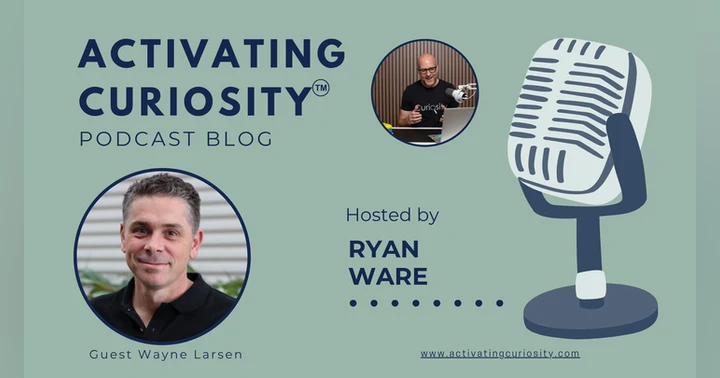
In this episode of Activating Curiosity™, we explore a hard truth about construction: we’re not just facing a labor shortage—we’re facing a productivity problem.
If the construction industry is “busy” every day, why are projects getting slower, more expensive, and harder to deliver? This conversation challenges the idea that we’re solving problems and reveals how often we’re just firefighting symptoms like rework, delays, and inefficiency.
Ryan Ware sits down with Wayne Larsen, CEO of PT Blink, to unpack why time is the most undervalued variable in construction—and how hidden costs compound across projects and supply chains.
Drawing from manufacturing and industrialized construction thinking, Wayne shares how Design Manufacturing Integration (DMI), prefabrication, and kit-of-parts approaches can fundamentally change how we design and build.
This episode connects the dots between construction productivity, housing affordability, and leadership—challenging AEC leaders to rethink how work gets done and where real opportunity exists.
What you’ll learn:
- Why construction has a productivity problem—not a labor shortage
- How time drives hidden cost across projects and supply chains
- The impact of rework, delays, and inefficiency on project outcomes
- How prefab, DMI, and kit-of-parts improve delivery
- Why manufacturing thinking is key to industry transformation
Who this is for:
Construction leaders, developers, architects, engineers, and AEC professionals focused on productivity, innovation, and leading change.
Chapters
1:02 - Introduction
2:18 - Wayne’s background and PT Blink
8:52 - Industry challenges
17:32 - De-risking with technology
28:05 - Legacy and future generations
38:31 - Economic drivers of change
44:41 - Global housing challenges
59:42 - Closing thoughts
Guest
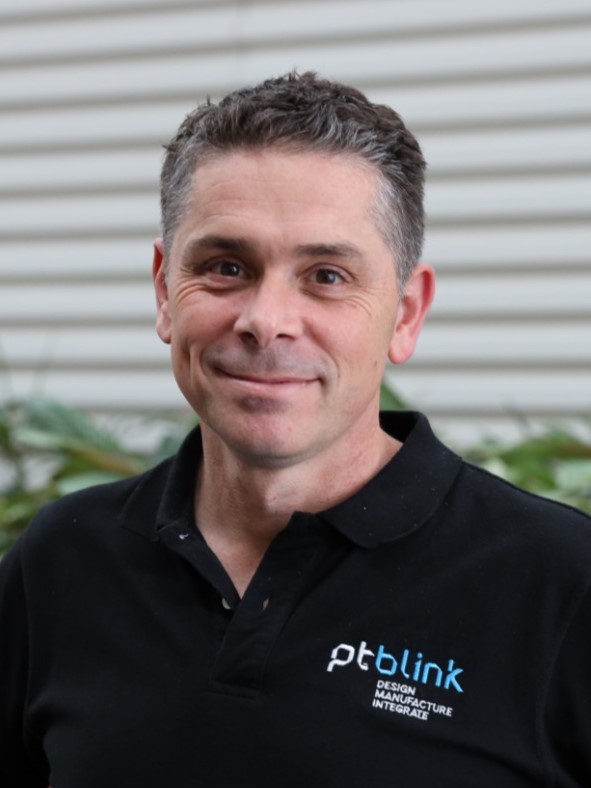
Wayne Larsen is a senior executive with 20+ years of leadership in construction technology, manufacturing, and supply chains.
With a background in industrial engineering, he focuses on applying systems thinking, automation, and manufacturing principles to improve construction productivity and drive industry transformation.
Overcast Innovations
Helping project teams coordinate building systems earlier for more predictable outcomes.
New Lyfe Accounting
Free Diagnostic ($500 value) for Activating Curiosity Listeners by NLA, to help your financial goals
Helping construction leaders simplify change, strengthen trust, and move forward with clarity.
Disclaimer: This post contains affiliate links. If you make a purchase, I may receive a commission at no extra cost to you.
Have feedback or stories to share? Drop us a note or leave a VM—we’re listening!
Follow Ryan at the following:
https://www.linkedin.com/in/ryankware/
https://www.linkedin.com/company/connective-consulting-group-llc
https://connectiveconsultinggrp.com/
https://connective-coaching.com/
https://ryanware.me/
Don't miss out on future episodes! Follow & subscribe now to our newsletter and stay informed about the latest trends and insights in the construction industry.
If this show helps you, please consider supporting it. Just $3/month helps cover production and keeps the conversations going.
⭐ “Love the show? Toss some stars my way, it’s the easiest applause ever.
Frequently Asked Questions
Why is construction productivity lagging?
Construction has become systematically slower and less productive over decades, unlike manufacturing, due to a failure to become more efficient and better resource utilization, not just a labor shortage.
How can manufacturing principles improve construction productivity?
Applying manufacturing thinking, such as Design Manufacturing Integration (DMI), prefabrication, and kit-of-parts approaches, allows for controlled production environments and more efficient, product-like construction processes.
What is the impact of time on construction costs?
Time is the most undervalued variable; delays and sequential building lead to substantial hidden costs, including material waste and prolonged carrying costs for developers.
How does rework affect construction outcomes?
Rework, delays, and inefficiency are symptoms of deeper productivity problems that increase costs, lengthen project timelines, and hinder overall project success.
00:00 - Firefighting Vs Real Problem Solving
01:14 - Meet Wayne Larson Of PT Blink
04:15 - Why PT Blink Exists
08:51 - The Productivity Crisis Behind Housing Costs
17:31 - Design Manufacturing Integration Explained
29:06 - De Risking Change For Skeptics
34:37 - Moving The Supply Chain Upstream
45:08 - The Real Cost Of Doing Nothing
56:44 - What Success Looks Like
01:00:29 - How To Learn More And Get Involved
01:03:10 - Host Recap And Final Takeaways
01:06:59 - Subscribe Share And Closing
Firefighting Vs Real Problem Solving
Wayne
Think that's part of that's part of the challenge of change in the industry in that in that construction is a daily battle to solve lots and lots of problems, right? So people in the industry feel feel good that they're busy every day solving problems. Right. The problem is that's they're solving the wrong problems. I think they're solving the symptoms, not solving the problem. And but we get stuck in this rat wheel of you know, snag list, punch list, do this, do that, got got all this to do. That's that that's not problem solving, it's firefighting. So we need to get sort of elevate that mindset of okay, what's causing these symptoms, and then solve that problem.
Meet Wayne Larson Of PT Blink
Ryan
My background coming from that prefabrication side. I just saw something unique in this group, the way they were approaching it, the verbiage they were using, and the background of the founder as well as the gentleman that we're going to talk to today, and how that starts to really bring opportunity to a lot of different areas when it when it comes to designing and integrating prefabrication within construction projects. So today I have with me Wayne Larson. He is the CEO of PT Blink, and they are located in Sydney, Australia. So hey Wayne, good morning. How are you? Good morning, Ryan. How are you? I'm doing well. I'm I'm appreciative that you were willing to jump on this early for you over in Australia. But this is this is exciting for me, I think, to have this conversation because I I want to share a lot of the work that you guys have been doing and get in deep to the conversations. But before we do that and get into the to the questions, why don't you tell a little bit about yourself, sort of your history, and how you got into your role here with PT Blink?
Wayne
Yeah, sure. Um my background, I'm actually an industrial engineer by training, not a not a not a construction guy. I come from the manufacturing and supply side of the industry. So uh 20 plus years in steel manufacturing distribution, aluminium product manufacturing distribution into the construction. And uh, I guess in the um uh I guess the American nomenclature to be in the in the design build space where supplying product into GCs to go into design and construct or design and build projects. Um, that sort of journey in history gave me a good sort of understanding of the downstream sort of impacts or or or challenges of the industry. Six or seven years ago, I I met Met Murray at the founder of PT Blink, and uh we got into a conversation around you know the challenges around productivity and waste and cost and time in particular. Uh and from my side of the uh of the of the industry, I saw firsthand the opportunist opportunism and the waste and profiteering that takes place in the supply side because of last-minute changes or rectification works, that kind of thing that that take place. So a better way of of delivering buildings through manufacturing and my lean manufacturing mindset sort of coming together with the structural innovation and and and technology that that the PT Blink had, you know, is a is a nice fit.
Ryan
Yeah, so your your background in that supply chain, like you said, the industrial engineering. Murray, who was the founder, Murray Allen, he was he was a structural engineer, right? And he founded the company. I'm not gonna tell the story of the name because I'll let you do that real quick, but the name PT Blank and just what Murray was seeing because you came in a few years after he got started. Tell a little bit about the name, the history between it, and kind of how that's evolved into what you're doing today.
Why PT Blink Exists
Wayne
Yeah, I think I mean the the core challenge that we're we're we're we're solving for is time. The name Blink comes from effectively Blink and it's done. It's all about time. The company itself, so Murray is actively involved in the business. He's is is a founder, but he's a is he's our chairman uh and is the I guess the the thought leader and in innovator around the technology, particularly around the structures uh piece. Him and his father before him have a long history of innovation in in delivering buildings. And that started with clear span structures and and post-tensioning of steel. So PT in PT Blink stands for post-tensioning and not in the traditional sense of post-tension concrete. What we do and then and our technology is is applying the same philosophy and effectively trying to strengthen steel using post-tension strands. So uh our uh the impact of our technology effectively doubles the carrying capacity of steel beams, and that gives us the ability to create very efficient structures, very long clear spans, and the the history of the business is very, very large clear span things like hangars and warehouses. Yeah, I think 170 meters, column three is the biggest, yeah, the biggest spanning building that that that Murray uh had has previously built. About eight years ago, uh it was posed with a challenge and two challenges, one from a property developer and one from the primary steel producer here in Australia. Uh and the property developer came to Murray and said, Yep, yep, you've lived in China for for many, many years. He lived in Hong Kong and and built buildings all over China for 15 or so years. And they challenged uh the property developer that is challenged him to say, Well, yeah, I see all these videos of buildings going up in two days in China. You know, why can't we build that fast here in Australia? And at the same time, our steel industry was on its knees because of low-cost imports coming in and that sort of foreign competition. And the steel industry came to us and said, Why can't we compete with imports and Chinese production? And those two things sort of sort of converge in that time is the most undervalued commodity in the construction industry. However, we arrive at that that solution, and and and really that's what all modular prefabrication, off-site manufacturing solutions are trying to do is eliminate waste. And that is both material waste and and human human time waste. Um, and if we can solve for time, then that that changes the economic outcomes of a project, both from a prone project financials perspective, but also for the supply chain. Because once time is valued, then all of a sudden you don't have time to wait 16 weeks for windows to come from China. You don't have time becomes valued, then all of a sudden time is the biggest risk matter thing that you'd need to mitigate. So shorten supply chains, local manufacturing, creating local jobs, and moving existing manufacturers up the value chain to deliver buildings in a different way is what we're all about.
Ryan
I mean, it's interesting that you started with a developer was kind of coming to, you know, coming in with Murray and kind of getting started in that conversation of like, hey, I'm watching this, I'm seeing it, like, what are we doing? Yeah. And and you you discussed it. You started getting into that problem, right? Some of those challenges. It's time. We don't have enough humans in this industry, whether you're in Australia or you're here in North America, right? Like our industry has been been struggling with that for some time. You mentioned trying to solve whether it's the supply chain side. I'm interested in that piece because you started mentioning, hey, he's a structural engineer by background, PT was post-tension, the idea of Blink being about speed and kind of shrinking a lot of that time between supply change and how we as humans are kind of impacted by a lot of a lot of those things that goes into a project schedule. So how has, as you've started looking in that from that initial conversation with that developer, what other problems were you starting to notice? You came from that supply side, both in kind of the engineering piece, but beyond, like, hey, we're trying to solve for time, you have a developer who had like this insight, like, and I want this, but mindsets tend to change that for other people, other industries, other parts that you're trying to bring together. So talk a little bit more about the, you know, the overall problem that you're aiming to solve, the things that sort of started to kind of trickle up as you were developing this solution for PT Blank of shortening that supply chain connection piece to the to
The Productivity Crisis Behind Housing Costs
Ryan
the site.
Wayne
Yeah, I think, I mean, the the you you look at the property developer at one end, who who is it's they are the the demand side at the end of the end of the day for construction companies, probably not for the industry. Talk of buyers and occupants as the as the you know the the the pure demand side. But if we we if we start with property developers who are the ones that are going to you know apply the capital and and and you know ideate the project and and and and and effectively you know initiate a project happening, they're looking at it from if I say yes, I want to deliver this building today, it's probably two or three years before I get the keys to that building. And they're saying, well, I'm paying for the site, I'm paying for the cost of carrying, I'm paying for this, and at the end of it, I have to make money out of the project, otherwise I can't do another one. And then for you know, what that does is all of that hidden cost, so materials cost what materials cost, timber costs what timber costs, steel cost what steel costs, concrete costs what concrete costs. So all the fixed material costs are going to be the same, except for what you waste, right? Yeah, in Australia, yeah, something like between 15 and 20% of the material that arrives to a construction site ends up in the bin. So there's already, if if if a building is 50% materials and 50% labor, say, yeah, you've already increased your building cost by 10% because you're throwing 20% of your materials in the bin. Um then you've got you know all the labor impacts. You've got people sort of stacked up in a sequential process to deliver a building. So you know, if it's a multi-story building, you can't build floor two until you've finished floor one. You can't build floor three until you've finished floor two. That sequential cycle is is the way we've done buildings for more than 100 years. Um we use the analogy often, and it's and it's and it's a scary one to put out there, that you know, the fastest skyscraper ever built is still the Empire State Building. Right. Right? That was 96 years ago. So for night for the last 96 years, we've progressively gotten slower and slower and slower in how we deliver a building. Yeah. That was 13 months and 15 days, that building was built now, 101 floors. Today, that building would take five or six years to deliver. Right? So that's a and that's a that's a that's a that's a systematic productivity failure. If you look at every other industry, we've progressively gotten better at productivity year on year. Manufacturing has got better, agriculture gets better, um, you know, even even government services have gotten more productive over the years than where where construction has either stagnated or gone backwards. So we're using more money, more materials, more labor to produce the same amount of housing every single year. So we're getting actually worse and worse and worse. That's not sustainable. So you talked before about the labour, the labour shortage. We don't actually have a labor shortage, we have a productivity problem. We're failing to get more efficient at delivering and using our resources better, which every other industry has to do. And that's driving up costs, it's driving up affordability crisis, it's it's it's it's creating a whole heap of pressure in the industry that can't be born. What the what the result of that is, is that from the developer all the way through the chain to delivery, industry is set up to effectively be confrontational and and aim to shift blame and shift risk. So it's a it's effectively a contracting challenge of who has the who has the deepest pockets wins or who has the best lawyers wins. And at the end, you hope to get a building that you that you're looking for. And we're trying to we're trying to change that. So when you look at it, time is one thing, um, or time is the the the key driver that we're trying to solve for, get time and get time back into the developer's hands where the where where you know the developer is the one that's going to do projects over and over and over again. You know, to put the time back in their pocket and money back in their pocket means that they can deliver more projects more affordably. To do that, you can't just throw a different widget into the same system and hope you're going to get a better outcome. And that's part of the productivity challenges we see, is there's so many great tools, but they're so disconnected. So what we do is create a whole heap of complexity in the industry by layering great ideas and innovation on top of each other in a really fragmented way. We haven't actually looked at the system system. We're trying to put band-aids on different parts of the process to get make that little bit of the process better. But if that doesn't flow into the next next stage, then all you're doing is creating another hurdle to get into the next phase and another opportunity for delay or error or rework, that kind of thing. So basically you said, well, you actually need to change the whole method of delivery from design and build or stick build into a process that that looks more like the way we deliver industrialized products, so cars and aeroplanes, that kind of thing. Our structural technology effectively is a chassis. So we've developed a structural system that is a kit of parts made up of columns, you know, header beams, four cassettes we call trays and blabel. So basically four elements of a building structure that can be configured in in different different ways to create any architecture. So if you can take any existing architecture and divide it up into a structural grid that that can be manufactured offside, then you're taking the biggest inhibitor to delivery, delivery of a multi-story project, and we're talking multi-story, four stories and up. Multi-story project, take the structure way off the critical path. And when we talk talk way off the critical path, we're saying instead of doing a floor every one to two weeks, we're doing two to three floors per week. So it's a it's a it's a it's a step change in vertical speed. And doing that in a way that doesn't require shoring and backpropping, doing it in a way that doesn't require scaffolding, and doing it in a way that doesn't require site fixing and reinforcement. So doing as much value adding in the factory as we possibly can so that fewer resources are required on site for a shorter period of time, and you're getting a reliable geometric datum that you can fix other things to. Once you can control the geometry of the building, you can control how you manufacture or how you supply into that building. So you're not having to go and do a site measure and understand what that aperture looks like before you can go and make the windows, because you know that that thing is going to be made to precision. You can make the manu windows at the same time you're making the structure, at the same time you're making internal walls, the bathroom, so on and so forth.
Ryan
Yeah, so it's a design design process, right? You talked about a delivery model. So you're changing into a design integration that's happening utilizing technology that's then linking to it. You mentioned it before, that fragmentation. So you're you're getting interdependency within teams so that they're starting to connect those dots during the design, speeding up the build. You're talking about a lot of work being done at a much quicker pace, delivering the structure, a lot of that skeleton piece. A lot of things are now coming off project sites quicker. You know, the things that leave a job are coming off quicker because you're still paying for them if they're on the job. And that doesn't just mean humans. It means, like you said, scaffolding or things that are rented or shoring that are driving costs up. So understanding a lot of that, you you mentioned again, it goes back towards that the piece that the developer is really driving it. It's like, hey, I'm paying for all of this. I'm all of these costs that we don't, you know, as designers, don't always think about. We know they exist, but when we're choosing to design a building, I'm gonna coming from the architectural world or engineering, like we have so much impact as designers to help drive that delivery model or that method of construction, right? And that's that's also where contractors have to come into play because you're you're working with a group that's going to provide portions of it. It's not necessarily the whole building. So, you know, I'm sure you've seen this, I'm sure your team sees this, but here's a developer that's like, I need this problem solved because that's who we're all building for, is the humans are going to go inside of these spaces. But what how have you seen mindsets sort of shift beyond the initial obstacle phase or resistance phase as you're first being introduced, or you first start kind of having these discussions with uh design teams and builders, as well as even supply chain groups that you're starting to work with, like the common obstacles, the common barriers, and then how are you working
Design Manufacturing Integration Explained
Ryan
through that?
Wayne
Yeah, and it's it's been a constant effort to change mindsets. You know, that that's that's really and and we sort of joked about it before about you know, we're still building buildings the same way that we built the Empire State Building just with better safety, right? The challenge is that you know we operate in an industry that is risk-averse. It is high risk because you know they're we're building structures that people want to live in for 40 or 50 years and they can't fall down. So people don't take risks on construction full stop. Um anyone who wants to do something different to the to the orthodoxy is seen as risky. And and that's that's the that's the challenge with with changing a process. So that the the work that we've we've been doing is is de-risking everything. So showing that when you manufacture something and you can check it for geometry, check it for uh co-compliance in terms of its its makeup, its materiality, it's it's its assembly, uh, that is way less risky than you know having 15 guys come to a site and piece by piece build that thing up. And you know, by the time you come to inspect it, it's already sheeted up and you can't see what's behind the wall. Right. So that that the understanding and the education piece has been has been has been fairly significant. And and the way we've approached that is we've effectively got the methodology we call design manufacturing at Great DMI. Everyone has to have an acronym, right? So um it is that for a reason. We design it to be manufactured, we manufacture it in a in a controlled environment and we integrate it as a kit of parts and do that through an ecosystem of partners. So we don't manufacture anything ourselves. What we do is we license the technology and we're we're creating a technology platform for manufacturers, architects, engineers, certifiers, consenting authorities, all that kind of thing to participate in that ecosystem. And it won't be for everyone. We're not going to have every GC, every builder, every manufacturer, because some will just say, you know what, I've been doing it this way for a long time. I want to, it's worked for me for now, I'm going to keep doing it. Yeah. And our real challenge in our industry is that the industry is full of generally old blokes, right? Old men. And old men get pretty stubborn as they get older and they don't want to change, particularly getting close to retirement. Who wants to change? And and and and and and yeah, when we talk about the numbers in the industry, the numbers of people in the industry, the real challenge is that we've got an aging industry, and we're going to have a whole wave of people drop out of the industry, and we've got no one coming in behind to fill that gap. And that's that's started happening in in most OECD countries, and it's going to continue to accelerate in Australia, in the US, in mainland Europe. Um, and that's a real challenge. So all these people that are saying no to change now are going to, over the next five to ten years, not going to be in the industry anymore. And if we don't start adopting different ways, one, there's not going to be enough people. We've got you know a growing global population and a smaller resource pool to deliver projects, and we're doing it in a less productive way. So, you know, we we our view is that we've actually got a humanitarian crisis on our on our on our doorstep that we're not really addressing because we're arguing over the how, not the why. Yeah. We actually need to get beyond the why and know that PT Blink isn't the only answer. Volumetric modular isn't the only answer. Right. Um, you know, they're all part of parts of, we're all parts of the answer that has to be, has to be implemented across the board to solve a problem, which is we need to be able to deliver enough buildings to house the population.
Ryan
Yeah, I think, you know, it's very similar to a lot of the conversations that I have. And it I think this just expresses that humans are humans, whether they're in Australia, whether they're in the you know, North America or anywhere else on the face of the planet, we you mentioned the word kind of we want to de-risk and we we don't we won't we don't want risk, so we find other ways to say no thank you, I'll keep doing it the way I've been doing it. Yeah.
Wayne
And but we we find we find that you could be in a project, so we could have a developer that lots of developers want this. They need this, right? They need that you know financially projects are fine, they're finding projects difficult to get through feasibility, not penciling. We experienced it in the US, it's happening here in Australia. And then somewhere through the cohort of people that are involved in a project, could be the architect. It could be the engineer, could be the the GC, could be a site manager who at some point there could be 25 out of 26 people that are all all waving the flag for this. And one person says, hang on, this is risky. And everyone will fall back behind that one person because no one wants to be the one that's wrong, right? So they'll all fall back to safety. And that's that's the real challenge, is it's it's too easy to say no, uh, and it's and it's too risky to say yes. So getting to the point where it's and it's yeah, we're seeing it now uh here in Australia, but I think this is going to become a bigger pattern globally, it's gonna be too risky to say no soon because we can't actually get buildings done. So yeah, it's going to that that that shift that the the pendulum is shifting back to we have to do things differently because we can't try to keep doing things the same way. So now it is how do we do that in a way that's controlled? How do we do that in a way that we can trust the process, trust the technology, and that's the that's the key is is de-risking it so that decision makers can see that you know what, this is this is this is this is resolved, this is well thought through, this is structurally sound, this is architecturally sound. We're delivering buildings that people want to live in, can live in, they're healthy, they're they're they're safe, and they're durable.
Ryan
Well, and it's you know, like I mentioned, it's it it's a very similar conversation. Like you and you you've said it, kit apart all the way through volumetric. There isn't a silver bullet, but it's it's one of those things that I keep thinking about is like we we as a society find that it's easier to if we again, our mindsets want this, so we stay in that lane of known. You know, I hear devil you know is better than the one you don't. Well, all of those things feel true, but as you just alluded to, we're not solving the problem that we're all the why like what we're actually aiming to solve, which is build the infrastructure for the world, whether it's housing, healthcare, whatever it is, right? So yes, what we're the way we built the Empire State Building was the right answer for when we built the Empire State Building. But if, like you mentioned, if we were to do that today, it would be, it would take us years to build, if not decades, uh just to get through the planning and get through all the process, right? So humans have made it more complicated. We are the ones in control. We have the agency to to work through this. And when I think about it in my career, and when I tried to take on something new, I never really I was always a risk. Designing a building was always a risk, regardless of the method of construction that I thought about. But I keep thinking about this in a way of you said trust the software, trust the process, trust all these things. I want people to like, we should trust our own ability. Yeah, absolutely. To go into this space that we've never been to before. And that it's still designing a building. It's just that we're, and this is where it gets tough. It's that slowing down period of that new area, that new thing that we're all going to learn, like you mentioned, the design to manufacturing, that integration piece to to use a different delivery model, to use this new method of construction. Uh, well, it's not even new. Uh, this method of construction that has been around for a long time, that it's new to us. Yeah. But when you are on a team, and then what when I think about it, like you mentioned, 25 people say go, one says don't, and then they get behind because of that reason. But the opportunity is really to have empathy towards the one human that has a fear, and it's not because they're weak, it's just they're human. So they feel like there's risk, there's this, there's I'm I'm having this feeling. Like if everyone is working together to understand this new thing you're gonna go through, slowing down, have empathy, ask questions, create that psychological safety to allow you to navigate it, then then it's not just, hey, we're doing it for the project. It's hey, we're trying to build more housing, hey, we're trying to build more healthcare, whatever it is that we're trying to design. So I'm glad you kind of shared that because again, I think that's universal. We know it for prefab or technology. But, you know, when I think about change management, I take think about our mindsets, it's inviting one, providing psychological safety for herself, but inviting in everyone else into that zone that allows for questions to be asked, slowing down to make sure everyone's on board. And and you've probably have seen this too, Wayne. I'm guessing as new new groups came on and the first time they tried it, like, hey, that won't be your best effort. Yeah. So don't punt on it, don't give up after that. And we've we've started.
Wayne
I mean, we in our first few projects, we had new let's call them consultants, architects, engineers, certifiers coming into the project and learning as they go on a project. We've now got to the point where we're starting to bring new people on behind a live project. So they're seeing a project happen from a distance in a low-risk way. They're they're watching it and learning from those that have done it before rather than trying to be pioneers on their own project. So we're we're bringing trying to bring the industry along behind those that have done it and and and build it, build a wave of adopters rather than then try and do it live in a project where where what you don't want to ever get to is an experience where the pressure of the project becomes the driving factor or the driving force that pulls people away from from challenging change and and and going through that that psychological process, because then the risk of their their part of the process becomes greater than than than you know the what they're what they're trying to achieve. I think the other point is that you know really what we're kind of and we don't state it sort of loudly, but definitely a guiding part of our ethos is is that that we're trying to create change for the next generation, not just for us.
De Risking Change For Skeptics
Wayne
You know, yes, we've got a we've got a commercial imperative, but we actually see this as the as part of the answer, not not just because, hey, there's an opportunity, there's a niche in the market, let's go attack all that and make money. It's about how do we actually change things for the better. We don't want to see landfill full of construction waste. We don't want to see trees cut down and then you know thrown in the thrown, thrown back in the in the in the bin. Uh we don't want to see you know young men taking their own lives because of the pressure of construction. We don't want to, you know, there's there's a whole heap of things in our industry that are so dysfunctional and so broken that has to change. Um, you know, we look at, you know, and it's not always the uh the the greatest example, but we look at you know companies like Boeing who can build a 737 in 18 days. I mean, $50 million and 600,000 parts or 800,000 parts in a in an aeroplane, but they can put that together, assemble that and have it flying in 18 days. Why does it take us two, three, four years to build a building of similar complexity? Same risk profile. You've still got people going in a plane every single day and not questioning boarding a plane. You don't question how long did this thing take to build and how many arguments were you trust the process, you trust the manufacturing, you trust the quality control. And that's the way that's it's just an accepted way. And that comes back to controlling geometry, controlling design, controlling manufacturing. And when you boil it down, construction is the world's biggest cottage industry. It's probably the last big cottage industry left, right? We have art of sand tradespeople who come together on an ad hoc basis to deliver a building by getting materials, tools, and labor to the site where they want the building to be, right? It's it's it's it's like coach building en masse. We don't build cars that way anymore for a reason, right? You don't order a order a car and they turn up with a foundry to pour a pour the engine block in your garage, right? That just doesn't work that way. We create sub-assemblies, we have a reliable geometric data being a chassis, and we put parts on that thing to give you a car. I love the uh I'm a manufacturing guy, right? So I love the uh the videos of the the Volkswagen plant in in Wolfsburg, Germany.
Ryan
Yeah.
Wayne
Because you can see there, you'll have a chassis going down a production line, and you'll have 25 chassis lined up, but yeah, first one's a Volkswagen, the next one's a Skoda, then there's a Porsche, then there's an Audi. It's all the same chassis, it's just a different kit of parts being applied to that chassis. And that's the youth of the state. Lots of manufacturers providing assemblies that you can create any building. All you have to do is choose your kit of parts. Right.
Ryan
Right. Well, I think I mean you said a lot of important things there, especially when I want to go back to something you talked about, is leaving a legacy. Like you said, hey, we're not just doing this to come in and make money. We we feel like if we aren't part of a solution, right? We're not the silver bullet, we're not everything to everyone. But if we we need to build something for the future generations to be thinking about how they're going to be designing and building in order to address some of these large problems, not just, hey, this is how a project goes together. It's literally what is it we're doing? We are designing and building globally to keep, you know, to give people shelter, to provide them with spaces to heal, spaces to learn, whatever it is, that being able to get enough of that that is out there for the world's population is critical. Not only that, it's you know, it's it's power infrastructure, it's all the things that we need, right, to survive as humans. So I think it's powerful to say, we don't always say it, but we just think there's something bigger here, which I've talked about with other other guests, is what is the legacy that you want to leave, right? What is it? It even even for site superintendents, like you've built the world, the way you've built it, your legacy is how you leave the industry as well. How do we begin as we're thinking about retiring and walking away from our businesses? Of like, will the next generation be able to maintain what we've been doing in its current state, or have situations changed that we need to do something different? And I think that's what you're getting to, Wayne, is that you, you know, what you've been working on, you and Murray and team is like, hey, like we have got to find a way to bring this design process to get these kidaparts out through the through your mind, how supply chains work, right? And and getting costs down and utilizing, you know, materials that are that are regional or local to projects and connecting manufacturers, connecting architects. So I think it's unique, and this is something that I find unique about your system is you, yes, it's a technology and it's a process, it's a mindset shift, it's all of these things. And it's a tool that architects and engineers, manufacturers, and other integrators, they're part of it to solve this problem that you're talking about. So it's not like a lot of times we think about things like, hey, you're you're going to do something and we just want you, like we're selling you a product. It's like, no, we're we're trying to elevate your careers and the way you're delivering projects. So it just it just is a unique model that I find very intriguing of like, and it's not just Revit or Inventor, it is this whole other way of starting to look at it because you're you're combining that with all of the other tools that are going on in the industry as well, right?
Wayne
Absolutely.
Moving The Supply Chain Upstream
Wayne
And and and what we want to do is elevate particularly the supply chain in the industry up the value chain, right? So if if if an architect starts a project, we don't want the architect designing to 30% and then getting thrown off the project to get a cheaper architect into coming and finish it. We want them to own the project end-to-end. We we want a manufacturer not to just sell some sticks of steel with some holes in it. What we want them to do is actually sell a product and do more valuating. So their share of their share of wallet increases. They're utilizing their sunk cost in their in their in their capital and their people in a better way and a more efficient way. Rightly or wrongly, we see the best way to improve affordable or cost and and productivity in the process is to make better utilization of their capital that's already been deployed. So if there's a timber manufacturer or steel manufacturer and they're working one or two shifts a day, they're doing very, very low value weighting, they're doing some processing, they're not doing any complexing or assembly. There's a there's an opportunity for them to do more with their with their with their existing equipment. They're already paying rent on their buildings, they're already putting depreciation on their capital. So use it more, make it sweat, make it, make it, make it, make them money, and that brings their lot their their unit cost down. But gives them more value. They're now starting to move into. I'm no longer a materials supplier, I'm now a product manufacturer. And then they start to develop their own IP. Their IP is in process, controls, quality control, product development, all that kind of thing, get them up the intelligence chain and value chain of the industry. So they're actually producing about most manufacturers have a lot of IP. They just don't realize it and they don't value it because they're so used to being uh on the end of a you know a three or four-party tender at the lowest, yeah, the lowest price wins. And that is not a way to drive the industry forward. It's not always the lowest price that gives you the best cost, right? And and and yeah, that's a that's an argument that that that goes around in circles. But um the the legacy of not valuing that is that those companies eventually go out of business because you know that they become a commodity supplier of raw materials, and that that is very, very easy to supplement from low-cost countries or low-cost sources, right? But IP and process and quality is not easily, easily sort of copyable or replaceable.
Ryan
Yeah, so you're you're like you said, you're elevating all of the supply chain within the within the process, you know, you're giving opportunity to architects, and I can think about that, right? It's not no one's replacing anyone. It's just I think you said this so well, which is it's not just a labor shortage or it isn't a labor shortage, and I talk about this all the time. We're not utilizing the labor force we had more effectively. And that's what you're you're saying as well, is like, how do we get the most out of everyone? And I don't mean work 80 hours a week. I mean like we should be at a point where we're probably actually working less, producing a lot more in society. But this is one of those things that you guys are you're looking at it again and saying, we're trying to give everybody this tool, the software and technology built on the DMI process, the design manufacturing integration. You are filling a pipeline, you're having people watch projects happening. So you're those that are curious, they can go see this happening, this process become part of the pipeline of who can start to think about building with these delivery models and delivery methods, you know, utilizing kit aparts and utilizing prefab. And and it's one of those things that I think if they are using PT Blink and then they're or they're part of that process, right? If they're if you guys are part of it, and they're on another project and you guys aren't on it, it doesn't mean everything's a throwaway because now they're learning the language, learning the questions. They're learning, you know, yes, every sort of whether it's single trade to multi-trade, that's going to change sort of how things work. But you're building a stronger foundation for yourself, for your team, for your business to go address that developer's problem, which is why is this taking so long to build the building I'm asking you to do?
Wayne
And we we we treat we generally see time savings of between you know 40 and 60 percent on a on a on a vertical project. Now, even if cost is exactly the same, if you have the time, you're doubling the IRR for the developer, right? He can he can deploy his money twice as fast. So even if he makes no more profit out of the project, yeah, we we generally see somewhere between you know five to fifteen percent cost savings in a project. And that's mostly time-based stuff and waste-based savings. As I say, a ton of steel costs with a ton of ton of steel costs. But if you can use 5% less of it, then you you're saving some money. So a little bit less cost, a lot less time. The developer has the opportunity to make effectively twice as much money because they're doing twice as many projects. That's that's that's so that's the commercial outcome. And change doesn't happen. Yeah, it comes back to it's it's the economy stupid, right? Change will change will not happen unless there's an economic driver for it. Whether it's be whether it be a transition to green energy, whether it be a low carbon future, whether it be a system-wide change in the construction industry, unless there's an economic imperative, a financial imperative, it won't happen. Yeah. We need to create to create the financial imperative to to to create the desire for the change, to go through that learning and change process. There has to be a reason for it, and that is economic at the end of the day. Yes, there'll be some, and for us, there's some there's some obviously higher views of around around not putting rubbish in the ground and and you know, all that all those those those additional benefits that come from, but without it being financially driven, the demand side just won't have it. So it has to drive a financial imperative. And that's right, that's that's across the industry.
Ryan
Well, and I think I think that's very true. And I think right now I would almost question like I think we're already there. We're just not recognizing how much it's already costing us to do it this way. It's all it's all hidden cost, right?
Wayne
You you can't see there's there's no there's no there's no line item in a in a in a in a in a cost plan that says rework, waste, and and labor, labor, extra, extra, excess labor time. It's all it's all buried everywhere. The studies that have been done in the order of 20 to 30 percent of the labor on a site is for re rework and rectification. That's right, effectively doing work twice. Right. The first thing that turns up to a construction site after a concrete pour is the guy with the concrete saw, right? He goes there to cut cut the bits out that got that didn't get didn't get formed upright.
Ryan
I was gonna say a dumpster, but you're right, yeah.
Wayne
We go and do all this work, and then we do it again because it's not not quite right or it's not the plan. Or we have to go and adjust the next floor because the the floor below is is two inches below where it should be. We're always making up the I guess accounting for the errors as a building goes up and at all costs.
Ryan
I think it's I think that's all very true. I think it's also that we're the productivity, you mentioned this, and just all of that going back and redoing just means we're not building another building, which is what the developer wants. So again, it's all connected into this. Well, if we're designing it the same way that we were a hundred years ago, for an empire state building to be built, which I'm guessing was far fewer drawings than we would have today as well. Right? Like if we're not looking at it like, hey, we have to figure out how to build more things while bringing costs down. The current situation, the current model, that's not happening because we're electricians are turning work down, even though they may not say it. Like, if they could double their revenue without doubling headcount, they'd do it. Mechanical subs would do it. And I'll tell you, like, electricians are prefabricating, so is mechanical. Like they're they see it, they see the advantage in its single trade, so it doesn't impact a lot of people. Structural systems, you know, to architectural. Like architectural, anytime it gets into this multi-trade and it becomes this what feels like a heavier lift to get it integrated into a design. Yeah, that's, I don't know, from my background, that's where I see a lot of the friction points. And then it's we've tried it and it didn't work out well. So then there's, you know, again, that pain that they felt. But a coming back towards what we are designing today, what a building that is being designed today, you we are already overpaying for it. And we could have pulled back and thought differently about designing and how the methodology, the delivery model to the method of construction. All the different ways that we could be bringing people in earlier, like you're saying, going through the integration and delivering kit of parts all the way through whatever volumetric to how you're gonna build. Like the first time won't be the lowest cost, but the more we do it, we're gonna start seeing those developers being more willing to do to build more. Capital is going to become more available to go do it. We're going to start solving the housing shortage issue, which is enormous across the globe. And I'm, you know, you can talk about this too. But the US, like, I lived in California. I mean, we were hundreds of thousands of units shy every year. Yep. We can't catch up to it in this current state. So maybe I'm getting a little too excited with that, but I just think coming back to what you said about affordability, like we we are in control as an industry to reevaluate what is it that we are doing, not just the process in which we're doing it, it's how do we answer that question for that developer and be part of the solution where it is new, we haven't done it, but we take pride in building a Legacy industry. We take pride in that learning moment. We go through that journey together to shift right now, right now, this industry towards a future that is addressing a
The Real Cost Of Doing Nothing
Ryan
lot of this. So I guess that leads me to the question because we've talked a lot about like what it can mean. So let's just go a little bit in an opposite direction of like, okay, Wayne, if we, you know, what do you see in your mind and how does PT Blank kind of see it, or even even Murray, like if we don't start solving this, like what is the cost to everyone else, not just the industry, but to everyone else that we we live with in our communities?
Wayne
Yeah, well, I mean, we I already said, I mean, I'm I've got two uh teenage, almost adult children, and and yeah, in Sydney, they they will struggle to be able to afford to buy a house in their lifestyle. In Australia, we have a high percentage of home ownership. You know, 70 or 80 percent of the population owns their own home. We it's almost a a a born rite of passage in Australia to to work towards home ownership. We're not we're not a big build-to-rent or multifamily renting community, although it is growing, and that's being driven by affordability. So there's a bit of a shift towards away from individual ownership into institutional ownership, and I think that's a scary proposition for wealth creation and wealth, wealth generation, and end-of-life security, financial security. My girls are already saying I'm never going to afford a house. One, it it starts to to make me and my wife worry that the you know the kids are gonna try and knock us off a bit earlier than that than we want to go and try to get a hold of the house. But plan B, plan B. But but but yeah, that's it's a cultural challenge that that that the whole psyche of of particularly out Australia has been driven around owning your own home, having your own backyard, raising a family in in in in in that in that in that space. So that's that's changing from a cultural perspective. Um, but that then changes the whole how do you how do you grow wealth through life? What what are what are your investment vehicles? What is what is your your retirement strategy? Because if it's not around real estate and home ownership, what does that look like? And where's the funds then flow to? And and that's that's something that is that is that is particularly challenging. I think at a broader, and and I touched on this before, I think we've got a more fundamental issue is we're we're not gonna be able to provide shelter for the growing population. Our population is growing faster than our housing stock. In Australia, we've got governments that have promised 1.2 million homes over the next five years. We're already 40% behind that target. And we're gonna be we're gonna be hundreds of thousands of homes behind that target, account for the homes we need today. There's something like two million dwellings short, just for um you know rental demand, social housing, emergency accommodation, that kind of thing that that is needed right here, right now. So we're probably more like three to four million houses behind or homes behind our target than than the 1.2 that the government's targeting. And that's just to provide adequate shelter. And we're a first world country, we're an OECD first world country. You then move to the third world. I mean, what happens in the Ukraine once the once the fighting stops? What happens in Turkey, in Turkey to rebuild after earthquakes? What happens in in the Middle East after the fighting stops or in or in or in Israel and Gaza? You know, these these mass rebuilds will take resources. The Middle East and Saudi Arabia is taking all of the low-cost construction resources into building mega projects and gigaprojects in in the uh in the Gulf states. So where does it all come from? It's become a a bit of a hunger games of all the rich nations trying to try to bring labor in, but it's a pool that's dwindling. It's it's it's a shallow pool. We're fighting over the same limited resource pool. So there is no other way other than to change. We have to change to something and change to other things, other ways. It's just a matter of getting on and doing it. And I think that the the real challenge in manufacturing, you have a very short product cycle, right? You you start a product at 9 a.m. By 9.05, you've you've you've finished that product. And you can you can you can review and refine and address and and improve on a fairly quick cycle time and get get your learnings sort of recorded uh and and changes adopted and measured fairly quickly. In construction, that that cycle time is quite long. So even if we halve the time, we're still talking 12 or 18 months before you get to the end of the cycle to then be able to say what worked, what didn't work, and and and improve. And that I think is is part of the the the challenge of moving moving the industry. It's a slow moving industry because projects are quite long duration. That you know, it it does take you know time to to to manufacture, even if we're doing it as fast as we can, it's still going to take some time.
Ryan
Yeah. You talked about it. You you said putting a project together, there's an ad hoc team that kind of comes together potentially once and they're never going to work together again. They may, and that makes it challenging. The duration between projects to share on those lessons learn as you're going through. Yes, that's all that's all fair. And like you said, just trying to shift and elevate, learning each time to keep getting productivity higher. But you know, the thing that you shared about, you know, whether it's wars or whatever, I think about, you know, the fires in California. Yeah. You know, and and what it was the beginning of last year, or there's fires every single year. There is natural disasters happening everywhere that are that are destroying homes, destroying buildings, destroying cities. And again, that's another area of of friction that we're fighting for those resources to build. That's right.
Wayne
And just just age of buildings, you know, there's gonna be you know, three to five percent of existing building stock will have to be replaced every year as well, just because it it it degrades over time. So that won't go away, but that is going to, and as the population grows, that pressure example it it's it's it's a it's an exponential pressure point.
Ryan
Yeah. And it's gonna raise other costs, right? I mean, it isn't just like, hey, the cost to build it, the cost of energy. You said something I think I have I have two young sons as well, and I was talking to a to another guest about this as well. The the next generation, and I here in the US, like we talk about the American dream, and most people feel that that never existed. It was a pursuit. It existed post-World War II for a lot of people because we cranked out a ton of housing. But we we also shifted from plaster to drywall in that time period, did some manufacturing and some other ways that we we were kind of looking at building, but like we haven't had a boom like that. Yep. And there is there is pressure right now. There is, and that's what I would think we were kind of talking about before is this financial pressure exists. Can't get financing, can't get insurance, can't get enough built. Like, when when will be that moment where the pain of learning something new and the risk of the new thing suddenly is so minute compared to the long-term risk of us not being willing participants in the world?
Wayne
I think I think we're there now. I think we're we're we're at that tipping point where the risk of not doing something different is is is getting smaller than the risk of doing something different. You know what I mean? So the other way around greater than the risk of not doing different. So I think the the risk of the status quo is becoming the bigger risk, particularly in this country. Finances are starting to get in behind different different ways of delivery, which is which has been the key inhibitor. You know, banks in particular are the kings of being risk averse. Uh and and and you know, they would always default to, you know, you you have to have this, you have to have this, you have to have something that's been you know done before. Um they're starting to see, well, one, they can't lend because there's not enough builders to actually deliver the project projects the way they they they want to. So they're starting to see the problem again, it becomes a financial imperative. If they can't lend, they're not they're not earning interest. Well, therein drives a problem. That drives the the whole the whole the whole cycle. We also have a, I guess, a another fundamental problem in in that the economies are stacked against bringing down housing prices. Yeah. And I'll say that because banks, banks effectively underpin the economy, and banks are normally underpinned by mortgage-backed securities. So if if if the bank's lending book devalues, that's a problem. That's a problem, you know, globally. So I think the best we can hope for is slowing the growth of price and and letting letting wages and inflation catch up with with with that part, yeah. Yeah, the real estate asset cycle. Because you know, I think we've got a a a bigger problem of of you know um probably most of the OECD countries are effectively living in a in a Ponzi scheme of uh you know of of of real estate backed lending that that no one wants to actually look at look under the hood and and see what's what's really there. It's it's it's GFC on a on a grand scale.
Ryan
Yeah. I mean, uh 2008 was rough, you know, with the housing crisis here in the States, which threw off the global market. And that, you know, that came from some other bad actors that and things that were going on with with derivatives and and and banks and all of the stuff that was happening with the loans. And but you're right that there is this little whether it's a Ponzi scheme, but like we all talk about a housing bubble. Oh, the housing bubble's gonna hit. Well, it can't.
Wayne
Governments governments won't allow it. The governments can't. Every every government would collapse if they let the housing bubble burst.
Ryan
Yeah, exactly. So so that can't happen, but we hear it here now. It's like, hey, we don't want to see the prices of homes go down. But that all may be true, or maybe if to keep the economy running, we have to figure that out. But like that doesn't mean that we can't also be as an industry looking at our opportunity to, as you're saying, look at these methods of construction, look at you know, PT Blank as an opportunity as an architect and engineer to become part of the process, part of that integration piece that that does change how we're delivering projects, that does look at it in a way that that helps. And I think we didn't hit on it much, but you did hit on the capacity piece for factories. And I think that's the other side of it is that you guys are trying to help as well. Correct me if I'm wrong, but it is by being able to produce more and getting that cash flow better for those factories, which you know, people don't want to take something new on because they're not sure if the factory is going to be around by the time their project happens or getting it in the pipeline. So it's it's solving other other things like that as well.
Wayne
And you look at some of the big failures, you know, the terrors of the world, they were they were trying to solve the problem with a blunt force instrument in some in some respects by owning the whole vertical, owning, owning the whole supply chain. We are at the other end of the spectrum. We don't want to own the supply chain. We want a cooperative supply chain that comes in and benefits from the volume that comes through. On the demand side, we've got property developers that need to deploy capital. And if we've got manufacturers that have capital that they want to fill, then yeah, it's almost a matchmade in heaven. Our job is to join those dots and join the the technologies so that they can do more evaluating to fill that capacity that gives the product that the developers want. Right.
Ryan
Right.
What Success Looks Like
Ryan
So, Wayne, then been a great conversation. I think that I always want to kind of understand after we've talked about, you know, what does it mean if we don't solve this problem? And to, you know, you're the CEO, CEO of PT Blank. Murray has big vision, you guys are talking about legacy. So, with that, like what do you believe success looks like for the industry and and that the part that you're playing in it, but the part that obviously you're talking about with others playing? What does that success look like?
Wayne
I think success looks like that that we are able to locally manufacture housing or homes as a as a as a as a kit of parts. So multiple manufacturers manufacturing parts to make housing that that puts control back into the into the developer's hands. So that you know they are they are the ones driving the process, choosing the products, choosing the manufacturers, and bringing together, you know, effectively like like Lego blocks. That's that's I think what success looks like. And what that means, I guess, is is that is that we have control over the over cost escalation. We have control over waste. We're not we're not we're not burning resources in terms of time, capital, land, and human resources the way we do now in the industry. I think that that that just has to change. Yeah.
Ryan
Yeah. Creating a better industry for everybody that is in it now and and kind of wherever they are on their journey and their career, but also potentially building that future 100% legacy that others can and want to come into, right? They want to come in and they want to try to be part of problem solvers, which is why we all got into this. We we wanted to solve very big problems. We liked, I, you know, I love the design. I love all the the pieces and parts about design and being an architect. And like you said, it's providing that platform for others to go have success as well.
Wayne
I think that's part of that's part of the challenge of change in the industry, in that in that construction is a daily battle to solve lots and lots of problems, right? So people in the industry feel feel good that they're busy every day solving problems. Right. The problem is that's they're solving the wrong problems. I think they're solving the symptoms, not solving the problem. And but we get stuck in this rat wheel of, you know, snag list, punch list, do this, do that, got, got all this to do. That's that that's not problem solving, it's firefighting. So we need to get sort of elevate that mindset of, okay, what's causing these symptoms, and then solve that problem. And so up another thing, just need to elevate that thinking up and up and up until we get to the system-wide, system-wide sort of change.
Ryan
Yeah. Well, I think that's well said. It's like we don't that's what we're trying to get people out of, is that the busyness, the thing that that is burdensome to all of us that we're all exhausted by, like constantly doing. But the reason they got in is a lot of the problems we've been talking about that they want to be a part of. And I think we're what we're the discussion we've been having is really about this invitation into the opportunity for them to take a part in it. Right. Absolutely. Pause for a moment, create your environment that is empathetic, create, you know, it's not about being weak asking for help. It's about asking for help and saying, I want to solve this problem, but I don't know enough about prefabrication or how I can actually be a stronger advocate for for this change. So with that then, Wayne, if somebody is listening, and this is what we're, this is why we have the podcast, we want individuals who are they're curious enough, they they realize the rat race that they may be in the middle of, or they're just like, you know what, I've I have been a resistor. That's okay. They're they're listening.
How To Learn More And Get Involved
Ryan
Wayne, what what are some things they could do, some next step or action items that you would recommend that they could do if if they are curious?
Wayne
If it's if they're curious about what we're doing, then absolutely reach out, check out, check out our website, ptblink.com. There's uh there's registration links on there, and uh, and we will get back in contact uh uh with you directly. But uh there's also a a wealth of reading material on there, you know, what our process looks like, what our philosophy is, what our structures and and and technology uh does and enables. And then it's from both sides of the uh the equation on the on the manufacturing side and also on the on the property developer side. I think the best thing that we can do as practitioners is is have a is have an inquisitive mindset. Look for change, look for something different. It's coming anyway. So on board to it and inform ourselves of what's out there, what's different, what's new, what's coming, and how do we get how do we how do we participate? Yeah, or kind of always say it's it's gonna take lots of people to to say yes to get change to happen, right? So the more you can actually look at something that's different and say yes to it, that's that's that's gonna create a momentum shift.
Ryan
Yeah. Well, that's great. We will definitely share all of your information in the show notes so they they can take a look at PT Blank. I know that you you've been doing a lot of work in Australia. We didn't even get into it, but you guys are in progress for North America, the US, and other locations, Europe, and then expansion. So we definitely want listeners who are in those regions to still kind of take a look at it, take a look at the site. As Wayne mentioned, reached, reach out, get in line, like get in line, be the pipeline, be that person. So, so Wayne, I appreciate the time. I know that we based off of our conversation now, we could go forever talking about how we can really address this. But I think you guys have, you know, what I've seen from the time when you first started in 2016 and kind of evolved in 2020, and then 2021 releasing the DMI, the design, manufacturing, and integration. You guys are evolving, you're continuing to learn, you're continuing to expand, you're you're growing your resources with architects, engineers, and fabricators, as well as other integrators. So I'm I'm appreciative of all the work you guys are doing at PT Blank to help move this industry forward. Um, look at the problem that we're all aiming to solve, which is how do we get more housing? How do we build more infrastructure such that we can all have an opportunity to live that dream and own, own a home as well as feel safe within our own within our own countries and communities. So I appreciate it, Wayne. Thanks for your time and thanks for being a part of Activating Curiosity.
Host Recap And Final Takeaways
Ryan
So that was the episode with Wayne Larson, CEO of PT Blink. And it was founded by, we mentioned this before, Murray Ellen, who is actually a structural engineer and PT standing for post-tension, Blink standing for speed. But I wanted to have them on because, again, they're in the prefabrication area, but they're not in the United States, which is where I'm located. They are in Australia. And as we had the discussion, we came to the same realization that we do in most episodes is that we're all human and we all struggle with change, something new, something we've never seen before. And the solution and the things that they're bringing together in this vertical space of stacking and being able to build structures in order to build housing so that he can again dress the housing situation, which is what we want to do for future generations and current generations and changing the industry, but also producing more infrastructure. That starts with each of us who are in this arena of the architectural engineering and construction industry to step back, provide ourselves the space to think about how we're designing and planning buildings today. And he brought up a great example. The Empire State Building was constructed over 100 years ago. And we we could never build it in the time frame that we built it then. We could not build it today. So we have to start asking different questions of why is that the case? What situations have changed? What is different now than when it was 100 years ago? How do we, as individuals, really begin to play a part in addressing the problems we're discussing, which isn't the fire drills that we find ourselves in? It isn't those things that make us feel like we don't have time to learn. It is to be able to step back and breathe and say, I got into this industry for list the reason. I want to help solve this problem, list it. This is why I want to be a part of it. And then once you ask those questions of yourself and have the answers, think about how situations have changed. Think about how you can play a part that you want to in helping lead this construction industry and leaving this legacy that you want to leave behind. So I hope you enjoyed the conversation. I know we don't get into the technology that they're producing. It is, you can see that you can go to their website, but there's something bigger here that they're aiming to do. And I just think that as listeners and as all of us in this industry, like we we know how to research, we know how to ask those questions when we're at that point. But what we don't think about is is the cost we're paying right now as individuals, as communities, as as nations, and as a planet to continue to design and build the way we're building today. It is costing us something. And that is what we wanted to kind of have a dialogue about. So I hope that all of you are able to, again, give yourself that space, take the time, ask those questions, think about why you're in the industry and what makes you most proud about being in the industry and what would you really like to achieve in a legacy you would like to leave. So until next time, I hope that you continue to stay well and I hope that you continue to activate curiosity. Within yourselves as well as curiosity within others.
Subscribe Share And Closing
Ryan
The Activating Curiosity podcast is brought to you by Connective Consulting Group and Connective Coaching, part of the Curiosity Building Experiences. If you enjoyed today's episode, don't forget to subscribe so you'll never miss a conversation. Share the podcast with your network and help us bring more curiosity into the construction industry. Interested in becoming a guest or a sponsor? Visit us at activatingcuriosity.com for more details. Until next time, keep leading with curiosity.
CEO
Wayne Larsen is a senior executive with more than twenty years of leadership experience in the technology and building product sectors of the construction industry. During this time, he has gained extensive experience directing platform development, manufacturing and complex supply chains end to end.
Wayne’s ethos is to challenge existing paradigms by applying systems thinking, technology and process automation solutions to achieve continuous organisational improvement, industry disruption and transformational change.
As a passionate business professional, Wayne is driven by the goal of achieving world class innovation and driving change to deliver exceptional operational, customer and shareholder outcomes.