

 Apple Podcasts
 Spotify
 Amazon Music
 Youtube Music
 Goodpods
 iHeartRadio
 Deezer
 Castro
 Castbox
 PocketCasts
 Audible
 RSS Feed
 Construction's Energy Wake-Up Call: Designing for an Uncertain Future
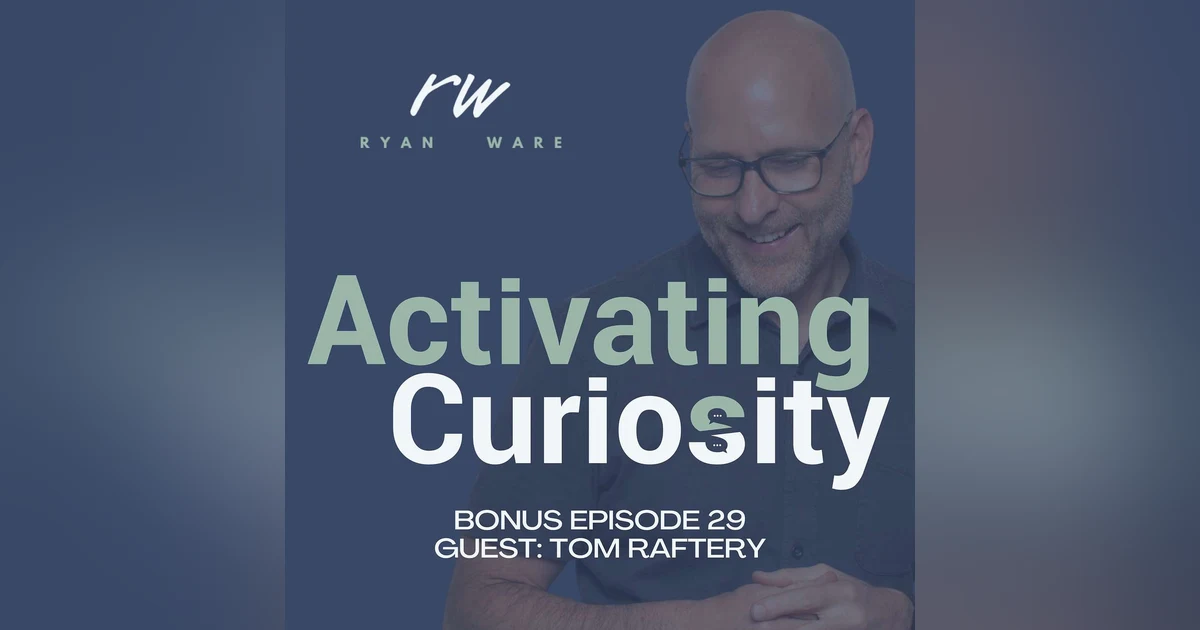

In this bonus episode of Activating Curiosity™, Ryan Ware sits down with Tom Raftery—speaker, sustainability strategist, and host of the Resilient Supply Chain and Climate Confident podcasts—to explore how global energy disruptions are reshaping construction, supply chains, and the future of resilience.
Using lessons from the 1970s energy crisis, the COVID-19 pandemic, supply chain disruptions, and today's geopolitical uncertainty, Ryan and Tom examine what happens when critical systems become overly dependent on a single source of energy.
Rather than focusing on politics, this conversation explores how leaders can think differently about risk, resilience, electrification, and long-term planning.
From renewable energy and energy storage to building design and infrastructure decisions, Tom shares insights gathered from years of conversations with global experts in climate technology, energy systems, and supply chain resilience.
This episode challenges AEC leaders to move beyond reacting to disruption and start designing for it.
What you'll learn:
• Why energy disruptions impact far more than fuel prices
• How supply chain resilience and energy security are connected
• What past crises can teach us about future uncertainty
• Why electrification and energy diversification are accelerating
• How design and planning decisions influence long-term resilience
• What construction leaders can do to prepare for a changing energy landscape
Who this is for:
Construction leaders, architects, engineers, developers, facility owners, and AEC professionals focused on resilience, infrastructure, innovation, and leading through uncertainty.
Chapters:
08:02 What 50 Years of Energy Shocks Can Teach Us
15:10 Why Renewables and Energy Storage Are Accelerating
32:43 How Businesses Are Responding to Uncertainty
45:38 What This Means for Construction Leaders
50:33 The Future of Energy, Infrastructure, and Resilience
58:10 A Real Example of Energy Independence
Guest:
Tom Raftery is an international keynote speaker, sustainability strategist, and host of the Resilient Supply Chain and Climate Confident podcasts. His work focuses on climate innovation, digital transformation, supply chain resilience, energy systems, and the technologies shaping a more sustainable future.
https://tomraftery.com/
https://tomraftery.com/climate-confident/
https://tomraftery.com/resilient-supply-chain/
https://newsletter.tomraftery.com/
Recommendations:
Want to learn more about the history and conditions, listen here:
https://podcasts.apple.com/us/podcast/the-daily/id1200361736?i=1000772344263
https://podcasts.apple.com/us/podcast/the-daily/id1200361736?i=1000772009313
Overcast Innovations
Helping project teams coordinate building systems earlier for more predictable outcomes.
New Lyfe Accounting
Free Diagnostic ($500 value) for Activating Curiosity Listeners by NLA, to help your financial goals
Helping construction leaders simplify change, strengthen trust, and move forward with clarity.
Disclaimer: This post contains affiliate links. If you make a purchase, I may receive a commission at no extra cost to you.
Have feedback or stories to share? Drop us a note or leave a VM—we’re listening!
Follow Ryan at the following:
https://www.linkedin.com/in/ryankware/
https://www.linkedin.com/company/connective-consulting-group-llc
https://connectiveconsultinggrp.com/
https://connective-coaching.com/
https://ryanware.me/
Don't miss out on future episodes! Follow & subscribe now to our newsletter and stay informed about the latest trends and insights in the construction industry.
If this show helps you, please consider supporting it. Just $3/month helps cover production and keeps the conversations going.
⭐ “Love the show? Toss some stars my way, it’s the easiest applause ever.
Tom
The technologies have advanced enormously, particularly in the last 15, 20 years. And you have as well the learning curve, meaning that the prices keep falling. You're seeing typically in solar and battery storage, particularly, the price is falling roughly 15 to 20%. Wind hasn't fallen as fast, but it's still fallen a good as 70 to 80% alternatives like wind and solar combined with storage now being cheaper than fossil fuels.
Ryan
I am Ryan Ware, and today's bonus episode, we're going to focus on a topic that is pretty much in the news every day now. And it's something that it, you know, is impacting all of us in different ways. But it isn't the first time, first time this has happened, but it's not the first time that we've had uh energy crises start to come up and impact the global markets. And what we want to talk about today is just really um what happened with the Iran conflict that we find ourselves in uh globally and Iran shutting down the strait or Hormuz. But we want to think about this from you know, sort of that past, present, future look around energy and uh supply chain resilience and climate. And I want I wanted to have a guest on that I I knew has spent his career talking about these things. And he has multiple podcasts where he is focused on building a resilient supply chain and really some of the climate action and climate innovation. And today's guest is going to be Tom Raftry. He, again, the the podcast, you will give the links to what he is working on and those guests that he's having. But bringing his voice on onto the podcast was important for me because he is not located in North America. He is from Ireland and he currently lives in Seville, Spain. So he's living this um moment in Europe, and he has contacts all over the globe. So he's able to bring these perspectives from a lot of the interviews that he's had and articles he's been focusing on recently as it relates to the the current energy situation that we find ourselves in. And a lot of the conversation will go into EVs and it will go into alternative energy and ways we should be thinking about that. In our conversation, we dove into the 1970s. We dove into what's happened in in the early 20, you know, 2020 to 2022, and what's happened now in 2026. Because I don't think that we can sit here any longer as humans who where our population has more than doubled in those 50-year span to 60 year span, and and think that the situations are exactly the same. So therefore, that it'll just bounce back and we can just continue to think like, hey, we we only need one form of energy. Um, we're seeing it now that we can't do that. We cannot have one answer for the only way that we're getting our energy or from one source or through one strait, where that choke point is studied over and over again in university. And once it's shut down, we're now seeing the ramifications from it. So, what moves will we be making as we go forward and we think about how all of our decisions are so interconnected, as well as all the things that that are happening with this moment is so interconnected and how each individual on the face of the planet will feel it slightly different, but is going to feel it. I think the main reason I wanted to have the conversation is because it gets so political sometimes when we start talking about energy. And I just wanted to pause for a moment to slow down and think about those things that we can control in this moment. And obviously there are things that we can't, but to be able to put it into a framework in our own mind of how we move forward in designing and planning buildings, but also how we're making decisions in our life that we take back agency, that we're doing it because we're realizing that in these moments, we can no longer trust what everybody was telling us, or we can no longer trust a single source of energy production.
Tom
Tom Raftery, welcome to Activating Curiosity. Ryan, thank you so much for having me on. Thank you.
Ryan
Yeah, I appreciate your willingness to do this. I've gotten to know you through other connections, kind of following you on LinkedIn and then just some of our conversations. So I thought you're a perfect person given this unfortunate situation that we find ourselves in. Um, but given what you've done in your career, the fact that you are based in Europe, um, you see things from you know more of a global perspective sometimes. So being able to bring in your expertise and the things that you're you've been focused on in your career, I think will help with this conversation. So we know that on February 28th, um, you know, the US forces and Israeli forces um went into a conflict with Iran. On March 2nd, I believe it was the thing that we we hear about in schools being studied in economics, happened. Um the Strait of Hormuz is shut down by Iran, causing mass ripple effects across the energy market, which also will get into this impact, many other things. Before we dive into what is happening sort of present day and then getting into the future, let's take a step back and do some moments in time. Um maybe tell us tell us a little bit about what happened then that can kind of help us think about today and then the future. But want to dive into the kind of the 1970s because you know, Iran was involved, the US was involved, Israel was involved in a lot of things that were happening there with the oil and the energy. Um 2020, we have the global pandemic with COVID and a kind of reverse of what was going on from the energy market, as well as uh 2022 with Russia invading Ukraine. So can you kind of talk from your perspective with those three points and maybe any others that you can add? What was kind of going on? What what did we learn from it or not learn from it? Um and and as we you know fast forward 50 years, like what really kind of came from that those those time periods?
Tom
Yeah. Thank you. Good question. So the oil crisis of the 70s uh was a big global shock, obviously, because there hadn't been anything like that before. And it suddenly made the Western world or the world that depends on fossil fuels realize that there's a vulnerability there, something that hadn't necessarily been as obvious before. And consequently, you saw things like an uptick in research into alternative methods of generating energy. I mean, solar panels had existed before then, but they were bulky, they were inefficient. Despite that, uh US President Jimmy Carter put some solar panels on the top of the White House. It was symbolic. It wasn't going to generate huge amounts of energy, but it was symbolic, and that was important. And then obviously he didn't win the next election. You had a whole Iranian hostage situation, which didn't help. Reagan stomped into office, ripped out the solar panels, and things kind of went back to the way they were. We famously, as a species, have a short memory. And so we started to double down on our uh reliance on fossil fuels. And in the background, you had still people working on solar and wind, and batteries started to come to the fore, but they were still inefficient and expensive and kind of niche. But then you had, let's say, we'll talk about 2006. And in 2006, I think it was 2006, it's that kind of ballpark. 2006, you had Al Gore releasing the Inconvenient Truth movie.
Ryan
Oh, yeah.
Tom
Yeah. And that I think changed a lot of people's perception of what's now called the climate crisis. What was then called global warming became climate change and is now often referred to as the climate crisis. I remember listening to John Holdren in, I think it was 2008, 2009, he was the um chief scientific advisor to Barack Obama. And he said that global warming and even climate change aren't really the right names for what's happening because they sound almost like things are getting a little warmer. That could be nice, you know, not necessarily as catastrophic as we've seen some of the things that have happened. He said they should be called global climatic disruption if we wanted an accurate term. But as he said himself, that doesn't really roll off the tongue. So we we've been kind of stuck since with climate change and climate crisis. And then if we move forward again a bit, we've we've seen temperatures start to rise, we've seen sea levels start to rise, we've seen uh global CO2 concentration rise horrifically. Before all this, before the industrial age, the CO2 level in the atmosphere was about 270, 280 parts per million. And it's stable across thousands of years. And then we have the industrial revolution and it started to climb up slowly. It's now at 430 parts per million, compared to, like I say, 270, 280 for thousands and thousands and thousands of years. Our society, our planet has evolved in a world of 270, 280 parts per million, and suddenly we've gone to 430. And that's what's causing all the problems that we're seeing. And then we see more energy shocks to get back to your original question. We see, as you referred to, the COVID pandemic in 2020, when demand collapsed. And then we had in 2022 the invasion of Ukraine when you had the uh gas pipelines explode, the ones feeding Germany. And suddenly the gas prices uh flew up, and that had a huge impact on Europe. And then we have the US-Israeli war on Iran. And these things in rapid succession, 2020, 2022, and now 2026, those three big shocks in succession have really, really dented uh people's uh perception, people's trust uh in fossil fuels as a secure, uh cheap, resilient uh form of getting energy. And all the while in the background, people have still been working on the alternative energies, on the wind and the solar particularly, as well as on the storage issue, because you can't you have to, on an electrical grid, you have to consume the energy as soon as it's generated. So you have to manipulate the generation to match the demand. And increasingly we're starting to figure out how to manipulate the demand to match the generation. So we're but they have to be kept in sync the whole time. But if you have variable generation, which is what you get typically from renewables, then you do need to try and deal with that variability not just by managing the demand, but also by having storage on the generation side to take in any excesses or to output to meet a fall in generation so that you can have predictable generation coming from renewables. And the technologies have advanced enormously, particularly in the last 15, 20 years. And you have as well the learning curve, meaning that the prices keep falling year on year on year. You're seeing typically in solar and uh battery storage, particularly, the price is falling roughly uh 15 to 20 percent year on year on year on year on year. And you can imagine over a period of 15 to 20 years, what that's done to the price of battery storage and what that's done also to the price of renewables. Wind hasn't fallen as fast, but it's still fallen a good uh 70 to 80 percent in the last 10 to 15 years. So you have now alternatives like wind and solar combined with storage now being cheaper than fossil fuels. In I think it's 91% of markets globally now, the combination of solar plus battery backup is cheaper than new building new gas plants. So and and it's not just that it's cheaper, it's also time to market is faster. Because if you go out now to your local planning authority and you say, I want to put up a one megawatt or a five hundred megawatt or a one gigawatt solar park, the time from submitting plans to first electrons being produced, depending on where you are, et cetera, et cetera, et cetera. But it's typically like 12 to 24 months. If you try that with a gas plant, you're talking six years. You try it with a coal plant, you won't get permission. You try it with a nuclear plant, you're talking 30 years.
Ryan
Right.
Tom
25, 30 years. So we are in a situation now where we massively need to increase the amount of electricity we're producing because we have the likes of AI coming on stream, requiring a lot of electricity. But also we're starting to electrify everything. And we have to do this to bring down our emissions. And because we're starting to electrify everything, we're starting to electrify transportation, for example, with EVs, electric cars, electric trucks, electric ships, electric planes, all these things are starting to be electrified, some faster than others, obviously. But we're also electrifying things like heating and cooling. And because we're electrifying all those, the demand for electricity is going to increase. And counterintuitively, while the demand for electricity increases, the demand for energy will decrease. Because if you look at energy today, primary energy today, let's say uh let's say we talk uh a hundred joules of energy, from that hundred joules of primary energy, about thirty of those are used for work, and about seventy of those are wasted in heat, uh, typically and inefficiencies. So if we switch from using primary energy like oil and gas to uh electricity, uh we massively reduce the inefficiencies, we massively reduce the amount of waste from heat. And so about two-thirds of the primary energy that we require today, the demand just goes away. And we end up only needing about a third of the of the energy that we are using or that we require today to do the same amount of work that we're doing today. You can think of it in terms of an EV. An electric vehicle about uh 80% of the energy that goes into the battery, 80 to 90 percent of the energy that goes into a battery in an EV is used to make the vehicle move. About twenty to thirty percent of the energy that goes into a regular car, traditional internal combustion engine vehicle car, about twenty to thirty percent of the energy that goes into the tank is used to move the vehicle. The other 70 to 80 percent is lost in heat and noise. If you look at cars using an infrared uh camera, it's immediately obvious which ones are EVs and which ones are internal combustion engine, because the internal combustion engine ones, through an infrared camera, look bright orange and red. And the EVs are just dark. Right. And you'll you'll see it as well with cats. Cats go under uh internal combustion engine cars because it's nice and warm under there. Right. They don't go under EVs, you know, unless it's really hot and they're looking to be cool. You know, so the the amount of um energy we require will will drop, but the amount of electricity we require will increase as we electrify everything.
Ryan
Yeah.
Tom
And uh so the fastest and cheapest way to meet that demand is through uh uh electricity plants that can be deployed quickly, i.e., renewables backed up with storage. And uh the cheapest way to do it, similarly, renewables backed up with storage. The other thing is the storage market is starting to become far more diverse now in terms of the different technologies that are being used for energy storage. Uh we're all familiar with the likes of lithium-ion batteries, but there's also uh thermal storage. There's a company called Rondo, for example, R-O-N D-O. Uh the CEO is John O'Donnell, if I remember correctly. I had him on my climate podcast a number of years ago. And they're doing gigawatt scale storage of thermal and of heat. And that's hugely important in industrial processes. Things like, you know, let's say uh making steel, making glass, making aluminium, uh, sterilizing bottles, sterilizing cans, bottling plants, all these kind of things that use heat all the time. And today a lot of those are generating that heat with gas boilers. But if you use the likes of uh thermal energy storage, what they do with Rondo, if I remember correctly, what they do is they have um, I think in Rondo's case, they have like bricks. It's either bricks or sand, one of the two. They run electricity through it, they heated through resistive heat. So the same way that your incandescent light bulbs a number of years ago would give off a lot of heat, it was just resistive heat, or if you had uh resistive hobs for electrical hobs for cooking, same kind of thing. So they use that to heat either the bricks or the sand, and it's and they keep it very well insulated so none escapes, and then it just stores that heat, and then you can give it out as steam or some other form to do whatever industrial process you need. So far cleaner and far more efficient and far cheaper than gas in many cases. Obviously, that depends on the local market and gas and electricity prices, but yeah, generally it is. And so that's another form of storage. And then you have ones as well like compressed air energy storage, uh, which is an interesting one. And basically what that it means is what you do is at times when you have excess energy, you use that energy to compress air and push it into the likes of underground caverns. And then when you need more energy than you're producing, you can just release that energy which is under pressure, release it and run it through turbines, and then that generates electricity, and boom, off you go. You have a battery just using compressed air. Really, really simple. Right. Works really well. And there's several companies. I I talked to one company called Hydrostore. They're based out of Canada, but they're doing big plants in Australia and they're doing big plants in California and places gigawatt scale again, energy storage using these kind of technologies, using compressed air. There's there's several others in the space. There's a another technology called vanadium flow batteries. And these are batteries that are made of fluid. So they're they're kind of liquid batteries. And they use an element called vanadium in water. And because they're mostly water, about 60% water, they don't go on fire. There's no danger of explosion. Right. And they're not as energy dense as the likes of lithium-ion batteries, but they don't degrade over time the way lithium ion batteries do. So your typical lithium ion batteries will last 10 to 20 years, kind of ballpark, and at the end of that time they'll be at 70 to 80% of original capacity. The vanadium flow batteries are guaranteed for 25 years, and at the end of that 25 years, they're still at 100% capacity. They lose nothing. It's amazing. It's a very cool technology. They are more expensive up front, but that's because they're a more immature technology today. That'll come down with economies of scale and the learning curve as well. They aren't as energy dense. So you'll never have one in your phone or in your car, but they're ideal for stationary storage for utilities because they don't go on fire, you can stack them side by side or one on top of another, which you can't do with batteries. With batteries, you've got to have a minimum distance between the containers, you know, and you can't stack them. So you can stack these, and they are at the end of their life, you can just suck out the vanadium and put it into a new battery and start over. There's no loss of any materials or anything. So, you know, that and so that they make a huge financial sense over time. So their levelized cost over 25 years is less than lithium-ine batteries typically.
Ryan
Right. Right. The cost of the whole life expectancy of the battery.
Tom
They're cheaper to maintain, cheaper to insure, et cetera, et cetera, just because they're far less risky.
Ryan
Yeah. Well, I mean, this is it's it's fascinating kind of hearing this journey over 50 years of like you've had these moments in time where we were we we saw the warning sign. Like these shocks happened in, you know, the 70s. I I didn't, I wasn't around for all of them and barely alert, I guess, you know, during the Carter administration. But I was young enough to kind of pay attention and just go back through and reading that you put geopolitics into this and you throw in, you know, you you throw in any kind of energy crisis. And here, and here we are in the 70s, like fossil fuel being around, like we're talking about a planet that had half the population that it has today. And that demand on energy and the amount of you know production that was happening then to the shortage and what what was happening in the 70s, that innovation, you keep, you know, you were you were talking about this, like innovation gets cheaper the the further from the point of kind of conception of that that idea to creation, right? So I I think it's just you know this warning signs of being stuck on fossil fuel. Yes, here in here in North America, you know, oil companies, mostly in Texas, and they're they're you know, pretty much most of their power is solar and uh wind, right? Like so it's it's one of these things where we're fight, you know, we tend to fight over the political side of the energy pieces. But then there's the reality. Well, what happens when the choke point gets closed off and a majority, uh 90% of what was coming through there is not coming through it. 20% of the energy going to a lot of you know European countries to Asian markets, like it impacts the whole world. And it doesn't just impact at the gas tank, it impacts at the grocery store, and it it isn't a moment in time of impaction. Like 1970s weren't like one day of impact. It it lasted years into where we you know we decoupled the dollar from gold in the early 70s, and we let money kind of flow free. And then the crisis happened with the oil, and we had this huge amount of stagflation that just carried on to high, high interest rates. All of those things were connected, like they were not disconnected from one another. It wasn't just an energy kind of having its moment of causing these issues. Then you find a global pandemic causes the same thing, as you said, of it wasn't just a supply issue there. It was the demand shrunk. And once the demand shrunk, old wells were removed from a fossil fuel standpoint. And when those are when they're shut down, you know, they can't just restart. And that's what we're hearing over and over again. Yeah. There's a difference to that when what you're what you're talking about is electrifying, you know, more electrification of the planet, like won't have a lot of those same issues. Yes, shifting into an electrified world isn't also a flip to switch the same way. There isn't a flip to switch, like when the demand shrinks and then increases instantly in 2021. Like there was no way for the oil market to respond to it. And the same things probably didn't happen in the 1970s, you know. But what we should be learning from that is like the answer isn't um one or the other. It's sort of how do we coexist in getting the demand of fossil fuels down, like you said. So I don't know, it's just I find it interesting that these points in times all could teach us a lesson. Um I like what you said or what what um was kind of mentioned about the naming of calling it a global climate disruption. Again, it does not roll off the tongue. And the word disruption is also something that people get kind of fearful of. Um, so I don't know what the name is. Yeah. Um, but I think it's one, it's, it's, it's also this thing that you mentioned of the time for these new solutions to get to market um and the cost of them when they first come out. And also, we got to become familiar with these things, you know, these solutions that are really kind of being put forward. Because a lot of times as humans, like the first time we try it or we see it or we do it, like we're not always like, it's not that warm, fuzzy feeling. Like we didn't, we don't fall in love with it. And this isn't something that we tend to anyway, but um, when it when we're talking about energy, but we're all skeptics of something that's new. But you mentioned this too, is like solar panels went, you know, they've come a long way from the 1970s to to what is available to market today. This, you know, people talked about EVs when they first came out. Well, it's only gonna drive this far, and there's not a well, there's not enough infrastructure. And I know in the UK, like I'm talking to somebody where I had a chance to be over there in Spain, where you're located, is like the infrastructure isn't built out yet. So again, you can't quite flip the switch, but we have that's what we have to get ourselves to understand is like, well, it took a long time to build the infrastructure for fossil fuel to be able to travel, you know, different different parts of different regions and countries, right? So, but that again is something that we can do as humans, we you know, whether it's in the construction industry, like, you know, electrical subs and these infrastructure and all the things that we need to do, is well, we're doing it for data centers, and we're going out and trying to build huge you know, huge data centers that also require huge power um requirements to them. So you've got to do both simultaneously. You can't build a data center without an infrastructure to feed it. So I just I don't know how you feel, Tom. I just feel like these points, like today, like present day, where we find ourselves with this energy shock. I don't think we're, I don't know how you feel, but I don't think we're feeling it yet. Like I think the market is sort of seeing it one way. Like the stock market is not the economy. The economy isn't going to feel it just immediately. It is going to feel it over time, which could bleed into 2027 and potentially even 2028 when you're talking about fertilizer and the cost of some of these things, or or ships getting around, you know, taking an extra 14 days to get around somewhere and things spoiling, um, to food shortages, to, you know, whatever. I mean, there's so many different things beyond just the energy piece that it's it's it's costing all of us sometime in the future. How do you how are you thinking about it versus maybe what you're hearing from some of your your counterparts that are out there, as well as what we're hearing potentially from politicians to the news or or other sources?
Tom
Yeah, I mean, it's it's interesting because it's forced a rethink, I think, for a lot of people and for a lot of organizations. Companies who were happy to just, you know, have a gas plant at the back of their factory, suddenly seeing the prices of these fossil fuels jumping. I mean, the barrel of oil was before the invasion in and around $50, $60 per barrel. It's now been over 100 essentially for the last couple of months. It dipped below 100 a couple of times, but it's back up again. And, you know, it's it's oscillating there between, let's say, uh, it's gone down as low as about 95 and gone up as high as close to 120. That's a huge increase for people who are purchasing fossil fuels. That kind of volatility is uh a nightmare for anyone who's trying to plan production, uh, plan and manufacturing, who are purchasing energy. And so when you see that kind of volatility uh impact bottom lines of organizations, you start to see people rethink their assumptions and say to themselves, hang on a sec, is there another way to do this? And so there is another way to do it, obviously, lots of other ways. But one thing that's proving has proven for the last you know 10 years to be very attractive and suddenly uh is looking even more attractive again is the likes of power purchase agreements. So these are called PPAs, power purchase agreements. Lots of companies, lots of energy companies are offering these to companies where they say, okay, uh we will build you a solar plant on your property or near your property where we can source some land if you don't have land available. We'll outsize it so it's more than you require. We'll back it up with batteries, and we'll sell you the power at X cent per kilowatt hour guaranteed price for 20 years. So suddenly your CFO is going, hang on a sec. I'm getting electricity, clean electricity right beside me, so there's no straight-of-hormones issue. Right. And it's a guaranteed price for 20, and it's it's often 20 to 30 years, you know. The power purchase agreements, they're rarely less than 20 years. So you're getting a guaranteed price for at least 20 years for your electricity. There's no volatility there whatsoever. Plus, you can report that this is bringing your emissions down because it's clean energy and it's manufactured locally and there's not going to be any interruption to the supply. And very often, these PPAs, the energy price that you're guaranteed for that 20 years is at or below market price. It's lower typically than what you'd get from your utility. So why wouldn't you? Right. So and it there's no upfront cost. There's no capital cost. It's it's an it's an opex, not a capex. So these these, particularly in this scenario now, where we're seeing this massive volatility and we're seeing fossil fuels be exposed for the untrustworthy, um insecure source of energy that they are, where you can bring energy home if you want. You can reshore your energy and have it local to you, and have it backed up with batteries, and have it a 20-year guaranteed price, and as I say, have it be clean and uninterrupted. You know, that kind of scenario is a no-brainer for companies.
Ryan
Yeah. Well, and I mean, like you're saying, I mean, we talked about the choke point. Like this thing has, you know, again, it's not just about oil. There's so many other things. You got, you know, liquid natural gas and and ever and all those components. Fertilizer is used. Fertilizer.
Tom
Sulfur is another one. About 70 to 80 percent of the world's sulfur comes from that region. Yeah. And helium is another one. Sulfur and helium are both used in the manufacture of semiconductors, as is natural gas. They most of the semiconductors are made in Taiwan, which is powered almost exclusively by natural gas. So you have a triple whammy there of the loss of natural gas and helium and sulfur. So it's all kinds of knock-on effects. The fertilizer one is a is a sneaky one because there's a shortage of fertilizer globally as a consequence of this. What that means is it's now impacting on planting seasons, and planting seasons come to the fore when you go to harvest in six to eight months' time. So that's when we'll start to feel the impacts of this from fertilizer is it's in six to eight months' time. And further down the line, if the fertilizer shortages continue, it's it's going to be pretty nasty for a lot of people. Food prices are going to jump.
Ryan
Yeah. Well, and that's it goes back to that it's not a one moment event, that this thing, I don't know, it's like a ripple effect causing a you know tsunami or you know, a tidal wave so large that we we're all just gonna be buried by it because it isn't just one thing. It just keeps rippling into all of these other areas. And that's why it's you know, the macroeconomics of this geopolitical issue are gonna hit everybody.
Tom
And from a business they're they're gonna hit everybody differently, though, Ryan, because if you look at who who's gonna win out of this, so who's gonna win? Ironically, Iran is going to win because prior to the invasion they had the you know, the Straits of Hormos were completely open. Right. Right. After this, they're going one of the one of the things they're going to insist on is that they control the flow through there. And it's going to be very hard to get them to row back on that. Right. They've established themselves now as a superpower in the region, which they weren't before. So they're they're winners right there just in a geopolitical sense. But if we think in terms of business and economics, who's a who's winning out of this? Who's winning out of this is the likes of China and to a certain extent Europe, because China has for the last 10-15 years been investing enormously in the likes of renewables and energy storage and electric vehicles and all the clean tech technologies that are required for the energy transition and the shift to electrification of everything. They've been doing that.
unknown
Yeah.
Tom
And consequently, consequently, because now we've had this massive energy shock, everyone is saying, oh crap, I better go and get an EV for my next car, or I better go get some solar panels to put on my roof. Right. And of course, China's the one who supplies those because they've invested in this and they've got the whole uh patter down perfectly. They are selling the cheapest of them. It's not just China, there's neighboring countries doing it as well, but it's it's typically China and that region. Whereas in the US, what you've seen under the current administration is a massive backpedaling. And so it's like the US is now investing heavily in VHS when China became Netflix.
Ryan
Yeah, that's a good analogy. I mean, our policies. I had a conversation recently with on these some of these pullbacks and policies, like the ever whip, you know, whiplash moments of policies changing. And how it needs to be less about the policies and more so of us as humans and driving demand through the you know the capital markets, right? Like insurance. Like, I mean, we can't get insurance to even go build. Well, the same thing's happening on an energy side where you have a choke point and the insurance prices are skyrocketing, or people are like, we're not gonna have surety this, right? We're not gonna insure the shipment. And that is that ripple effect. When you know, I focus on construction, and I look at it from this standpoint. It's getting materials to the job site. Well, the cost of producing it is increasing because of it. And uh the cost to get people to the place where they are producing it is increasing. So you have this issue where we also we had you know wage issues in our, you know, in our country and I'm sure everywhere in a lot of a lot of locations. Well, when more of your money is spent on this, you know, energy that it takes just to survive, that puts pressure points back into uh a job market, you know, where businesses can't keep affording to raise those prices, or if they have to raise wages again, which is what we saw you know post-pandemic, like inflation continues to rise. So it again, it's just this these things all stack so we feel it. And then construction, it's you're in the middle of a contract and suddenly the cost to ship the material is skyrocketing. Or God forbid we start to have challenges with diesel fuel to even ship across, you know, certain locations and access to it. Because, you know, I know I know part of what I was reading is like jet fuel, right? In order to keep planes so people will travel because the cost is increasing and skyrocketing to even do that, like they're shifting their production lines. Yeah. So I when I think about it from a contractor standpoint, like they could protect themselves, they can try to go get those funds, get a change order amendment, you know, is what they're trying to do in order to get uh increase that value to recoup the cost. But when is an owner finally going to be like, hey, we we got to halt because I can't see far enough in front of me of how this is going to impact the total cost? As you mentioned, it's it's not just the energy. There's there's aluminum, there's steel, like all of those things to make production of those items, which is all of all of the things that go into our buildings um are going to continue to see this ripple effect. And my my thing for, you know, when I'm thinking about my listeners, it's just to be, you know, you mentioned this great thing, like, hey, you know, get the power purchase agreement as an opportunity for a lot of A lot, you know, a lot of companies, but these are small contractors in some cases, in some cases large, but they're owners who how they're, you know, I step back and say how we think about designing and planning a building. If we design it the same, you know, we keep designing it on a requirement of using the same energy that we always have, then we're not really being part of, you know, the solution to to address these potential choke points that we've seen, the things you and I have been talking about, the 1970s to 2020 to 2022 to 2026. Like there's been enough warning signs like we can't keep designing and planning the way we always have, just because of our what we maybe think are politics or emotions brought into this. There is a real, there is a real issue with one country, like you said, Iran, who now has put into action, and and and I hear this over and over again, the thing that everyone is taught or or the project that they're given in college, if they're going into economics or finance, is what would happen if the Strait of Horror Moves is shut down? It's like like economic 101. Well, when you remove 20% supply of something, but the demand doesn't change, what happens? Um so we've now we're now witnessing that, as you said, Tom. You know, I I don't know where all this is going. I don't feel like it's we're we're coming out on top, unfortunately, of this either, because what what cards do we have to play?
Tom
I mean, one one thing I would say, and this is something you're you and your listeners may be unaware of, but for example, uh in China in December, 60% of the new heavy goods vehicles that were sold were electric. So it hasn't penetrated far beyond China yet. I mean, we're starting to see electric trucks appearing. I I pictured one in when I was charging my car locally here a few months ago. A big 18-wheeler pulled up and started plugged in as well. But it's it's not as common, but the technology to do it is there. And like I say, it's 60% of new heavy goods vehicles in China in December were electric. So for people who want to do haulage, diesel isn't the only choice. Right. So there's that to start with. The other thing is in terms of construction, I've had a couple of interesting episodes of the podcasts recently talking to people who were doing uh lead version five, for example, for construction, plus passive houses. And so these kind of technologies can help uh not just the construction companies themselves, but the tenants and owners of the buildings that they construct. So uh passive house you can retrofit. Obviously, lead it's harder. That's more to do with the construction itself. But these kind of technologies can significantly reduce the uh energy requirements of buildings once they are constructed. You can also impact with some of the materials you use as well, the likes of mass timber or hemp crete or any of these kind of things instead of concrete would make a huge difference as well.
Ryan
Yeah. Those are um those are good reminders, you know, the idea of um well, mass timber, I think, is a huge opportunity. We have some code things in certain areas that have to be worked through, but like I know it's one of those things, again, it's a it's a delivery model difference and getting the you know, getting through a lot of that. But there are ways that the end, you know, starting with design, architects, engineers, all of that piece of it with the contractors, starting in the planning to be looking at these things and talking with owners, because you mentioned this too, and a lot of times that we we didn't things don't get put into place in design because they cost more up front. And we we use this term value engineered. Well, that tends to mean we need to lower the cost, sharpen your sharpen your pencils. And the reality is we're living in a world now where somewhat, I mean, look at the pattern from 1970 to to what's happened, you know, now in 2020 and all these different shocks, like they're happening quicker and you know, deeper. And if we aren't thinking about designing and talking with our owners of like, yes, this, you know, again, the value engineering doesn't mean lowering the cost. It means long-term, as you were describing before, the cost of it actually is lower for a for the life of it, right? For some of these solutions. And being able to have that discussion with the CFOs, with everybody, whether it's a a material or or part of the infrastructure of the building, whatever, whatever the solution is, like it isn't just impacting the one cost of the construction. It's being able to talk with all of these individuals about the total cost of ownership, if you will, for these um these developers or or tenants or or owners of the buildings, that making these decisions, you know, from an energy standpoint where all of the solutions can protect them against some of these policy changes, whiplash, geopolit, you know, geopolitical issues. So it's, I don't know. This it's a fascinating conversation, Tom. And I know we've we've been talking about it for a long time. I think, you know, being able to understand it from a past, present kind of future look, we're in this present, you know, piece right now. I don't know if you have any kind of final thoughts on the on how you are thinking about the future. Like you said, some of these things that the groups can be thinking about. But given what you've experienced in your career and gone through these things and what you're seeing happening right now, like from a future standpoint, or any last thoughts that you think um, you know, listeners could kind of benefit from?
Tom
Yeah, I mean, I guess the point I made earlier about the learning curve and economies of scale and how the how how that's impacting the price of both renewables and all the various different storage technologies means that today renewables and storage together are cheaper than fossil fuels and they're only going to get cheaper. And the same is happening with the likes of electrified transportation. Again, electric vehicles are getting cheaper and cheaper and cheaper every year as the price of the batteries comes down. And consequently, in several markets now the EVs are cheaper than their petrol or diesel equivalent. So you can you can see here in Europe, for example, if you go for some of these vehicles that have electric and fossil fuel variants, very often now the electric one is cheaper than the fossil fuel equivalent of the same model. And that's only going to continue to that gap is going to continue to widen because the internal combustion engine vehicles are not getting any cheaper and the electric ones are. Right. So I'm quite optimistic in terms of uh how uh things are progressing. I wish it was going faster transition. Right. But economics will continue to drive in that direction, if you'll pardon the pun, because prices are going that direction. And then when you get things like this invasion and the shutdown of Homo's, it reminds everyone that fossil fuels cannot be trusted. And having your own local source of generation backed up with batteries, being able to roll that out quickly, have it be cheaper, have it be reliable, suddenly that becomes uh the default choice for people rather than relying on fossil fuels. So th those kind of things give me hope. And you you see uh in uh uh the the the data as well, the amount, the increase in sales of EVs in Europe in April it went up 45%. And similar numbers for the likes of solar panels and batteries. Everyone is going, I must get me one of those, you know. Right. And people people are switching to heat pumps and people are switching to um uh what are they called, those hobs, electric hobs, um, induction hubs. So electric induction hubs. We have one in our kitchen here. Absolutely fabulous. Not cooking with gas. You don't have you know pollution in your kitchen, your air quality is fantastic. You know, so and and they're they're far cheaper to operate, obviously, because they're electric, they're not gas, and you're not um you you're not you don't have a fire risk. You know, there was a a building about 20 kilometers from here last week exploded, two people killed. You know, it's not gonna happen when you when you don't have gas coming into your house, you know, and there's there's zero danger there. So there's so many more benefits to going renewable and electric than there are staying with fossil fuels. Fossil fuels are they're they're consigned to the to the waste bin of history, I gotta think. And, you know, it's for not just climate reasons, but it's for more importantly, more importantly, because it's gonna last. I mean, people can feel good about climate, but more importantly, when it starts to cost money, personally, yeah, you're gonna go with the the one that makes more economic sense. So that that gives me a lot, a lot of hope.
Ryan
Yeah. Well, and this is where we're seeing it's not a policy, it I mean, maybe a policy choice for the war or whatever, but that the demand, the the the capitalist side, right? Where we're we're looking at it as individuals saying, I can't, yeah, okay, I can't control this geopolitical piece or this policy, but the markets are telling me I gotta go do something different. And that's where the markets um and us, you know, as humans trying to decide, as you said, with the EV. And I I know getting to spend some time there in Spain, like the amount of BYDs around the electric car from China, which are great-looking cars. Well, we can't get them here in the States, right? But we see it again, it goes back to this comfort level of is the infrastructure. And, you know, people were worried about how far could they drive. But you the point you made about the electric, you know, the larger vehicles to be able to do, you know, long haul um shipping and things. And I, you know, yes, we're seeing more and more of that. A lot of these companies, the last mile things like that, going to electric vehicles or, you know, zero emission vehicles, there's still this, you know, whether it's reluctance or it hasn't happened yet and the cost of it to get it, but all of those things, like getting the right vehicle or figuring out whether you want to electrify that, but just designing a building in a way that allows it to, I think the importance of the conversation is like designing in ways where the usage of that building and that facility, like you're talking about, isn't so dependent upon fossil fuels not only to build it, but to have it exist beyond once we we leave that project site. And we're seeing this where we can say that we don't think we can control these things, but we actually can, and we can make decisions to look at alternatives. Now, the alternative, you know, making an alternative decision to use something because something, the supply of something is down only increases the demand on those other things. But that's where, you know, we have to be cognizant of it and the decisions that we're making, um, doing the due diligence, you know, figuring those things out. But yeah, I do think long-term, like this is a terrible thing. We're all going to feel it, but it may accelerate the way we think about energy and and disconnecting it from political fights and into, well, I'm a human, so I always feel like I need to control things, and I can't control this. Well, I'm gonna go buy an electric car. So, so it's just getting back to that human mindset of like, okay, these moments can feel overwhelming. There's a flood, our, you know, feeds are filled with all kinds of different points of views, but we're gonna feel it. Each gonna feel it differently, but we're going to feel this. And now it's up to us after 2020, 2022, 2026, and then you can look back to the 1970s of we can't trust this anymore. And if things are going to constantly change every four years, every six years, whatever it is, then we we can start to think about our own path and how we're thinking about energy um supply, energy usage, and all of those things that not only, as you said, can feel good from a climate action and climate standpoint, but hey, really be something that's more resilient and sustainable um for yourself. Um, I guess.
Tom
And and interestingly, on the point of resilience, you may have heard that in April of last year there was a blackout here on the Iberian Peninsula. Spain and Portugal lost electricity for a number of hours. And I have an EV. I was able to run all the critical devices in my house just by plugging into the EV because it's got a bi-directional battery. So just right there, you you talk about resilience. You couldn't do that with an internal combustion engine vehicle. No. And I was offering electricity to my neighbors. You know, I was asking, I was offering them, you know, you want to charge any devices? Come on over. It's no problem.
Ryan
Well, that's I mean, that's nice of you. I don't know. I mean, if I don't know if that would happen here with a lot of neighbors. There's plenty of diesel generators and fire up here in Cleveland when uh with more and more strong storms and losing electricity for days. Um, love that smell. Not really. But again, I think it's just this is such a big conversation when we start getting into the politics of it, that it's just like, okay, well, pause for a moment and like think about the situation and think about like like, okay, today may be different than the past, but like, what do I know and how can I move forward and take the emotions out of out of some of the things so that we can pause and and you know really address what's what's happening, you know, as best we can and what we know is probably coming our way given given uh the current circumstances. So big topic, Tom. I know we could I could probably go on forever about this and a church of you. I wanted to have you on because again, you're not you're not focused on construction. You're just you're focused on the climate act, you know, your climate action um podcast and resilient supply chain. Well, that impacts us, right? These things are all part of us as infrastructure and construction and designers. I just think your guests, they can hear and learn so much um from you. I know I do, and I've enjoyed the conversation because I think I don't I don't even know how to scratch a surface of knowledge that I need to have to talk on this subject. Um, but you have far more, and and I appreciate you being willing to come on to Activating Curiosity, kind of share what you've heard, what you've learned, and and some of the things that that might be helpful. So I appreciate it.
Tom
Sure, sure. Yeah, great. Thank you. Thanks for the opportunity. And if any of your listeners have managed to stick around this long, thank you for your attention, I guess. Um, and if people want to learn more, you can find me on resilient supply chainpodcast.com or on climateconfidentpodcast.com, which are my two podcasts. And I also have a weekly newsletter that goes out every Thursday. It's free. And you'll find that at newsletter.tomraftry.com.
Ryan
Yeah, perfect. All right. We will definitely share that in the show notes as well, Tom. Appreciate it. All right. Thanks for being on. Thanks, Ryan. Thank you so much. Thanks. All right. That is our conversation with Tom Raftery. I know we went a little long. I know we covered a lot in this conversation, but that's why I wanted to have Tom on. He has a huge amount of experience and conversations with people who are really and have been focused on alternative energy and solutions that can start to address this thing that we're seeing right now of a choke point that is deplenishing and removing a lot of our energy uh supply from the markets, causing massive disruption, causing massive um potential price increases on pretty much everything that we're going to face. So it again, I know some of these conversations are feel a little different than just the typical construction conversation, but we're going to feel it as contractors, you're going to feel it as architects, you're going to feel it as humans. And that is the real reason for the conversation is to start to just think about some of these things from a human perspective of what it is that we believe, you know, we're capable of maintaining that agency and making some of these decisions that are best for us and ultimately end up being best for all of the others that we're living, living amongst uh on the planet. So uh until next time, I hope you continue to to think about these things as that you want to dive into, you want to explore, you want to understand better. And I hope you're able to continue to activate your curiosity as well as curiosity within others. The Activating Curiosity Podcast is brought to you by Connected Consulting Group and Connective Coping or Curiosity Building Experience. If you enjoyed today's episode, don't forget to subscribe to the network with the conversation. Share the podcast with the network curiosity activity. Interested in becoming a test for the conservative.com for more details. Until next time, keep leading with curiosity.
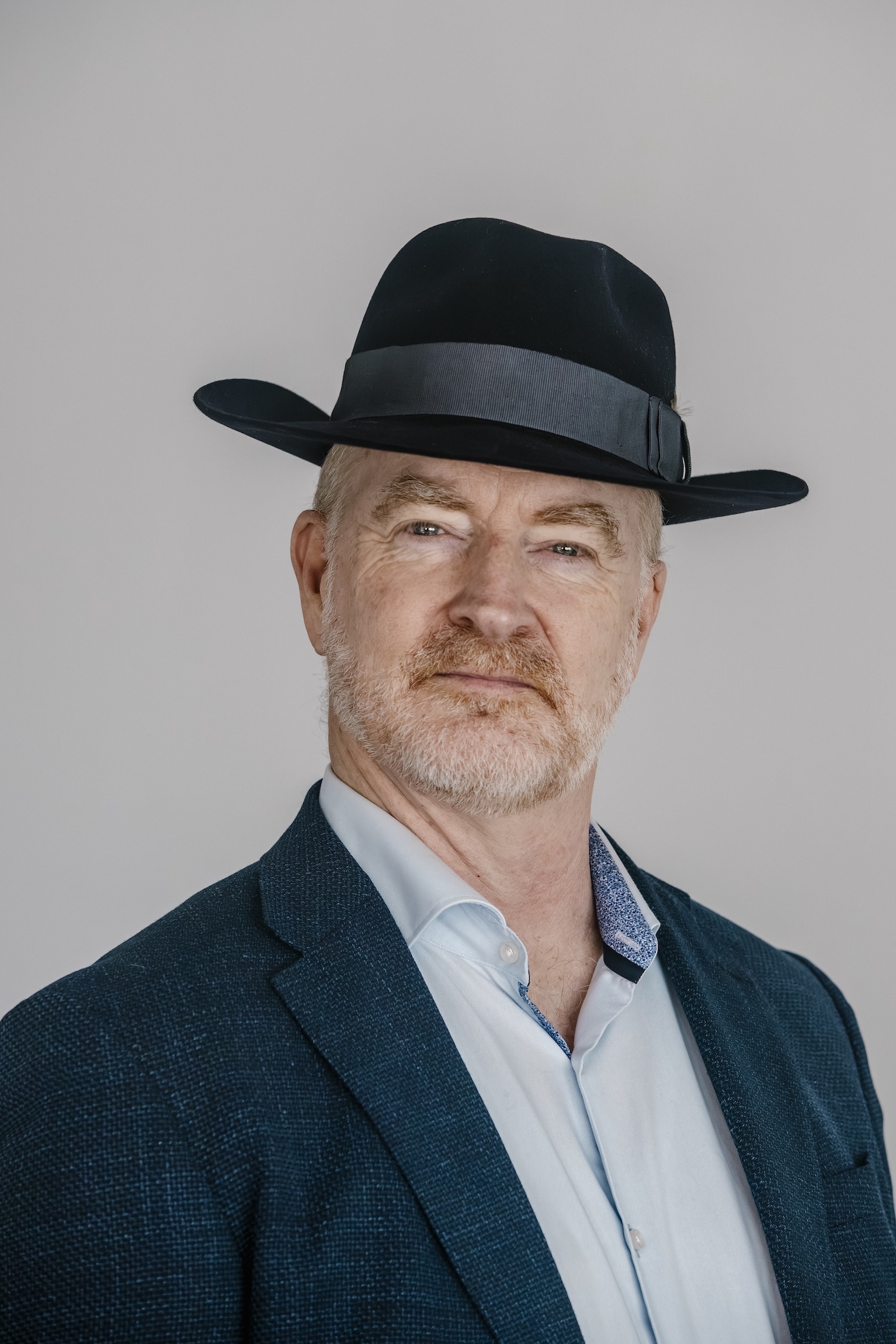
Tom Raftery is an international keynote speaker, sustainability strategist, and host of the Resilient Supply Chain and Climate Confident podcasts. His work focuses on climate innovation, digital transformation, supply chain resilience, energy systems, and the technologies shaping a more sustainable future.