

 Apple Podcasts
 Spotify
 Amazon Music
 Youtube Music
 Goodpods
 iHeartRadio
 Deezer
 Castro
 Castbox
 PocketCasts
 Audible
 RSS Feed
 Scaling Offsite Construction: Tackling Visibility in Prefab Manufacturing

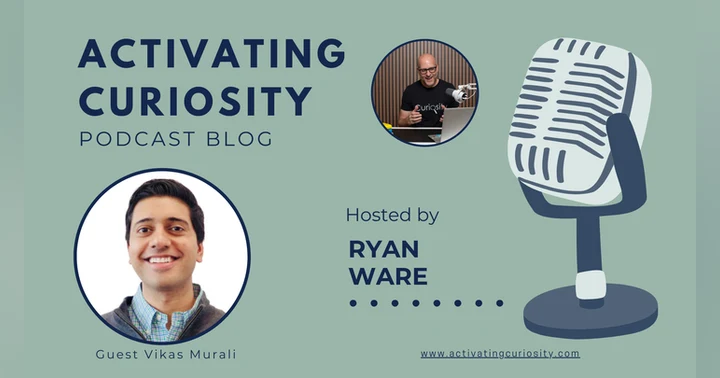
In this episode of Activating Curiosity™, Ryan Ware sits down with Vikas Murali, Co-Founder and CEO of Offsight, to explore why limited visibility inside prefab factories remains one of the biggest barriers to scaling offsite construction.
As contractors and manufacturers expand into prefabrication, modular construction, and industrialized manufacturing, many still rely on manual processes and disconnected systems that create uncertainty around progress, quality, and delivery. This lack of real-time production visibility makes it difficult for project teams, contractors, and owners to fully trust and adopt prefab solutions.
Vikas shares how his background in manufacturing technology led to the creation of Offsight, a digital platform transforming prefab factories from construction-style workflows to manufacturing-driven operations. They discuss how real-time production tracking, digital workflows, and enhanced data reporting improve factory efficiency and project outcomes.
The conversation dives into the critical role leadership and change management play in adopting new technologies and scaling prefab manufacturing within the construction industry.
What You'll Learn:
- Why lack of visibility slows prefab and offsite construction adoption
- How digital workflows improve factory efficiency and project outcomes
- Ways to build trust between factories, contractors, and owners
- How data and reporting reduce risk in prefab projects
- Why change management is key for scaling industrialized construction
If you're focused on offsite construction, prefab manufacturing, modular building, construction technology, or innovation in AEC, this episode offers actionable insights to accelerate adoption, improve trust, and drive better project results.
Chapters
6:20 - The Role of Technology in Prefab
15:52 - Overcoming Manual Process Barriers
24:45 - Building Trust Through Data Visibility
35:48 - Change Management in Manufacturing
46:55 - Future of Prefab and Industry Insights
Guest
Vikas Murali is Co-Founder and CEO of Offsight, a software platform for prefab, modular, and offsite construction. With a background in enterprise technology and manufacturing systems, he helps factories replace manual processes with data-driven operations to improve visibility, efficiency, and scalability.
Overcast Innovations
Helping project teams coordinate building systems earlier for more predictable outcomes.
New Lyfe Accounting
Free Diagnostic ($500 value) for Activating Curiosity Listeners by NLA, to help your financial goals
Helping construction leaders simplify change, strengthen trust, and move forward with clarity.
Disclaimer: This post contains affiliate links. If you make a purchase, I may receive a commission at no extra cost to you.
Have feedback or stories to share? Drop us a note or leave a VM—we’re listening!
Follow Ryan at the following:
https://www.linkedin.com/in/ryankware/
https://www.linkedin.com/company/connective-consulting-group-llc
https://connectiveconsultinggrp.com/
https://connective-coaching.com/
https://ryanware.me/
Don't miss out on future episodes! Follow & subscribe now to our newsletter and stay informed about the latest trends and insights in the construction industry.
If this show helps you, please consider supporting it. Just $3/month helps cover production and keeps the conversations going.
⭐ “Love the show? Toss some stars my way, it’s the easiest applause ever.
Vikas
People who have a vertically integrated model, which was you wouldn't, I mean, when you start building for a regular manufacturer, like the manufacturer just ships the product to its customer and that's it. Like, you know, end of story. Like that's somebody else is responsible for the installation and whatever it may be. But today, in in the um construction world, like you're going to see these companies that can own everything from the prefab through the design, you design the prefab, and then even the installation aspect of things, right? So they're all underneath one hood. And I think when that's the case, collaboration across all those key facets of your business from start to finish is huge.
Ryan
I am Ryan Ware, and today we're going to have a discussion around some technology, but it really is about how we can see greater adoption of prefabrication and off-site construction while utilizing technology and software to provide us more insight into how the factories are producing, to how contractors and other stakeholders within the prefab and off-site project process can actually gather data, but also have it more readily available due to the change and the way we sequence construction as it relates to off-site and prefab. So today I have with me the co-founder and CEO of Offsite, Vikos Murali. How are you doing?
Vikas
Hi, Ryan. Nice to see you and nice to connect.
Ryan
Yeah, it's great to get a chance to kind of talk. And I know I've got to got to know you guys over the past uh few years when you first got started. Andrew, your co-founder, him and I had a chance to kind of meet with other people and get to know him a little more and what you're doing. So before we dive into that, though, I want you to just tell a little bit about yourself, how you got into this, because your your background is not coming from this industry. So I think it's important for people to kind of uh to hear that, but also to hear what kind of got you into this? How did you come about getting interested in the construction industry?
Vikas
It's a good question. Andrew and myself, both of us come from a technology background. Uh, we're engineers by our own background, our own learning trade. Before we actually started off site, we actually had a technology consultancy that we were both part of. So it was a business that basically built technology and delivered technology for different sorts of industrial companies and manufacturers in particular. You know, our largest customer in that prior business was Schneider Electric. Um, and you know, as you know, Schneider definitely manufactures a variety of different electrical equipment. And a lot of their processes are custom. So, you know, we had a lot of exposure to some of their factories, and we saw their manufacturing processes that were custom, were bespoke, were you call them engineered to order, very much in line with what's happening now in design for manufacturing assembly and prefab and so forth. And, you know, the pain we saw there is when you have these processes that are unique and customized by product, by design, by project, uh, different types of products for different projects require different subassemblies. They go through different stages in the manufacturing workflow. There's lots of different complexity and customization that you need to manage. So making a factory run oper run efficiently with all that level of customization and that complexity is tough. So what people end up doing to manage this type of complex customized process is pretty much falling back on manual processes. So this can include anything from leveraging spreadsheets to track production progress, having bespoke quality travelers that are printed out custom to each product or each product's design and each product's subassemblies and components and so forth. This can include customized shop drawings that are just printed out and attached to products that are unique to each product and their design. And being able to manage all that and track and effectively leverage all that from the shop floor through the assembly is very difficult. We saw that there's a strong need for a digital solution that can essentially be set up to manage all these custom workflows. They can be built out uniquely, defined uniquely within the product, specified down to that product level, that design level, and then reutilized as needed from project to project. There can always be changes in any project. There can always be changes in any workflow. But the workflows exist, they can always be updated, they can create new workflows, you have any number of workflows. And being able to manage those effectively, centralize those effectively within one solution is how the whole genesis of offsite started. That's that experience we got from our consulting background. And we realized that you had a unique opportunity to build this product, you know, let them define these workflows, then launch these workflows for Shophorse. You can track production, you can track quality, you can track all those other custom elements like bill of materials that are unique per design or product. You can track labor, all the other things you would need to do to run a factory efficiently can be tracked with an off-site and utilized within with an off-site. And that's essentially how the genesis of offsite came about and how our foray into prefab started.
Ryan
Mm-hmm. Yeah. So you're, you know, the backgrounds between you and Andrew is that technology, but that consulting side of going in and working with another group and looking for those pain points, the, the, the repeatable pain points that you were seeing with the clients in the manufacturing side, which in that case, some of them may have may have been from the construction industry or a component or two within the industry, that you are then saying, like, hey, they don't, they don't have the data that they need to feel efficient. And that's, you know, the data can be different, whether it's the engineers, the factory floor, like whomever, as well as, and I think this is probably dive into this, but like what project teams outside of that space, outside of that building, can then see as it relates to to a construction project or off-site. So I think it's it's always interesting when someone doesn't have the background from the construction industry, identifies something that's relatable from a human standpoint of you know, too much data, not enough data, things like that. But when you were, you know, you mentioned Snyder, and I know now that you've grown, you've been doing this for six years. As you, as you've gone through it, and you know, you mentioned one problem that you're really looking at, and that's kind of the data and the control, where it was going back to manual process. I think that's one of the first times I, you know, reached out to Andrew, like, hey, I walked through your factory, I saw a folder that was handwritten with a pencil. I was like, yeah, I don't know how to work with this. So talk a little bit about like as you've gone through the process and you've started to kind of lay out that that initial MVP as a technology piece, the problems that you were aiming to solve at the beginning, and maybe how those have begun to evolve into other things that you you believed you could solve through through a technology.
Vikas
Um, so I'd say when we started out, um, the input to making the software and the software itself came from, you could argue like a pretty established manufacturer, right? In that sense. They'd been doing this for a while. Um, it was an established factory that had been around for many years, acquired by, of course, this bigger company. So yeah, they they their live their ability to utilize technology was probably still still early, right? They weren't fully utilizing it in that capacity, but their experience in terms of manufacturing and running a manufacturing process was mature. So we essentially came out of that background and being fed information, being fed feedback from those types of folks to build this initial MVP, this initial solution. Now, when we move into prefab, what you see is an industry that's very much in its early growth potential stage. So there's a lot of potential, right? And a lot of people who are moving from traditional construction over into this new sort of manufacturing-driven process. So we have a solution that may, in some cases, technically something that a lot of people can grow into. They may not use all the functionality, they may not necessarily even need to use all the functionality on day one, but it's something that they can grow into. So I think what we learned once we started with prefab, and when we kind of moved over to this industry and the commercial side of things, is that we need to have a solution that is very flexible in that it can hit all these different operational pains. But given whatever stage of maturity you're at, like you may not need to solve all these operational pains on day one. You can start off with the highest priority pains first, and it can be much more simplified. And then you can work your way into like utilizing all the other functionality and all the other value add props and so forth. So essentially, depending on who we work with, there's always going to be some elements of the software that really matter more than other elements. But at the end of the day, it can really be customized to all those different types of facets. What you're building, what stage of maturity you're at, you know, how how far you are on that evolution from pure construction, uh construction underneath a hood and a warehouse to full-on manufacturing, right? That's that's the value.
Ryan
Yeah. And I think, you know, as you as you're discussing it, it's like, okay, yeah, you your first clients were those mature manufacturers, but you're now stepping into this area of prefab. And this is where I think it it gets interesting. Someone who is used to doing traditional build now transitioning into we're going to start to do off site and bringing traditional kind of flows and mindsets into a warehouse or a factory and how they think about it. Because the construction industry has been adding technology within our process for a long time, um, be it be it through design and planning, things like that. But now you're introducing new twists to a process and the way a contractor is going to think about um about that build. And that's where I'm I'm interested in kind of knowing this. You you brought two things up. It's like mature factory versus an immat, not you know, an immature, not meaning it's off running in a crazy way, which it may be. It just means it's young, right? They're not used to running and operating from a factory standpoint. A project site may feel like a factory, but it's not. So you're mentioning sort of this change management sort of approach to how do you get technology into a process that's still young and developing for some of these groups that you're working with and giving them something that they can grow into. So I'm interested in, you know, as you first got started in into this area of how you were working with the humans who were going to be on that factory floor, who weren't used to technology, now being introduced into technology that would benefit them as well as benefiting a lot of people that were going to be part of this project. And at the same time, knowing that you're still young as a as a as a business and technology to have that agility. So I'm I'm curious to those resisting um, you know, types of things, like the obstacles and the barriers that you were really seeing and kind of feeling as you were first getting started shifting from mature manufacturing into some of these, you know, newer.
Vikas
That's a good question. And I think actually in that regard, I would say that that the change management process, like you pointed out, especially when it comes to shop floor, is key, right? So at the end of the day, you don't want to implement any technology or most technologies that would basically make your job more difficult. So, like in essence, let's just say you're required to capture a lot of data. And by capturing all that data, you're essentially taking longer to build. You're distracting away from the core active just assembly, just actually, you know, actually doing your day, daily operations and daily work. So with Offsite, our ethos was very much around how do we bring in this technology and implement functionality to make your life easier. So it's not just data capture, like of course, capturing data, improving KPIs, tracking where the deficiencies are. That's great. But I think on on top of it, it's also actually making you do what you're supposed to do each day quicker and more efficient. So it's operational efficiency too. And by that I mean um throughout offsite, there's a lot of different workflow automations. So let's just say you need to complete a quality report that's required, it's mandatory, conformance report. Today you may be filling out a paper over and over again, like going through each thing, like requiring to fill out checklists. Now, if I were to basically digitize that completely, either through a checklist format that's you know unique to that specific product or design, or even do one of the functionalities which an off-site is an overlay, right? Have that digital document and overlay all those crucial fields that you're used to. The training is very little because you're going from paper to digital. It looks exactly the same as what you'd have on paper. Now all those fields are digitally linked with an off-site. They trace back to that product, they capture all that data, and you fill everything digitally within seconds. So, and we can not only do that, we can say that if you fail this one task or if you succeed this one, this one item on the checklist or on the paper form, immediately succeed five others. They're related. So you're saving yourself even more time. So we're making your operational activity actually more efficient. Uh and the same goes for like some of the other functionality around material tracking, around kidding, collecting the parts, like all that can be done in a more efficient manner. So, in essence, it's not just the fact that we're tracking information and that's helping you overall continuously improve. It's actually that we're making your life easier from an operation standpoint. So, in essence, once I get the summarized, I would say the change management is one of bringing in a technology, making sure that it aligns well with even your process today, even if that is manual, trying to simplify that to the training curve, the learning curve is not that high for operators, but also making sure that at the end of the day, your ability to collect collect data and is not actually impeding their ability to do work. So all those things essentially fall underneath our umbrella and kind of how we execute our change management process. We build our workflows, we think about that from day one.
Ryan
Are you seeing some of the newer or younger companies as you're starting to talk to them, you know, and they're they're still thinking about their process. First, those that maybe have a process and they've gotten kind of got started. So it depends on where they are, right, and their life cycle. But you mentioned this before, like yes, you're trying to make their life easier, you're trying to give them all these things, and it isn't just about data. Like, that's not what technology is. It's trying to take away some of that repeatable, some of those repeatable things that are utilizing time that aren't best spent by by the human that that's within the factory or someone that's out in the build. But I'm just curious, like, have you, as you've gone through it, have you have you learned as a technology company, you know, now some of those things as people are building their process and not only to to how you're kind of implementing it with them, but like starting to open up and say, like, hey, here's another opportunity or problem that seems to be repeating within a lot of a lot of these factories and manufacturers that that you're able to address.
Vikas
Yeah. So I'd say when we kind of look at off-site's technology from a high level, the technology can do two things. Like one is definitely taking what is manual today or is partially manual or is done through desperate systems and at these different prefab sites or custom manufacturing sites and and put and systematize them in the system, create these workflows, centralize them. That just helps that data, like you said, the data capture and data centralization and KPI tracking get better. So you're going from manual wasting time to fully or to digital or various degrees of like disparate digital systems to fully digital centralized saving times. That's one, that's one thing. The second thing is actually helping them actually implement a process, like you said, process of changing. But using technology to implement a process that in essence makes your production workflow better or your operational workflow better. Examples of this could be like kidding, or it could be tracking cycle times within work areas. So, like if you're not tracking how long a cycle takes to complete an activity, like framing for this module or so forth, right? Now you can very easily, very efficiently. And an example would also be tracking active time doing a task. So you can clock in saying I'm starting this task, it's finished. So now you know, like theoretically, here's how long I should take to complete this activity. This is the benchmark. If I'm hitting this, you know, I'm building an efficient production line that's actually going to drive with speed efficiencies and so forth of prefab, right? So if I'm falling behind, how do I know I'm falling behind? Before I couldn't know, like it was just a hodgepodge. Now I have a system in place. So in essence, the technology is not just like taking that manual, making it saving me time, making it efficient. It's also maybe letting you build physical processes and manage them in a way that actually makes it overall helping you drive the ROI pre five. So I think that's kind of one of the learnings we've had in value ads that we kind of point to. And that that can just study different things. It can be like production-related processes that can be added in, material tracking and control-related processes, labor tracking elements, right? Labor utilization. Are people actually being utilized correctly in different work areas? Where's their downtime? Right. Where could I have used them better? All that can be essentially effectively and easily managed with an off-site. So in essence, it also helps you build more mature, let's call mature, but like more serious production processes and so forth that actually help you drive production efficiency and speed and quality efficiency and cost savings.
Ryan
Well, and I think that's an it's an interesting point because when we think about the adoption of prefabrication, right, by by the industry, developers, architects to design it, to contractors to be um, you know, subcontractors or even GCs being willing to utilize different levels of prefabrication. And I know you guys are working with a lot of different kit of parts in and modular groups and uh, you know, name it everything in between. Each of those factories is going to be different. But the one commonality I think that I've heard in my career, and you tell me, I think this is one of the reasons that you you got into this was to advance the adoption rate of prefabrication, which meant that these factories would need to be able to see all of the things you're discussing, right? In order to improve their overall process. That was, you know, it's hidden inside of a factory and where project teams just aren't sure, like the project teams outside, the architects, the other stakeholders, to be able to gain some of that visibility without just going into making trips to the factory all the time, right? So can you talk a little bit about like how some of this is not just helping the factories, but also this, these obstacles and barriers on the outside of those factories?
Vikas
For sure. Yeah. I think when you talk about prefab adoption, the way I we think about it is there's two elements to that. So one is definitely the factory itself. So like the actual business being efficient, driving the ROI prefab, proving that it's better than traditional construction. So speed, quality, efficiency, cost savings, like repeatably, right? Being able to do that efficiently and repeatably. So software and technology can handle that and can definitely be, it's like that's a direct application. I think the second application is to what you call the broader ecosystem or value chain, which is kind of everybody associated with that factory who also is taking risk. Uh, in many cases, it's financial risk, right? So it's basically fronting a large project with a significant amount of capital up front in a different way than you're used to in a traditional construction ecosystem, maybe like purchasing or intending to purchase like hundreds of ad pods for a very complex project over various floors and put it spending a lot more money up front than you would be used to in a traditional job site where there are different milestones that need to be hit before money is released. So the change in like the risk profile and like the way that basically money is flowing can turn into a situation where people who are working with those prefab sites are really worried where, hey, like am I certain that all this money I sent to the site is going to actually amount to the to these products being delivered on time, this work being done correctly. Um, how do I know that's gonna happen? Besides just me sending somebody over and over again and and trying desperately to pester them and figure out what's going on.
Ryan
Right.
Vikas
And I think that's really where technology can be like a an opener to like mitigating that risk and a facilitator to helping that partnership evolve. And those two, like the owner and those factories gain can confidence. And you can build out these milestones technically within a technology like offsite, so that when these metrics are hit, like half pods have completed production or half unfinished flooring, and you know, now the first floor of the building is ready, the second is ready, whatever it may be. These are like key milestones and indicators. You have visual proof, you have documentation, you have all the sign-offs and everything within this within the product, you're really pulling out layers of risk for going off site. So I think really like that is what I would say would be the element where technology visibility can really help in driving adoption.
Ryan
Yeah. Well, and I think the fact that you named your company off site with the with it spelled, you know, S S I G T G H T, right? Like that, the fact that you're trying to give people the the line of Into the factories, not only within the factories, but outside. And I think that's such a critical component. And, you know, one of the reasons I wanted to be able to talk to you was it is. You know, I've been in prefab most of my career and kind of around it and have utilized it. And I know that a lot of those questions are like, how will I know that it's getting done? And I think a lot of what you're aiming to solve is the fact that someone has to pick up a phone and you got to call the factory, you're calling the project manager, who then probably has to go somewhere else to kind of check on it, versus project teams having they're getting enough visibility of what is happening so that you know everybody who's sitting in the meetings and trying to coordinate everything that's happening weekly with the owners and the architects and the contractors, right? Like, this is how far along it is. Do we need to, is anything need to shift? Because they're thinking about flow, and that flow is going to change from a traditional build. So I think that's one of the important things is that you're going from that off site where it's you you feel like you have no visibility and it's a new thing that you've not utilized as a contractor or or a project team, like the premium's going to be added on top of every bid and every number and every consultant fee for the new area. And like you're saying for quicker adoption, it's if we can get these factories to to you know be able to operate efficiently, you know, some of the modular groups that we're working, working on things, companies like K Hill and others that you've been working with, right? So it's just that's it's one of those things where the unknown, we tend to that's the fear piece. That's that obstacle, and that's that's that barrier that that I think has made it such a slow adoption. So, you know, as you're thinking about it now, you're you started this, so you're six years in, and you've seen some of those barriers, you continue, continue to kind of drive and and and and help, and you're building partnerships, I think, with other other groups out there. I think I saw you're partnering with like ICG, Nick and Melissa and that team. And there's a lot of people who are putting putting a lot of effort and energy into trying to help advance the prefab and the offsite piece. And I one of the questions I always like to get from your point of view and and and guest point of view is what do you think that from your vantage point makes this so important that this is why I got into it. This is why it's important in order for us to solve as an industry.
Vikas
I think from a high level, what I would say is like if you look at traditional manufacturing, right? That's you know, this feed manufacturing and so on, that's been around for like a while, a long time, you know, technology adoption is still all over the place. It's not, I would by no means say it was as ubiquitous or mature compared to like, you know, other industries, like even other like tech forward industries, maybe you say, if you will, like marketing or something of that sort. Like the reality is it's an afterthought in still many cases. People still go to like paper travelers, people still do spreadsheets, right? Even even with all the tools and availability. The beauty about prefab is like though it's in its infancy and it's starting out, that's also a great thing because it means like the industry is willing to understand that this is type if this is going to succeed. Maybe this type of technology has to be along for the ride, right? It's not gonna just be let's repeat the following of like other manufacturing sectors and industries and just do the same thing over and over again. It's like let's let's see if we can drive these efficiencies the right way with technology this time and maybe use technology as an enabler to get growth and to get success, right? And I think that's that's also why I like prefab and I can see the potential for prefab a lot because you know, yeah, it's still as interesting. People are still starting to figure things out, they're launching new factories, but they're open to tech adoption in a way that like traditional, you know, old school industry, old school segments within the manufacturing world may may not be, right? May still not. So I think uh, you know, that's what prepab has going for it. So I would say, you know, that's what really gets me excited. And I think that that feedback loop of also building a product that's like catering to this new burgeoning industry, building with their feedback coming in, taking seeing new things that they that they that they're coming up with, the new processes that they're that they're inventing physically, and then incorporating that into the digital solution to help manage that process, I think is also very powerful. So, like if you can set the framework or this is the solution that can help enable this process, help guide this process, as more and more people come in this direction, they're gonna realize that hey, this this tool is actually able to guide us in these early stages and help us get off that ground and help us drive those that ROI and value. And then I think you can see this having some strong impact. So that's that's really what gets me excited.
Ryan
Yeah, and I think, I mean, it's powerful because I think you when I think about all of the manufacturers that kind of got started, and I could think about the timber, you know, the mass timber industry and and modular, and I could think of a lot of other fabricators, like even contractors, the life expectancy is short for a lot of the startups. And you've you're starting in a time where there's a lot more people getting into it, getting into fabrication and and contractors self-performing, now coming in and kind of trying to create their own factories. And you're getting a chance to to partner with people and work with other groups and see through some of those those challenges that and reasons other, you know, I assume other manufacturers um struggled or a slow takeoff to all the way to failure of the company to put some of that into light to help accelerate not just the adoption, but accelerate the manufacturer to a more scalable and successful framework as a business. So it's so critical because it's you think that resistance, again, a lot of the resistance to the industry, and and you can you can talk about some of the design pieces, people don't, you know, modular why they don't. But a lot of the reasons, especially from the construction side, is we just don't know if you're going to be around. We don't know by the time we start this project, will will you even be around as a fabricator? And the insights that you're talking about from, and I think these are some things that you've added, it's like not just planning the manufacturing, but being able to see the pipeline and when things are going to go through the factory in order to know, like, do you have the bandwidth and a much easier standpoint, but also that cash flow you mentioned that changes from the traditional build and how the cash flow is going to need to get to the factory in order to do that, which you're not solving this area, but you know, that's the that's the financial market to the insurance companies and and all of those things and policymakers. But I do think it's it's such a critical part that has been missing from my, you know, from my point of view, having worked with a number of manufacturers, and even like where I was a contractor dealing with fabricators of like, I don't know when the stuff's coming. You know, I don't know when it's when it's getting on the project site. And and and I don't know if they will be around. So I think I think it is an opportunity there that you're talking about of like we can't just fix the factory. We have to provide enough information to help them accelerate growth, but start to accelerate the adoption. Because just because they're getting a process doesn't mean the rest of the industry is quite ready yet to take on some of these things due to, you know, the high probability or what has seemed like a high probability of failure rates of factories. So I guess that's that kind of leads into this next question that I have then is like, um, you know, what do you believe the cost of not solving this is for factories? I mean, is it what we're just I was just discussing a potential failure, or what have you seen through a lot of your work, like that hidden cost and the cost that they're probably already getting hit with by not starting to address it through a technology and a process adoption?
Vikas
I mean, I think honestly, like as you kind of hit upon the you hit the hit, you know, you hit the nail on the head. Like the reality is the factories are going to succeed and the ones that are probably going to make it out or, you know, and and have the best potential, be the leaders, I guess, to some extent in the industry, are the ones that can basically build the strongest, most credible, most trustworthy relationship with their owners, right? So it's just convincing owners and others that, like, hey, we have we can deliver on these projects, we consistently are able to deliver, we consistently are able to achieve our schedules, we're able to deliver quality product that is, in fact, has far fewer fewer quality errors than what you see on the traditional job site. You are actually over, maybe not in the first project, but enough over enough projects going to see value savings way better than what you would see in traditional construction, right? So the whole pitch to like this, I should be a trusted vendor, I should be a trusted factory that you keep turning back to, and I'm and I'm a trusted prefabricator. I mean, if your goal is to just duct tape stuff together and continue to operate manually or even from square zero, say, you know what, yeah, maybe technology and like regimental processes and being able to actually track key KPIs or manage key important processes that that that would drive those cost savings, you know, production improvements, quality savings, like yeah, we'll just kind of ad hoc them, then you know, you're kind of setting yourself up for failure in some regard. Because the truth of the matter is like if you can't if you can uh adopt a system in place and continue to um you know leverage that system, it's gonna be very tough to like traditionally prove to somebody that you can deliver on those results long term. Right. So I would I would probably say that like the value here of technology is almost that you're accepting the fact that yes, this is a companion tool, yes, it can be used to help build that system, yes, it can be used to drive those advantages of savings, those those quality improvements, and being almost almost also documenting the quality, the quality improvements, like saying I'm actually completing things correctly before I ship. And then that builds trust. That is building trust because you're being successful and you're building trust with your with owners and others. And that's what's going to drive pipeline. So at some point, I think like really that's that's what it boils down to. It's essentially like having the tools and showing that you're actually serious about the long-term viability of your business and the long-term viability of your relationship with your owners and others. Right. I think that's that's what I would say.
Ryan
Yeah, I think it it's just one of those most common things. And you can see it, you can read it about another modular group has closed the doors, or another factory has closed the doors. And you're gonna make that initial investment into, you know, we're all starting a business because we believe we can solve a lot of problems and grow it and scale it. And I think what you just kind of said was, hey, the technology is actually working alongside you with the process. It's not, it isn't a magic bullet. And we kind of say that all the time, is like technology can't solve it all. There has to be this human piece to it. Um, and that is from our standpoint as humans, like remaining and keeping our own agency to understand what it is we're aiming to achieve each day and utilizing the technology to help accelerate us to that point. And I know with a lot of your technology and a lot of the the things that it focuses on, all the way from that pre-planning and estimating, and it you can talk about this too, but like now with AI, like how is that going to help? But it but it is one where it's again, we I'm seeing it more and more, and I'm seeing a lot of contractors trying to take that self-perform and go into creating factories. And they they've not become they've not been in the manufacturing realm. So something like what you're doing, it's it's it's different than any other you know, project management software that is normal process, and not to name all the technology companies, but like we all kind of know where Autodesk is and all of them. Like this is different. Your technology is is again, it it's that it's the way to try to help accelerate all of these manufacturers who have not been in that arena or maybe never added tech. So I kind of want to come back to that then. What from your your standpoint, when you're looking at a manufacturer that that is out there kind of doing this, before before they go through that implementation, right, and put it in, technology, we see it all the time. There's change fatigue, there's technology fatigue, and sometimes you can stick the technology in, and it's just not, people just do not buy into it and they don't utilize it, and then they blame the tech. So when you're thinking about this being so important and and the cost of not putting it in, like what have you seen, or what do you do to really help that to make sure, like, again, that change management, it's the culture set to the mindset where it, hey, they know traditional and they know how to build. Like, how do you help kind of ensure that you know a change fatigue doesn't come to bite you later down the line?
Vikas
Yeah, it I think um, you know, when I think about off-site, I think from high level, you kind of did mention it too. It's it's like an enabling tool, right? It does, it's like it's not, it's enabling people to go from traditional construction towards a more manufacturing-driven type of process. You know, we've been discussing that over and over again. And I think the truth is the reason it is is because it is very flexible in terms of how you can build out these workflows, what these workflows will entail, what stages of production process there are, what checklists need to be reviewed, who gets access to what checklists, which people can complete the checklist, team leads, operators, quality inspectors, you name it. Right? There could be different specified um documents for each peer person, which documents need to be accessed, when, where, and do they are the latest version? All that falls underneath one simple solution, right? So I think that that's a lot of complexity, but it's very built within one simple solution and easy to access. And I think the reality is the cause of that flexibility, it's easy to take people from all these different questionable bespoke processes on the construction side and sort of moving them over to like a systematized manufacturing repeatable process. And I would say change management is always tough in going from that moving over in that direction. It's it's period is moving over that direction, but also even if you were like a full-on manufacturer full or further along that direction, taking something that's more manual or like Hodgepods that you're accustomed to, like I'll print out new shop growings every time there's an update, and I'm gonna just stick it on the product. Changing from that to saying, hey, look, just open iPad app, take a paper clip, it's there. Like we'll always sync, we'll always sync the latest. Like there's a little bit of learning, but it is making your life easier, right? So even in any case, there's going to be some change management, but I think it boils down to two things. One, we still we have to make it super easy from a user input UX, UI UX perspective to get what you want when you want it, and to complete what you need to complete. And that's that's always on the on the user side. It's our mobile apps, they're easy to access, they're very simplified. They have permission bases that are just for specific people and specific roles. So, again, not too much time wasted. I do this activity, I'm in framing, this is my work area, this is what I need to complete. Um, and I get exactly what I mean. If I were doing something more laborious before, having to clock into three different systems to track my time, I only need one. If I need to complete a checklist that has 50 items, now I it'll cut cut it down half the time. I need to complete one. So all that is basically on the operator side, making it more incentivized, more easier for them to use. And I think on the managerial side and like the business executive side, the value there is like if I'm proving that this has the solution has come in, it has actually helped me go more from construction towards manufacturing. And that's helped me get more speed advantages, more cost-saving advantages, more quality advantages that come with prefab manufacturing process, then I'm satisfied. Then I think that this is putting me on the right track to achieve that that end result. And I think that we can prove that too, because we can definitely show them like here are your traditional KPIs, here's how you've been doing since you've gone to gone off to offside, and here's how we're driving continuous improvement within your business. And some of that continuous improvement is actually just tracking your having a better way to actually effectively track key things you weren't even tracking before, and now physically improve on those processes, like cycle times and tack times, whatever you name it, right? Like stuff like that, which is I think is is is also part, yeah, also part of the solution. So yeah, I'd say that's the how the change management typically works, making it easier on the operator front. The UIUX is simple. There's not going to be too much pushback. We have to continue to simplify it, we continue to save them time. And on the managerial side, you're getting value add from the fact that the solution is actually helping you drive those results and then helping you track those improvements. So you're proving you're moving more towards the manufacturing efficiency side from the dispoke construction side, so to speak.
Ryan
Yeah, and I think you you made an important point. Like humans do tend to just kind of bounce back to the thing that they've known and trying to to ensure that, you know, from your partnership level, like you're you're there with them during this journey, trying to, as they're getting the factory up and running, or maybe it's running and kind of implementing that software of recognizing that. And I think that's where anybody that's going to implement the software is looking and bringing those individuals in, but creating that culture that allows for the questions, allows for that psychological safety, because it's going to be new for them, right? This is going to be not just the manufacturing side, but this, you know, the technology that they're they're going to be implementing in order to kind of get that visibility. So as you go in and working with these companies and you think about the industry holistically and kind of what you've learned over the past, what, six years, right? I think since you got started and all the companies you've gotten to work with, what does success look like for you as you're working with an individual manufacturer? And what did what do you, from your perspective, because you started the company, you and Andrew kind of co-founded it and said, hey, I see a problem. We need more housing, we need to get prefab, more adoption, we could do a lot of these things. Like, what are you what are you guys looking at, you know, from a this this is what success looks like for the industry as a whole.
Vikas
I would say from an individual manufacturer, individual client perspective, I think success means that we start off on the ground level. So there have been many cases where we've joined companies like and they've adopted us very early in their own life cycle. Sometimes they don't even have a factory and the first two things they they onboard are off-site. Um, and then something like that they're launching their factory and off-site's one of the first tools they go to. Other cases, they started off the first few projects, they're starting to get there a lot of, they just were awarded a large project that that's coming through the pipe, and they want to switch stuff, they want to start implementing off-site and implement some technology infrastructure to help them scale. So many cases we start off on the ground level. Even with enterprise clients, it could be as simple as starting off with one site and they have a project, they're they're moving, and then there are other factories that can also benefit, they can get cross-business value, like it could be like their go-to solution for all of prefactor for their business. And that's that maybe we'll be where we end up, but we start off usually on the ground level. And I think for me, like success would be going on that journey with them, like starting off at the beginning, then going to other factories, then seeing them expand, then adopt off-site of those other places, then drive more functional value to off-site, saying, hey, if you built this, this, and this would be even better for us now at this enterprise level, we do that. Right. So I think as I see more and more businesses go on that trajectory and they expand usage of off-site and they expand other sites and expand adoption of more functionality with an off-site, that's that's definitely gets me excited. That's like success in my mind for like individual customers. And that may just be like that maturity happens, they adopt more functionality as they themselves as a business become like more process, immature themselves. They add more people, they get larger projects, materials becomes a key pain they have to solve, labor becomes an important thing they need to need to control or they are gonna drive the efficiencies, if they add more people, right? So reporting becomes becomes crucial to them, analytics, all the other things that are that are crucial to their their performing. Like and those other pains, the fact that they're getting more of those pains is actually a good thing because that means they're like growing as a business and they're realizing that all these things need to be controlled and we're gonna continue to grow efficiently and actually prove out that spectrum, move over to manufacturing and drive those efficiencies and prove that we're gonna be efficient. So I think that I think that in that regard, like as I see them adopting more capabilities and as I see them expanding it, that's a great sign. That I think that's a sign of individual success of customer. From like an overall perspective, you know, I definitely want off site to be that tool that makes it so that more people can do this, right? So that more uh general contractors who are evaluating, like, should I open a self-perform business in the near future, especially contractors who see that, like, okay, this needs to be something that has to be baked into our long term strategy. More of them say that, okay, we saw that other companies that, you know, may have been our competitors or so forth, have launched, they've adopted off site, they're systematized with off site, they're seeing results from off site. So maybe we should do this too. And maybe this is something that we could benefit from that'll. Help us make this big investment to move into off-site construction and to move more projects offsite. So I I would like it to be in the later in terms of my long-term vision. I think that that's that's how I see it.
Ryan
Yeah. Well, and I you know, I think what you're talking about is getting these factories to scale. Again, we're going back to that. If they scale, then we know the adoption of off-site is scaling, which means we're starting to solve some of the bigger problems for the industry, which is um, you know, a shrinking labor force as well as just you know increased cost of construction. So we're building less and we're not meeting the demand of infrastructure, whether it's housing or healthcare. So I I think what you're talking about and why you started it, this goal of how, you know, it may be a technology, but it's it's something bigger. The purpose is is bigger than that. And I think commend you and Andrew on that is like, hey, we've got to find a way to help these manufacturers and these even contractors kind of getting into it. And I would say, like, you know, not every contractor needs to be in prefabrication, but every contractor can utilize those factories and others that are fabricating. And that is where I think the you know, the advantage of those who do get into it or are in manufacturing, design for fabrication and all of those areas, right? Like, there is true advantage for them too, by working and partnering with companies that are advancing their manufacturing, are utilizing a software and a technology that benefits the factory, but also benefits them through the project flow. So, because I think it's one of those things that's dangerous that you see everybody be doing, you're like, oh, we got self-performing, we should jump in. Well, maybe have a conversation. You know, what does it really take to build a factory? Which everyone's good at business, but it sometimes can feel like, hey, I should do this because everyone is. When the reality is, is like we we we can accelerate this tremendously with all of those doing it currently, whatever it is, single trade all the way up to a multi-trade solution, by seeing more adoption of technologies like off-site or other ways to get to get information and data, but also just process these down and thought about in a different way. So it's a it's a big goal. And I know you guys are you're just getting started, you know, started in this area. I put six years at just getting started. But prefab's been around a long time. And I'm sure you're seeing it, that resistance and some of those things that you're you're saying, hey, we want, we want to fix and want to help. I guess, you know, just out of pure curiosity, has there been anything during this journey that as you started to get into some of these groups that you were like, well, that's surprising. We didn't think about, we didn't think about that. It became this other thing that you were like, yeah, we we we should we should investigate this, or yeah, we had maybe this wrong. Just, you know, just curious, you know, if anything like that has happened.
Vikas
I would say there's always cases where customers come back to us and are like, oh, we're having this pain with our physical process, or or and that can just be something that's like happening at their site, or it could be something on how they're working with customers or whatever it is. And we always draw that backwards to like, okay, is there a way that I can improve the software or implement a digital solution to this pain that you're having? Um, and I think it can it can be many things. I think um, you know, when it comes to that whole visibility and product collaboration aspect of things, more so than not, we've heard of like, you know, reporting being crucial. Like when the product actually first started, there wasn't that the very like way back when we first came out of our consulting days, we didn't have anything around mature reporting solution, like something that would actually easily track progress on all these modules or these pre-pad products and panels, whatever you may have at various stages, how far are they complete, what crucial quality issues have been addressed, provide those status updates in some sort of systematic manner. We didn't have that. And I mean, very soon we realized that's a must-have if you want this to be effective. So it's uh it's not unheard of for us to receive feedback in that regard. And some of the stuff we're building, like you said, you know, we're also incorporating, even we were talking about earlier, like AI and other elements into the solution because we're all we have now a pretty robust solution with many different users, lots of data coming in over all these different factory sites. So there's value there and like operational systems and others. And we're consistently realizing that technology can drive more value add beyond what we originally thought. And I think what'll happen is like, you know, as the injust industry starts to mature and we pull back those layers of like value add, there'll always be more stuff that we can we can tackle, we can build. And they may all some of them may be local to the factory, but some may actually, in fact, be with the way the factory interacts with the larger ecosystem on these complex projects where different people need insight, mean delivery updates, like you've said, schedule updates, like need to coordinate, coordinate job site resources for install. That's actually another thing. Like very soon, people who have a vertically integrated model, versus you and I mean, when you start building for a regular manufacturer, like the manufacturer just ships the product to its customer and that's it. Like, you know, end of story, like that's somebody else is responsible for the installation and whatever it may be. But today in in the um construction world, like you're gonna see these companies that can own everything from the prefab through the design, you design the prefab and then even the installation aspect of things, right? So they're all underneath one hood. And I think when that's the case, collaboration across all those key facets of your business from start to finish is huge. Quite a few of our customers actually not only just use the product for the factory setting, but also for the install. You have a fully traceable record of every product from its beginning to its even job site install. You can build the custom punch lists and all sorts of other uh elements with an off-site, track everything back by QR code scan, you name it, to its infancy. So, I mean, that is also coming out of customers telling us, hey, this is something that could be huge crucial for our own business as we start to grow in this direction and whatnot, and and we incorporate it. So I'd say, yeah, that for us, that feedback loop, that's that's the big important thing.
Ryan
Yeah. Well, and I wanted I wanted to ask that because that's you know, you mentioned something you mentioned during the success part is we all are learning how to do this because the adoption is low, because off site is only 5% of how we do things, that the agility that you mentioned early on is that you're still learning, you're still maturing along with these factories as they're maturing and as the industry continues to evolve and change, as you mentioned, that whole vertical integrated sort of approach, that's going to keep happening. So I'm glad you shared that because it was just one of those things that that was kind of I was thinking about is well, we don't want the industry to be static, even though we want to see adoption, it's going to evolve. Like how we are designing and implementing prefabrication to how the factories are going to work, to the roles that we're all going to play as stakeholders throughout it. And I had a conversation recently about mass timber, like our roles in designing these solutions are going to be different in the future than the way they are now. And as you mentioned with vertical integration, that is a critical part. So, you know, that feedback that you, you know, you and your team are in a constant kind of continuous learning mode of that feedback, of I'm sure there's things you say no to, and I'm sure there's things you say yes to, and I'm sure there's just pure, you know, lab work where you're just exploring what's possible as things shift. So anyway, just wanted you wanted you to kind of add on um with a little bit of that info because I think that's important to understand is that you see the industry continually evolving, which means offsite from your standpoint, off-site technology will continue to evolve as it does and it matures. So okay, well, the last question that I have for you is um someone's listening, they're curious, they want to learn a little bit more. They're thinking about starting a fabrication, or they're just they're out in design world and they want to know how this works because they want to use off-site, but they're just some of the factories they're working with aren't. And they just they want to know what what they can get out of it as well as the design team. So if they're interested, what's some next steps that they could take, or how can they kind of get that curiosity sort of going a little deeper?
Vikas
I'm glad you asked. So essentially there's two ways. So the first way is definitely like, you know, you know what you want, you've heard from people, maybe you've you know colleagues or others who are using off-site, or you may have come across it before, you're you're somewhat familiar. And then I'd I'd love to point you to, of course, our website and our where we have a lot of our uh content, our LinkedIn pages, where you can see more about our product, what functionality we address, you can see more about those core competencies, of course, on the production or on their materials or labor, planning, all the key facets of managing and operating your factory, and then just managing an off-site project. We we cover all of it. You can see how whatever pain you may have falls underneath each of those, and then how offset as a tool would potentially be implemented at your site and then and then and drive those ROI results for prefab and then help you manage those projects. But what I'd also say is like if you're early to the game, or even you, or maybe not, maybe not even early, maybe you already started a few projects, but not sure. Like you know, definitely you have many issues, you believe technology is the solution to this. You've heard people have using off-site to improve, but you're not sure. Where I would point you is to our assessment. So we have what's called an off-site assessment, and that's also on our website. And with off-site assessment, what ends up happening is we have an expert from our end, our solutions team, who has several years already in the industry, works with a plethora of different types of prefabricators, everybody doing stuff from bath pods to volumetric modules to panels to precast concrete. And they can basically go through your process and say, here's areas where I see that, you know, your manual, you're running manual systems, things are set disparate, technology's not talking. And this is where off-site coming in as a solution will make the most sense. I really think the first entry point for you is production and quality because that's your biggest pain right now to deliver on these upcoming projects. And once you do that, then these other functionalities may be beneficial for you as you start to scale, right? They can identify that. Or they can say, hey, here's some processes that if you were to implement on the material side would be very effective in helping you drive better material control, better kidding, et cetera. And that's gonna make you know your upcoming projects successful, improve your processes, and that'll help your factory overall be more efficient and and so forth. And then some may just be, like I said, also the aspects around reporting and third-party collaboration and so forth. So I think I would point people to the assessment. If they were early and they weren't quite sure, that's really where you want to start out. And if you kind of are somewhat sure and you're you know these are some of the pains I have, but I want to see specific functionality within offside that can tackle those pains, then you can go straight into the demoing offsite and you can check out our product pages that will cover each of those elements in more detail. So that's probably the uh the runtime.
Ryan
Okay. And I think I think it's important for everybody to know that a company like like offsite is out there working with groups who are getting getting into prefabrication. And I think you mentioned this and we talked a little bit. It's it's single trades all the way through, multi-trade, it's mass timber, it's when we talk about those things, panelized, modular. So anybody who who was out there kind of listening, like you there's so many different types of prefab that can be complicated, but just knowing that there are people who are trying to give that visibility for designers, trying to give it for the factory and everybody involved, owners, developers, I think is important. And that's you know why I wanted to have the conversation because and and getting to know Andrew in all those years and trying to connect him with with groups that I felt like, hey, that you know, this is an opportunity for you to continue to accelerate what your goal is, right? What's your purpose and your mission and why you got into this? So um I'm grateful that you and Andrew, you weren't the consulting side, you saw something, and you're like, hey, getting into an area of offsite that it's been around, been around a while and has sort of a core group that's been a part of it, but also has a little bit of this view from a lot of other groups as not quite there, not quite mature, that you're helping accelerate that, that you're helping kind of this industry solve some of our largest problems that we have. So I'm I'm appreciative of the time, Vicas, and and tell Andrew hi and hopefully get out to the Bay Area to see you guys again. Thanks for being on Activating Curiosity and thanks for all you're doing.
Vikas
Absolutely. Thank you, Ryan. Really appreciate it.
Ryan
All right, thank you.
Vikas
Thank you.
Ryan
So that is the episode with Vikus Murali of Offsite, co-founder and CEO, and with his partner Andrew. And I know it could feel a little overwhelming when it's technology and and a lot of the things that they're focused on. But I wanted to have the conversation because I knew I knew what they were working on was trying to increase our ability within manufacturing as it relates to all things off-site construction, and that they're naming their business off-site, but they're spelling it as in visibility and sight of what we can see within a factory, but also what we can see for those project teams. And and Vikus mentioned that, hey, they're growing along with the factories as a technology company. Because as we, as we gain more insights, as we do this more times as a manufacturer or more times as a project team, we're we're learning more and more about ourselves and our team, but also about how the process might need to change holistically across the project lifecycle. And yeah, you've we can talk about technology and all that data and all of those things that that are important, but it's it's an area where we're seeing more and more groups interested in prefabrication and all levels of it. And sometimes they just want to use it on a project, and sometimes they actually want to get involved in it. They want to take their self-performing team and go a little further. And I've seen a lot of success come from single trade companies, electrical companies to the MEP side of things. They're able to kind of elevate and get a little further, a little quicker. And they're choosing to do prefabrication because they know that it's going to be more beneficial to them to take that on. But as we see more and more general contractors and especially subcontractors begin to create their own factories, this is a lot newer for them. This isn't single trade work. This is multi-trade sort of approach to offsite. And creating it in the field is one thing, but beginning to do these things from a factory standpoint is a totally different um kind of area of their business that they need to be thinking about. So wanted to have um wanted to have the group on, have offsite on to talk about, you know, really what they're aiming to solve and why. And the other reason is like I knew that they did, they did not come from construction, which just is again another area that that sort of drives my curiosity of they're not just doing it because yes, they want to sell technology. They want to see prefabrication advance because they live in the Bay Area and California has a shortage of housing and they see these problems and and they just kind of solve from a manufacturing standpoint of like, hey, I think we can I think we can help a lot more people by by taking this on and beginning to develop a software that can grow along with the industry. So again, I know sometimes technology can feel even overwhelming in conversation, but you know, it it is important for us to know who's out there doing what, trying to help this industry advance and continue to move forward and address some of our larger issues that we have. So I hope you enjoyed the conversation. I hope again it kind of sparks these areas for you to think about exploring. So until next time, I hope you continue to look at things from a different point of view than you have before. You're taking a look at situations and you're beginning to explore opportunities to address those. I hope you're able to continue to activate your curiosity as well as curiosity within the activating curiosity podcast that is brought to you by curiosity, pointing with

CEO
Vikas Murali is the CEO and Co-Founder of Offsight, a software platform built specifically for prefab, modular, and offsite construction. With a background in enterprise technology and DfMA-driven manufacturing systems, he’s focused on helping the industry move beyond manual systems and processes and scale offsite production through modern, data-driven factory operations.