Beyond Firefighting: How Design Manufacturing Integration Transforms Construction

This post explores how Design Manufacturing Integration (DMI) offers a strategic alternative to the reactive 'firefighting' common in construction, detailing its principles and benefits for improving project delivery and efficiency. Learn how integrating manufacturing thinking can fundamentally change how we build.
Key Takeaways
- Construction's persistent productivity issues stem from reactive 'firefighting' of symptoms rather than addressing root causes.
- Design Manufacturing Integration (DMI) leverages controlled manufacturing processes to create components and systems off-site.
- DMI fundamentally shifts construction from a linear, sequential model to an integrated, parallel process, akin to assembly lines.
- Implementing DMI helps de-risk projects by ensuring component quality and predictability, overcoming industry risk aversion.
- This approach directly combats issues like rework, delays, and material waste, ultimately improving project outcomes and cost predictability.
The Trap of Firefighting in Construction
The construction industry is often characterized by a relentless cycle of addressing immediate problems as they arise – a phenomenon aptly described as 'firefighting.' While this makes teams feel perpetually busy, it's a fundamentally inefficient approach. The conversation often centers on symptoms like rework, project delays, and on-site inefficiencies, masking the deeper, systemic issues.
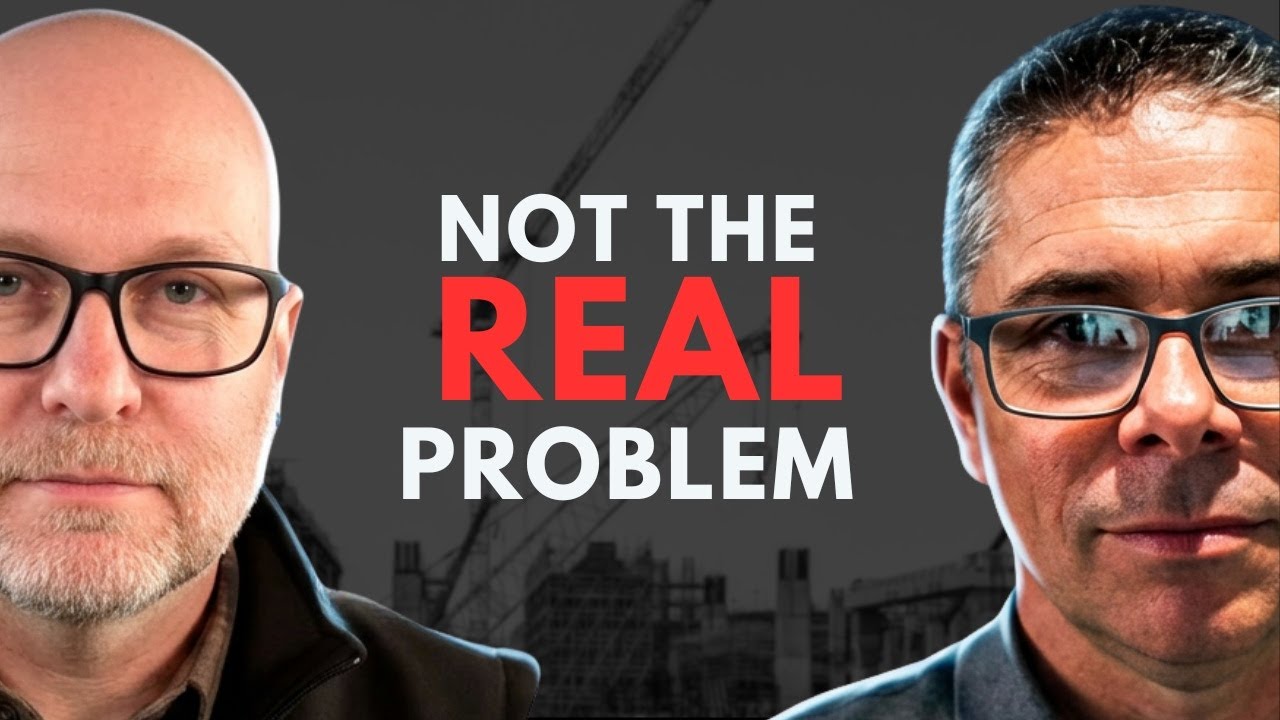
This reactive stance prevents the industry from truly innovating and improving its fundamental processes. Wayne Larsen, CEO of PT Blink, highlights this critical distinction: "The problem is that they're solving the wrong problems. I think they're solving the symptoms, not solving the problem." This constant crisis management diverts energy and resources from strategic improvements, leading to stagnant productivity growth that has plagued construction for decades.
Understanding Design Manufacturing Integration (DMI)
Design Manufacturing Integration (DMI) represents a paradigm shift, moving construction towards industrialized processes. It's not simply about prefabrication, but a holistic approach that begins with the end in mind: designing for efficient manufacturing. This involves creating components and sub-assemblies in controlled factory environments, where precision, quality, and timelines can be rigorously managed.
These manufactured elements are then delivered as a 'kit-of-parts,' designed for seamless integration on-site. Wayne Larsen explains that DMI "involves designing structures to be manufactured, producing them in controlled environments, and integrating them as a kit of parts through an ecosystem of partners." This transforms the construction process from a linear, sequential sequence of tasks to a more parallel and integrated workflow, significantly accelerating project delivery.
DMI vs. Traditional Methods
Traditional construction methods are largely sequential. One trade finishes a task, then the next begins, creating a long critical path. This inherent linearity, coupled with the variability of on-site conditions, makes construction susceptible to delays. DMI, on the other hand, breaks this chain. By manufacturing key components off-site, it decouples significant portions of the building process from the unpredictable site environment.
This allows for parallel workflows: manufacturing can happen while site preparation is underway, and assembly on-site becomes more akin to putting together pre-engineered parts. This systematic integration dramatically reduces the time spent on-site and minimizes disruptions. The goal is to take the structure itself off the critical path, allowing for much faster vertical construction.
De-risking Construction Through Controlled Processes
The construction industry is inherently risk-averse. The high stakes – safety, significant financial investments, and public impact – mean that deviations from established norms are often viewed with suspicion. This caution, while understandable, can stifle innovation. DMI offers a powerful way to mitigate this risk. By shifting fabrication to controlled factory settings, manufacturers can implement stringent quality control measures, standardized processes, and precise tolerances that are difficult to achieve on a busy, exposed construction site.
This predictability and reliability, when demonstrated, can help build trust and overcome the industry's natural resistance to change. Wayne Larsen notes that the challenge is that "it's too easy to say no, uh, and it's and it's too risky to say yes." DMI aims to make saying 'yes' to new methods feel less risky by proving their efficacy and reliability through manufactured precision.
Addressing Waste and Inefficiency
One of the most significant benefits of DMI is its potential to drastically reduce waste and inefficiency. Traditional construction is notorious for material waste, with estimates suggesting up to 20% of materials can end up in landfills. This is not only an environmental concern but also a substantial financial drain. DMI, through precise manufacturing and optimized kit-of-parts assembly, minimizes offcuts and over-ordering.
Furthermore, by reducing the time spent on-site and the likelihood of rework due to defects, DMI cuts down on labor inefficiencies and associated costs. The emphasis on systems thinking, borrowed from manufacturing, aims to create a more streamlined and resource-efficient building process, directly countering the current trend where "we're using more money, more materials, more labor to produce the same amount of housing every single year. So we're getting actually worse and worse and worse. That's not sustainable."
Fostering Psychological Safety for Change
Adopting DMI and other industrialized construction methods isn't just a technical challenge; it requires a cultural shift. This shift necessitates fostering psychological safety within project teams and organizations. When individuals feel safe to question existing methods, propose new ideas, and even admit when they don't understand something, learning and adaptation can occur.
Resistance to change often stems from fear – fear of making mistakes, fear of job security, or fear of the unknown. Empathy from leadership is crucial in navigating this transition. Leaders need to create an environment where experimentation is encouraged, where learning from failures is seen as a step forward, not a setback. This mindset shift is fundamental to embracing the systemic changes DMI represents, moving beyond the comfort of familiar, albeit inefficient, practices.
Conclusion and Further Learning
The construction industry stands at a crossroads, facing persistent productivity challenges that impact project timelines, costs, and ultimately, housing affordability. While 'firefighting' might keep teams busy, it doesn't solve the core issues. Design Manufacturing Integration (DMI), by bringing manufacturing principles into the design and build process, offers a clear path forward. It allows for greater control, predictability, and efficiency, while also addressing the critical need to de-risk innovation and reduce waste. Embracing DMI is not just about adopting new technologies; it's about a fundamental rethinking of how we design and construct, moving towards a more integrated, systematic, and ultimately, more productive future for the industry.
To dive deeper into how the construction industry is being reshaped by manufacturing thinking and how to tackle its most pressing challenges, listen to the full episode of Activating Curiosity™ featuring Wayne Larsen of PT Blink.
Frequently Asked Questions
Is DMI the same as offsite construction?
While DMI heavily utilizes offsite manufacturing, it's a broader concept. DMI emphasizes designing structures *for* manufacturing, focusing on integration and a 'kit-of-parts' approach. Offsite construction can refer to various methods of building components away from the site, but DMI specifically highlights the integration of design and manufacturing processes from the outset.
How does DMI specifically help overcome construction's risk aversion?
DMI de-risks construction by shifting critical processes to controlled factory environments where quality, precision, and timelines are more predictable and verifiable. This contrasts with the variable nature of on-site work. Demonstrating the reliability of factory-produced components and systems builds confidence, making stakeholders more open to adopting new methods.
What kind of productivity gains can DMI realistically achieve?
While specific figures vary, DMI aims for significant gains by reducing on-site time, minimizing rework, and cutting material waste. By enabling parallel workflows (manufacturing while site prep occurs) and a more efficient assembly process, DMI can dramatically shorten project timelines compared to traditional sequential methods.
How does DMI reduce construction waste?
DMI reduces waste through precise manufacturing in controlled environments, minimizing offcuts and optimizing material usage. The 'kit-of-parts' approach ensures that components are fabricated to exact specifications, reducing the need for on-site modifications or disposal of excess materials. This systematic approach contrasts sharply with the often less precise and more wasteful nature of traditional site-based fabrication.

CEO/ Change Management & Leadership Coach/ Key Note Speaker & Podcast Host
Ryan Ware is Founder and CEO driving construction leadership development. With over two decades of experience across every segment and level of management in the construction industry, Ryan’s career journey began in architecture and expanded into construction and prefabrication manufacturing. Throughout, he encountered consistent challenges with change management implementation.
Driven by passion and purpose to advance the construction industry, Ryan took to the stage to support as many leaders as possible. He helps audiences build stronger relationships with change and challenges the way leaders think about change, innovation, and leadership. His mission as a speaker, coach, and consultant is simple: to help the construction industry evolve by empowering those who shape it to better navigate change.

AEC Financial Planning: How Engineers and Architects Can Escape the 40-Year Grind

 Apple Podcasts
  Spotify
  Amazon Music
  Youtube Music
  Goodpods
  iHeartRadio
  Deezer
  Castro
  Castbox
  PocketCasts
  Audible
  RSS Feed