

 Apple Podcasts
 Spotify
 Amazon Music
 Youtube Music
 Goodpods
 iHeartRadio
 Deezer
 Castro
 Castbox
 PocketCasts
 Audible
 RSS Feed
 Industrialized Construction: The Key to Solving the Housing Crisis

The housing crisis isn’t just a policy problem—it’s a production problem hiding in plain sight. In this episode of Activating Curiosity™, Ryan Ware sits down with Ryan Smith, Co-Founder of ModX, to explore how construction leadership and change management in the AEC industry must evolve to address housing affordability at scale. This conversation challenges a common assumption: that better policy alone will solve the housing crisis. Instead, Ryan Smith breaks down why housing affordability is...
The housing crisis isn’t just a policy problem—it’s a production problem hiding in plain sight.
In this episode of Activating Curiosity™, Ryan Ware sits down with Ryan Smith, Co-Founder of ModX, to explore how construction leadership and change management in the AEC industry must evolve to address housing affordability at scale.
This conversation challenges a common assumption: that better policy alone will solve the housing crisis. Instead, Ryan Smith breaks down why housing affordability is fundamentally a supply issue—and how industrialized construction offers a path forward by rethinking how we design, manufacture, and deliver housing.
But this isn’t just about technology. It’s about mindset.
From fragmented project delivery to outdated regulatory frameworks, the real barriers are systemic. Together, Ryan and Ryan unpack what it takes for construction leaders, architects, developers, and manufacturers to shift from siloed thinking to integrated, curiosity-driven approaches that enable real change.
What you’ll learn:
- Why housing affordability is fundamentally a supply and production challenge
- The internal (competency, capacity, capability) and external barriers slowing adoption
- How industrialized construction requires a shift in design, delivery, and business models
- Why “systems integrators” and repeatable teams are critical to scaling innovation
- How regional knowledge-sharing and performance-based codes can unlock faster progress
Who this is for:
Construction leaders, architects, developers, and AEC professionals navigating change, uncertainty, and the future of housing delivery.
Chapters
0:00 - Introduction to Industrialized Housing
1:06 - Ryan Smith's Career Journey
5:15 - Internal and External Barriers
12:31 - Lessons from Global Precedents
29:30 - The Role of Design and Manufacturing
47:04 - Future of Housing and Industrialized Construction
Guest
Ryan E. Smith is Professor and Director of the School of Architecture at the University of Arizona and Co-Founder of ModX. He is a leading researcher in industrialized and offsite construction, with nearly two decades of experience advancing scalable housing solutions through research, advising, and industry collaboration.
Overcast Innovations
Helping project teams coordinate building systems earlier for more predictable outcomes.
New Lyfe Accounting
Free Diagnostic ($500 value) for Activating Curiosity Listeners by NLA, to help your financial goals
Connective Consulting Group
Helping construction leaders simplify change, strengthen trust, and move forward with clarity.
Disclaimer: This post contains affiliate links. If you make a purchase, I may receive a commission at no extra cost to you.
Have feedback or stories to share? Drop us a note or leave a VM—we’re listening!
Follow Ryan at the following:
https://www.linkedin.com/in/ryankware/
https://www.linkedin.com/company/connective-consulting-group-llc
https://connectiveconsultinggrp.com/
https://connective-coaching.com/
https://ryanware.me/
Don't miss out on future episodes! Follow & subscribe now to our newsletter and stay informed about the latest trends and insights in the construction industry.
If this show helps you, please consider supporting it. Just $3/month helps cover production and keeps the conversations going.
⭐ “Love the show? Toss some stars my way, it’s the easiest applause ever.
Ryan Smith
Industrialized housing is again one solution amongst the myriad of opportunities available to us to realize housing affordability. I do, I still do think that the way to housing affordability is through supply. And if you can have more supply in the market, that's going to stabilize pricing. And therefore, industrialized housing is simply a means by which to increase that supply. At the same time, it also is also an innovation that could lead to economic growth, job creation, um, IP. So they have those ancillary benefits. But in the first instance, we are after creating more housing for people, for our country mates to have a place to live in a safe and dignified way.
Ryan Ware
Today's guest is Ryan Smith. He is one of the founding partners of ModX. He is currently the director of the School of Architecture at the University of Arizona. He's also a professor and an author. So I'm excited to have this conversation, Ryan, and thanks for being on Activating Curiosity. Sure. Yeah, I appreciate it.
Ryan Smith
I'm excited to be be here and uh thanks for having me.
Ryan Ware
Yeah, yeah, thanks. So before we dive in to the conversation, why don't you tell a little bit more about yourself, your past, what kind of led you to this point in your career?
Ryan Smith
Yeah, thanks. Uh so uh I was a young architect, uh, graduated uh on the West Coast and was working um for a firm doing high-end residential projects in the Bay Area. I remember distinctly at a moment uh ordering some custom custom furniture for this house for a dot commer um from France and thinking one night when I went home, what what am I doing with my time? Why am I why am I doing this with my time versus something else? I really enjoyed the work um and wanted to stay in housing, uh, but at that time decided to try and pivot and go into um uh addressing uh the affordable housing crisis. And it seemed like the only way to do that was likely to take a career pivot towards academia and research. Um again, like I said, I was young. So I worked at the University of Oregon thereafter, then at the University of Utah, Washington State University, and now I'm at the University of Arizona where I direct the School of Architecture. And my work over that time is really focused on trying to address housing and housing affordability, uh, and doing that through the means of asking questions of how our housing is produced, both as a process and as a product. So that's been my focus. Um, and then uh related to that, about a decade ago, there were many companies that came knocking asking for the research that I have been doing, and in collaboration with Dr. Ivan Rubnik at Northeastern University, saying, Hey, could you help us answer some questions for our company or help us to leverage industrialized construction for housing? So we created uh a consulting advisory group called ModX, which is international and really focuses on that question of institutional change that needs to happen in order for industrialized housing to make a foothold here in the United States and and abroad.
Ryan Ware
So you're so you're young sitting around. I mean, I think we've all been there with a little spark of like, what am I doing? Um You drove yourself towards a problem that you said, okay, like this isn't just something I need to go draft up and and go get built. There's something larger here that I want to get involved in. You mentioned the research side, and I think that's where you kind of came onto my radar was this curiosity that you were having of like, hey, I gotta find out why it is it that we can't afford housing. Primarily you were probably focusing in the Bay Area, but also probably nationally. So when you started diving into that, like what did you what kind of information did you gather? What what did you start seeing as sort of this trend within the industry, but also policies potentially um to even uh availability of funding and things like that? What what were the things that you really started to say, like, hey, these are real problem areas um that need to be addressed?
Ryan Smith
Yeah, so uh as an academic uh initially uh I was in survival mode. So I was wanting to address affordable housing, but I know I needed to publish in order to stay alive and keep keep my job. Right. So um, how do you do that? And I I knew I had contacts in the industry, having worked in the industry as an architect in the Bay Area, but uh and being very interested in this topic of industrialized construction using factory-based construction to address housing affordability. So um uh in doing that research, I wrote a book, Prefab Architecture, was published back in 2011, um, the early part of my career. Um and really what that uh, you know, what I realized during the writing of that book is there are what I might call internal factors that limit the ability for the construction industry, in particular housing industry, to uh take advantage of industrialized means. There were internal factors, meaning internal to the prefabrication industry itself, manufacturing, design and manufacturing delivery. And then there were external factors, is what I would call them, that uh mostly barriers that limit the ability for industrialized construction either to take foothold for the companies to start up, uh or and even more importantly, to expand, to grow. Um, and I would you know call those institutional barriers, really. And and that was a big finding for me, so I'll give an example. For internal barriers, um uh with the addition of a third partner at ModX, Ivan Rupnik, myself, and Tyler Schvedderer, who's our managing partner, he has years of experience and practice. We we've uh coined a phrase called the three C's, which is internal challenges that the off-site or industrialized housing industry has. One is um competency, the industry itself. So it really is a uh an evolution of an industry out of uh out of the manufacturing home industry, the HUD coat industry in many ways. That's where our industry grew up from. Um and as it becomes right, enters into new markets, multifamily housing or say more sophisticated missing middle housing, that becomes quite a challenge to uh pivot skills toward uh from say a HUD coat industry or a single family industry to a multifamily industry. It's a very different kind of product and delivery system. So that would be a competency thing. Capacity, you know, the volume throughput of individual factories, whether they be panelized factories or modular factories, is always a question. And these factories want to scale, they want to grow, but they have to always temper that with the realities of uh supply and demand. Um we need more consistent throughput for those factories, right? Uh for them to make to make that uh business proposition uh reality and viable. And and those things together, competency and capacity equal capability. So the capability of the delivery system or the supply chain to meet the demand for housing affordability is one internal big question that we have tried to help companies come to terms with. And then on the other side are the external factors I mentioned, and those are mostly institutional, and I could describe those as things like building regulations, right? That either either allow or hinder zoning regulations, certainly, um, as well as finance uh um, you know, the workforce ecosystem, although those relate to these three C's as well, internal factors, but um, you know, regulations, finance, uh project delivery contracts, external things that really limit the ability of industrialized housing to scale. So during the early part of my career and investigating this, those are the two major things that I recognized were internal factors and external factors, and um realizing and understanding that there was going to be a need to research this from an academic standpoint and then teach it once I could understand it more to the students. And then ultimately understanding that for companies to get what they need out of it, it's not just research and inquiry, it's application. They need they need solutions, right? And so that's why we started taking the findings of what we were discovering in research and applying it to advisor, advising work to help these companies set up and and try and scale.
Ryan Ware
Well, I think the way you framed it, I mean, that it's perfect, the competency, the capacity, the capability from that internal side of when I think about factories, because both you and I kind of started in the architecture area. And I think there's one way architects look at delivering a project versus that of a contractor versus that of a of a factory. And I think back to when I first started using prefab or designing towards it and exploring it, it was is it a kit of parts, to wall assemblies, to a full-blown kind of modular um approach to it, right? And they all have their own terms. But it's been for me, like pre-cast, right? That's not new. I mean, pre-cast has been around a long time. Those factories have, for the most part, been able to sustain and and kind of grow and let technology kind of come in. But like you're saying, with this housing side, right? That is a it is a different skill set when we're building single family to that multifamily. So you're dealing with the research of those in a factory who potentially want to solve a problem, but maybe came from the industry or adjacent to the industry in one area to get an institutional buy-in to even design this way, to design, engineer it. So you you brought up again, it goes back to those barriers. You mentioned the word barriers, which is what I'm, you know, I'm always trying to understand is like, what are those obstacles? What are those barriers? Um, you mentioned regulations. And I know even for the modular world, it's it's the cash flow through a project. It's the financing, it's getting insurance, it's getting groups to fund the project where a developer may want to go this direction and utilize these solutions, but they can't get the they can't get the finance for it because banks don't want to front that much money because it's more front-loaded to go get things done in a factory versus procuring material and then paying for labor and a typical schedule work or or project cash flow. So you're you're recognizing that early on when you're starting to do the research. What what have you seen take place since you since you've done that research in those 10 years now with Mod X of some of the things that are starting to help those obstacles?
Ryan Smith
Yeah. Um something we have done at Mod X that started back in say 2015, 2016. Um, starting this research t 10 years ago as as an advisory group, uh, was the recognition that there were models out there, there were construction contexts out there that had success in delivering industrialized housing at scale. And what is it about those contexts that we can learn and glean from in the United States and apply to our situation? And then as we uncovered that, we realized that back in the 1960s, 70s, the United States actually had started a very robust industrialized housing sector, and it dwindled. And so, what are the lessons from that past as well that we could look to to try to reinvigorate or recreate our industrialized housing landscape here in the United States? Um, so some of the international precedents we looked at and have been looking at for a long time and continue to look at, uh, we are taking people back to these contexts this year. So we have a trip to Sweden and Japan this year. Um and I'm not saying that you can transport or transpose um an entire construction culture to the United States. There is no way to do that. And in the US, let's be frank, we have maybe a dozen or more unique construction regional contexts that exist, right?
Ryan Ware
Right.
Ryan Smith
For instance, the contract structures that exist in the southeast are very different than those in the northwest. So how do you uh how do you then take lessons from abroad, apply them to the United States, and and which lessons do you take depending on the context here? So it's quite a complex uh algorithm, so to speak. Um, but we have learned from those contexts some pretty key lessons related to your question about barriers and institutional barriers. And we have tried to um model those and adopt those and work with various groups here in the United States to uh address them and and uh uh teach them and uh apply them uh to our context. So some of those are companies, for-profit companies, non-government organization, nonprofits, housing advocacy organizations, both uh um you know, more more national or or regional. And then, of course, our ongoing and very um healthy relationship with U.S. housing and urban development that continues, even through this recent administrative change to the Trump administration that uh still sees our value in um trying to address the ongoing and perennial housing affordability challenge, but doing it through um perhaps an industry-first sort of approach, right? Let industry find those solutions with the local governments. Um, and then how can the federal government get involved to perhaps remove regulations or readjust them to allow for that industry and market to move forward? So that's basically what our work has been and continues to be at ModX. Um, and I'd be happy to talk, of course, more about some of the particulars related to that, but I wanted to paint that picture of what we've been doing as far as translating lessons from abroad and working with these groups to do that.
Ryan Ware
Yeah. Well, I'm glad you share the uniqueness because I think w we like to hang our hat on that. Like, hey, we're unique, so therefore we can't try anything. But at the same time, I'm like, yeah, but you're all human. So we still we still can look at our unique situation and make adjustments and apply. So like you mentioned, like, hey, we we started something in the 60s and 70s, and it sort of went away. But what are what are things that you can learn from from the past? So no one's no one's saying, hey, we we don't have a housing crisis, an affordability crisis. No, no, right. Everyone's agreeing that this is this is a real problem. And I you you mentioned something that I think is is very interesting to me, and I think the reason I started the podcast was our ability in this industry to address this problem by doing what we all do best in all of our areas that we work in, but bringing our expertise to figure out this industrialized construction, to to see it as an opportunity rather than a threat or I mean, let's be honest, I you know, I just talked to the uh ADC earlier, and it's like we we've known we've had a labor force shrinking issue since the 70s. So we are paying the price now for not addressing it. So what happens as population continues to uh increase or or things change and and dynamics change, they'll be you know, infrastructure starts to struggle more than it is now. Well, uh if we don't see that as an opportunity to be an industry first approach, like you're saying, then who's coming? Like who's going to solve it? Um, so you know that that to me is a huge piece that you're describing as, and and I'd like you to go deeper, as you just said, is like this isn't new. I mean, yes, there are different contract models. We all need to learn to figure those, you know, those out, whether it's you know, design build, every region is unique and what criteria it has to design towards, right? Like the South is different than than West Coast. So, but we do that every day now conventionally. We're just trying to learn how to integrate into a design these new methods of construction that allow us to begin to build uh housing at a much quicker pace to fill that supply. Um and what you're talking about is how do we get factories to those levels of competency, capacity, capability that are also aligned with teaching, educating, which is a lot of what you're doing, how to implement this stuff, how to, you know, what what has to happen with the design process when you are using Nodu, right? Or when you're bringing a factory in. And how do you how do you, you know, start to utilize experts from other areas of the industry to bring them in? So that's correct me if I'm wrong, but that sounds like a lot of what you're working with teams and factories on, as well as others in teaching and education, is how to start to think differently about how these solutions get implemented into the design and the strategy from the start.
Ryan Smith
Yeah, no, no, there's a lot there. Um so uh your question touched on uh delivery models, which I would call project delivery models. It also touched on business models. So the business what is the the business structure of those involved. So I'll touch on a few of those things. One, um, and and then sorry, and then the third thing you talked about in that sort of project delivery model was design specifically and the mindset around design. So uh at uh at ModX, we often refer to what's called the nesting layers of industrialized construction, nesting layers of context, really. And so oftentimes when we talk about industrialized construction, our our thought immediately goes to the product, which is a panel or a module, which I would call right the the technology. Um and thinking about the our our mind immediately goes to the factory floor and says, How are we going to be producing these things? And uh in many ways, that is the last step of a thought process to think about when delivering industrialized housing, right? So where does it start? It starts at the very outermost contextual layer, what I would call the outside of an onion, which is um the very institutional context in which construction and housing exists, right? Which is our macroeconomy, which is a market. A market has a certain demand structure. And what does that look like? What housing typology service that market in my region? What does it need? Um what are the finance structures around that? What's the regulatory context that can allow or not allow that to happen? And all of that forms that outer layer. And then within that, a business model emerges, right? We could deliver this with a certain business model. And whether that business model looks like an individual vertically integrated company doing all of the supply for that housing and housing product for that market and context. Um, or that is a collaborative team that comes together and says, I'm an architect, I'm a developer, I'm a manufacturer and a general contractor, and I'm or or some of those that are stable, and then others are brought in at various times to deliver on the promise. Of industrialized housing, that's also a model. So that business model becomes crucial in delivering for that market. And then another smaller layer within there, within the business layer, would be uh what what we often refer to as uh the product platform. So, what is the platform that's gonna deliver those housing typologies and that business model that is ultimately going to deliver for that context? And uh and that platform is important because think about it as a set of sub-assemblies that could be reconfigured in many different many different variations to produce difference or uh uniqueness with regards to different sites and different housing outputs. And then finally, within all of that, is what is the technologies we're using to deliver on that platform? So it's a it's a very different approach, I would say, than than I think how we've been thinking about it in this country. Um and we have been trying to encourage uh yes, teams, uh developers, uh architects, uh contractors, and of course, the uh the off-site manufacturers themselves to think about it in that way. So that's that that's an important piece to hit on a number of the points you were talking about, but maybe just to hone down into the specific question you had about what I would call the product platform, the platform approach, which is very linked, very much linked to design and the way we think about design, which is thinking about design from a manufacturing mindset. And that could be a designer that's embedded within the manufacturing operation in a vertically integrated company, or that could be a designer that is a third party, an architect, for example, that works to um envision with those who are going to be producing uh what that product platform is. The worst situation is an architect, we've seen this, envisioning or ideation outside of the realm of any sort of reality of manufacturing or construction, right?
Ryan Ware
Right.
Ryan Smith
And you and I know that because we're architects and we've seen that again and again. And my students do this, do this, and and so what what we often say is no, you start immediately with a supply chain and an actual manufacturing product, and then you uh you help develop that and think about how that might be uh um reconfigured to deliver on uh different housing outputs. So we call that platform design. So that that that's a little that that takes a different kind of mindset as a designer. That takes a manufacturing mindset, which is much more about a product that could be continuously improved over time. And every time it's utilized, that information comes back and is improved on the design and the and the in the manufacturing process. So that the it mimics pretty much every other manufacturing sector in that way or would, uh, as opposed as opposed to how we deliver housing and construction generally today, which is a one-off the spoke delivery system. So I just wanted to, yeah, I just wanted to paint that picture of in that nesting layers where we have the context, we have a business, we have a platform, and we have technology to service that platform. This platform piece really links into design and it requires designers, architects to think very differently about how and why they do their their work, frankly.
Ryan Ware
Um, I I've wrote a piece, I don't know, it's been a little while, uh, on how and why we need to change the definition of means and methods in the construction industry and how we think about it. Because I think as you were describing it, I'm thinking about all the students that get a chance to kind of have you as a professor and a director because of the way you're thinking about this. And I I went to Kent State and I know I've talked to the dean there, and they're doing a lot of these similar things now. We're we're we're brought into the industry, we come out of you know, university, and we're just thrown into this mindset of like, well, this is how it's done, and we're separate, and everything's a silo. And we're not looking at it, as you just described, in an opportunity of interdependency of I'm going to think, you know, when pen hits paper as an architect, I'm already choosing the method. I'm choosing the means, I'm choosing the subs, I'm choosing all the things that I don't know much about because the contractors are going to write those downstream contracts, but I'm doing it with little exploration of is that even readily available material? Is that even readily available labor force? And as you're describing it, it's yeah, I know when I first started working with prefab companies, I was like, look, you you're not recognizing that you're trying to sell a product that no one knows how to design with. Like, like someone has to teach, go be out there from the manufacturer side or somewhere else to get everyone together to understand how the process is going to change. Like, what are the questions I should be asking? How should I be thinking about this method of construction or this solution? Because it doesn't have to, it you you don't know. It might be kit of parts, it might be panels in some sections, it could be full-blown modular. It's not, it's usually a hybrid approach on bigger buildings. But I think it's so important the way you just kind of described it is this is a mindset. If this is a change in how we think about each of our roles and responsibilities within our professions, but as an industry, our responsibility to take a step back, think about that, yes, things are unique, but what is my role in having this be successful? Knowing there's a fabricator over here, engineer over here, and contract over here, to have more curiosity asking those questions of like, okay, I've never done this before. How do I, you know, how do I think about my drawing set differently? How do I know what I need to detail? And also understanding, like, there are things you may not have to detail fully because the factory is going to be able to produce, you know, through that technology and platform, like you said, shop drawings live as you're going through it, like with, you know, design for fabrication or direct digital manufacturing and those kinds of things. So, you know, where I was going with that was, you know, you kind of got me thinking a lot more of just why do we keep, I mean, maybe it's legal, you know, the legality and the contracts and way we think about it, but we need to think about means and methods in a different way of what our rules are and actually defining those from a design side. Because the only way to think about a method of construction like prefab is that you're going to have to engage with them. You're going to have to have them come in and be a part of the design assist, design build, design for fabrication process to ensure that it can be more successful. So that was me kind of responding to to how you've framed it with the onion piece and kind of those layers. But I don't know. What do you you teach the next generation? How do you approach this means and method idea, knowing the legality side of the contract? But what what are your thoughts on that?
Ryan Smith
Yeah, that's a good question. Uh I think uh an easy answer would be to say, well, just uh you know, apply integrated project delivery to housing delivery, use that contract structure, and it'll all be aces. But integrated project delivery, uh, you know, even as a either a contract structure or as a collaborative model or an agreement that people regardless of the contract you're using, an agreement of a delivery method, even that was established with regards to traditional on-site construction. That's how it was written. Yeah. So off-site construction, industrial construction is very different in many ways. That I don't know any any existing contract structure really services. I know the AIA is working on it, and others are working on new contract structures related to this. But that, like you're saying, doesn't necessarily solve the re-education process that's needed and reorientation of people in that way. I will just give a a hint and and not to not to give away too much of what we advise folks on, but uh we strongly believe in any collaborative team utilizing or wanting to utilize industrialized construction, there are two key principles. Number one, I think you do need a systems integrator. I think someone on the team needs to serve that role and decide to be the most educated in the room, try to learn as much as they can about this, uh, if you're cutting your teeth on it.
Ryan Ware
Right.
Ryan Smith
Um, and that could be the architect if they so choose, or or the team thinks that's appropriate. That could be a developer if they are a hands-on developer owner, right? They want to be very involved in leading that project. That could be the general contractor, depending one on the contract structure, but also their their interest and the scale of the project. That could be the manufacturer if they become much more uh supply chain integrated, right? They're they're they're able to move down into design or up into general contracting. So these these are uh uh that system integrator is one piece. The second principle I think that's really important, uh, related to this, is um uh we often call it the rule of three. Uh and this is not a popular thing to say, but um uh you're likely gonna lose money on the first one, cut even on the second, and do well on the third. And and and that's especially if you are working together and you have a commitment to figuring this out as a team, whether that's as a vertically integrated company or whether that's as you know, entities working together in a collaboration. Um, because it's very difficult to learn and and all those kings have to be have to be worked out. Our current development model in the United States, uh, developer-led model, doesn't isn't is not very forgiving with regards to losing money on the first one, right? That's not gonna fly unless they are uh you know understand that long-term vision of no, we're trying to develop a platform that could be used on multiple projects and we're gonna invest in that. And the architects understand that there's more work coming down the pike in relationship to that. So that's just to say that uh, you know, uh it's easy to talk about international precedence, but their contract structures and supply chain and delivery systems are different than they are here in the United States. So we have to make this work for us, right? That's that's the point. But some of those key principles would be, you know, who's the systems integrator, who's gonna take on that role to really lead this process and teach and continuously improve along the way. And secondly, can we keep the team more uh static through multiple projects to have greater successes in each iteration?
Ryan Ware
Right. Yeah, because what you're you know, construction, it takes a lot of people to build one building, and then they're broken up into another project to go build something else. So how do you get that repeatable win? And I I think you shared this too. One, you you started with you may lose money. Everybody will struggle in the first time that you're gonna do it. Because a lot of times these are the first times we're ever touching any of these situations. And we as humans, we we're not really good. That's not our best effort, right? We're still learning, but we're not providing ourselves as humans that empathy side of like the bigger picture. Like you're saying, the problem I'm trying to solve is to get more affordable housing. The problem is to get people into housing throughout the US, but also for those of all over the world, like we have this issue. And if we're gonna go industry first, like working with those developers, yes, they don't like you losing money, neither do architects, but it is we are already burning fees and pushing behind on schedule, and we're losing revenue and net profitability because we can't meet any of the demands of anything, right? Like we're not meeting the housing demand, we can't get uh some of the infrastructure done on the timely basis. And most people who are not in their industry, they see how slow things take, right? So this, you know, industrialized construction, like it's not a silver bullet. It is a solution and a method, as you're describing, that can get integrated where everyone's kind of taking on this new approach and a role with the empathy of like, hey, this is our first time. We need to figure out this process. We need to figure out how we communicate it. We need to figure out who needs to know what when, because it's a different time. And and that leads me to this kind of goes back to maybe a barrier of like or a resistance for some people to use it like a developer, others or municipalities, is that because we're so ingrained on knowing exactly how we've always done it, and that we're quicker at it, um the the you know, manufacturer side, I can think of not just in the housing, but the modular piece, there isn't a real uniform process that is out there. And, you know, we kind of understand because we've done conventionals for so long, like what that flow feels like. But it confuses, and people hesitate to take things on. And I know maybe you've seen this too, is like sure because every manufacturer is different, they all speak differently, and this isn't just within the housing world, it's like even in commercial prefab, like they all want to be special, and it's like, well, you're confusing the market. Architects, you know, they don't want to burn their fee trying to learn yours versus their system. So, you know, I guess I'm I'm curious too. This goes back to that competency because the way I've always thought about it was if you're a manufacturer, and you mentioned this, your business model is direct. Let's take a Katara, right? Most people know on the West Coast who Katara was. That is that fully vertically integrated versus, you know, some of the groups in Boise or Calgary or wherever that are doing the housing that are modular. Well, who's doing the facade? Who's doing the podium? Who's doing all of these components down to even single family? Um, what what can the AIA or what could what could other groups be doing? I mean, I know ModX is doing this too, but like how do we get everyone to understand is like we are creating the data every time we get step onto a project, we are working together to create new processes alongside these manufacturers and not expecting every answer because I think this is where change we all want 100% clarity that it's going to work. So, where's the data that shows that? You're a research guy. Like, who's responsible to create that data? Where does it come from? You know, have we done a poor job as an industry getting architects' buy-ins because the messaging potentially is off, there isn't a process, or how do we get developers to to recognize those? I I know that's a huge question, but I'm just thinking like solving the housing crisis has to be important, and we need to get other people curious about you know what they're what they can kind of step in and start doing now.
Ryan Smith
Yeah, uh good questions. Uh trying to hit on a few of those uh points. Um first off, you mentioned uh we write the process. Uh that's true. However, um, as we've seen with other contract structures and building regulations, very few construction industry professionals are in a position, because of time const time and budget constraints to advocate and rewrite those things. Right. So there are third-party organizations that work on developing our codes that we work within, our standards that we work within, our project delivery contracts that we work within. And change only happens, or you can change management theory, which I know you you you talk a lot about as well. Change only happens when the pain of changing is going to be less than the pain of staying the same, doing things the same. Um and for whatever reason, right, we we either haven't hit that point in some way. Um uh or um you know people need knowledge. The others, people are ready to change, but they need the knowledge to know how to do that. So uh uh I've spent a lot of time on knowledge management uh theory and practice that includes tech transfer, knowledge transfer, both internationally uh within a company, but also interorganizationally, like between two companies, and how that can happen. So, of course, IP issues and different things like that, but how one change how one educates, how one shares knowledge, how one continuously improves an industry. And uh I think where ModX is at now is we think that change, particularly with regards to industrialized construction and housing, is going to come by virtue of knowledge exchange and education at the sort of regional scale. Because construction happens regionally and has to be applied regionally, we're advocates for that. So we are working on a current project with U.S. Housing Urban Development and the National Institute of Building Sciences and six regions throughout the country to develop what we call regional action plans for accelerating and scaling industrialized housing. This project is coming to a close, but one of the key outcomes that's occurred, and we'll be writing about this in detail, is the creation of uh knowledge hubs within these regions to share this knowledge. And I'm not talking about trade association, I'm not talking about another trade association. I'm talking about a knowledge management group, communities of practice, right? Learning communities that can share that knowledge together. So that's the first thing. And I think we're starting to see that emerge in some of the regions we're working with, and we would be advocates for that using, as we have seen in some other international contexts, these type of hubs be created and be quite fruitful for sharing knowledge across the industry, as well as RD kind of kind of efforts. So the second answer to some of the something you you asked about these barriers, and yes, we're the ones who make that change and create that process as AECO professionals is something we have learned. Uh, we learned in a project a few years ago that um uh we've been uh uh advocating the federal government for. So I've just talked about regions and local and their role. I talk about sort of at the federal level, something that we advised the federal government on was uh how to scale and accelerate industrialized housing nationally. What would the role of the federal government be there? And uh of course, immediately when you look at international precedents, people think, well, of course, these countries had great government subsidies. That's how they stood up their industrialized housing industries. But the research actually suggests that's not the case. There were government programs just like there were in the United States post-World War II. But uh they, you know, industry led, and what ultimately they did was uh to um align award criteria in the same direction to well, award criteria meaning incentives on mortgage or uh government-backed programs. Think think of our programs in the US for housing affordability, Litech, um, you know, construction loans, et cetera. If you were to able to incentivize the things towards innovation, performance, time, workforce safety, et cetera, that doesn't necessarily um pigeonhole people into industrialized methods of construction, but suggests that we need to find more productive means for delivering industrialized housing. And that could be by industrialized housing. Um and what that suggests is um instead of doing direct government subsidies or direct government procurement of housing, which we would suggest is not a good model for long term sustainability of an of an industry, right? Um that we but we do need some sort of demand aggregation tool to allow those factories to have consistent volume throughput, or they're going to struggle. Uh as we have seen, uh, we think aligning award criteria is one way to do that. And that could be done at a federal level, say through um, you know, fun uh finance mechanisms for housing affordability, or it could be done at say the local or region level with state programs or or other things. So that's something we we've talked a lot about at OdX and would be advocates for. And then the second thing, um, and it's the big elephant in the room, is our building code regulations are um, yes, we have a model code in this country, but they are adopted and enforced very differently, even from town to town within with you know within a municipal within a metro area, different between each metro area, municipality, different from state to state. That makes it very difficult for uh a team trying to deliver on industrialized housing, and especially a manufacturer trying to service multiple regions with one factory to be able to uh standardize any of their processes, right? Right. So we're less of an advocate and we're less of uh interested in pushing for standards across the industry from manufacturer to manufacturer, right? And and more trying to suggest that we need a standardization of process and and also uh building code regulations that allow for some sort of predictability on behalf of those that are delivering industrialized housing uh so that they are not having to pivot at each project iteration with regards to that regulatory framework. So uh we are we're gonna be talking more about this at ModX. We have a project emerging with the National Institute of Building Sciences to address this question of building regulations. Others are looking at this as well and trying to address this. Um, ICC and MBI, uh, there are other groups, and I think it will be uh a big topic moving forward about how we can slowly navigate and move from what we would what what I would describe as a prescriptive code that suggests how, you know, means it starts to suggest means and methods towards a performance-based code that suggests how these buildings should perform, how fast they should be delivered, um, and some other performance parameters, how how they perform from an energy standpoint or from a moisture standpoint or what have you, and then let the industry innovate in order to deliver on those things. Uh, that could be new materials, new products, new systems, new subassemblies, new industrialized housing delivery. And so that's that's what we've been working on both at the federal and local level to try and address and make way, make a pathway so industrial those involved in industrialized housing in the supply chain can have the greatest amount of success as possible. Um that that that's something that we we strongly, strongly believe in. And I'll I'll just uh end that comment by saying it's really easy for me and for you, right, in many ways, to sit here on a high horse and talk about industrialized housing as though it's something we have figured out or or or understand or have have this have um have and have answers to when everyone really is trying to figure it out. And I have deep, deep respect and uh for my colleagues who are on the front lines, on the ground, uh really uh the ones designing, uh manufacturing and building industrialized housing today. And the context they have to work in to do that is really treacherous and challenging. And all I would say is I I see ModX, I see my role as trying to help those in industry to deliver on the promise of industrialized housing by um you know removing those barriers and greasing the skids, so to speak, to allow for the greatest opportunity to launch.
Ryan Ware
Yeah. That's I mean, that's powerful. You're and you're right. Like if it was figured out, we'd all A, we would not have a conversation. But it is. Like I, you know, the pr the the power of being human is that we get to relearn and and uh you know think differently than we have in the past, which is of what a lot of this is. And as you described, I I do think it is powerful on the regional side. I'm here in Cleveland, and the mayor had started this endeavor to bring in fabricators to do housing. They they've gotten selected, they're just kind of getting started on trying to get some prototypes done. But here's a region that understands and the the mayor recognizes it. And most of them have not been in that arena. They don't they don't come from fabrication, right? So sure it is, I am seeing those things, and then I do love this knowledge sharing piece because like you're saying, doesn't need to be another association. I my opinion is doesn't need to be another CEU. Like, yeah, it should be driven on our pure curiosity to learn and want to be a part of solving this problem, as you're saying, which I know there are tremendous people out there doing this. There's Cogents is in Cleveland and and throughout Ohio, and they're they're really looking at all of these things and the way they're approaching projects and trying to do some of this knowledge sharing and kind of that community of practice, like you said, because we are time poor. Like this whole industry struggles with it of like, well, I can't learn on the fly, so I'll just wait and do this change or implement like on the next project, but then you're spinning, you're just constantly spinning. And because there are so many different humans that are involved on every single project, and you're kind of interchanging those and they're switching to different ones, it's like, well, now you gotta you gotta go back into retraining a whole nother group. So it's not this isn't just a manufacturer's problem to solve. It isn't just the architects, it isn't just engineers or developers, it is uh in and I come back to something you've said. We have an industry opportunity to solve this problem and to look at our uniqueness by a region. Uh there has to be some standardization of process. We factories can't afford it, they can't afford to change every single time and you know, they go into a different region. So I think what you shared is is important. I I love that you guys are, you know, from my dex side, looking at this knowledge sharing, best kind of practices area via regions, because we are human and we do want to say like where I'm located, it's the best. We know how to do it, right? So like it just makes it it turns it into ownership and ownership turns into commitment. Um, you know, that's where that buy-in starts to happen. So a lot of good work that you're sharing that I know you're doing, you're kind of spending a lot of time with students. The book was what 2011, 2010, you mentioned. So 15 plus years, 20 plus years. Um, I I'm heading into my 50s. So it's the conversation has been the same, like a lot of the conversations. Um, what do you think that it means? Because I'd like to make this back to the importance. What does it mean if we are unable to solve some of these problems?
Ryan Smith
Well, uh, I think we're already seeing the housing market shift in the United States. That has happened over time. So if you just look at, say, the architects billing index, which is a good indicator of where housing has gone or where it's going if you if you look at the housing numbers and honey hone in on those. Right. We had uh uh multi, you know, post 2008 recession, we had an uptick in multifamily housing. And in many ways, single family and multifamily starts swapped and multifamily really took off. That has slowed down, that's slowed down again, right? Um, well, let's be honest, all of housing has slowed down at this point. But what we're starting to see is is uh a development of of missing middle housing. And I think it's a it's that's a very exciting area for developers and ACL professionals. It's been very difficult for developers to pen make it pencil because a lot of it is infill, right? And it and it doesn't scale. But I'm excited by off-site manufacturers that are coming forward with missing middle solutions that could could help fill that gap. Um your question, though, is what if we can't deliver on the promise of industrialized housing? What does that mean? Let me be clear. Industrialized housing is, again, one solution amongst the myriad of opportunities available to us to realize housing affordability. Right. Um I do, I still do think that the way to housing affordability is through supply. And if you can have more supply in the market, that's going to stabilize pricing. Um, and therefore, industrialized housing is simply a means by which to increase that supply, right? That's that's the goal. At the same time, it also is also an innovation that could lead to economic growth, job creation, um, IP, et cetera, et cetera. So they're they have those ancillary benefits. But in the first instance, we are after creating more housing for people, for our country mates to have a place to live in in a dignified way, um, safe and in a dignified way. Um But I don't I am not I am an optimist. I am an internal optimist and and yet um when I you know wake up in the morning and I I'll just be I'll just be frank. I have uh I have children that are in their 20s right now. Uh my oldest is 26. And um he does not see a future in which he can own a home.
Ryan Ware
Yeah.
Ryan Smith
Um the model of wealth creation via real estate and owning a home and then taking equity out of that home or selling that home, that has been the means by which we have built wealth in this country for for decades. Where's the future? That may not be a future for these kids. It may be that they they they develop wealth in alternative ways. Or, Ryan, they just don't develop wealth. And that is that's that's troubling. Um, but that also suggests perhaps the country is is migrating towards a very different kind of housing solution for the future, right? One that is is much more per perhaps dense, one that has different options available to folks to rent, to buy, to um uh to co-opt, to share, right? There are different models. Um my 26-year-old has right three roommates. He has a partner and and two roommates, and that's they're they're they're they're a tribe, they're a family, right? That's how they're living right now. Um, and a lot of uh 20 somethings are living that way uh as a result. So I I think they're finding, I think the market is is gonna level out, but that old model of homeownership only and wealth creation through uh my asset, I don't, you know, that could potentially not be a future. And and that's scary for our generation because that's how we understand the economy fundamentally. But um, I am interested, I guess, more so in industrialized housing as a means to deliver on the variety of options for housing typologies for that future generation so that they can live in a dignified, safe, and happy and productive way, right? Um and that our country can continue to be um a good, honest, loving place to live, that our kids can feel fulfilled and um and they can contribute to to society. So that that's that's where I'm at and and and why I continue to do my work. Um uh I I see it as a bright, bright future, a different future for sure, but one that I one that I'm still very much optimistic and one that I think industrialized construction is gonna play a critical role in.
Ryan Ware
Yeah. Well, I mean I I'm glad you shared that because I I want to always bring it back to the human piece, which is which is part of that that question of tying it back towards your purpose in in life, like what you're aiming to do is is very unselfish of like I want to take my skill set to research and to understand, and then help people start to address a problem for a whole society, you know, a whole other part of our society. And I feel the same. I've got young kids, and but you sharing that story is like, hey, there is a reason we need to do this. Like we we are only 250-year-old, you know, nation. And to see, I know I lived in California, so I know how many units we were short every year. And there was no way we did not have the labor pool, we did not have the amount of factories to meet the supply. And as you just described, like, yes, there was generational wealth with the housing side, but like without having shelter, you know, just the basic fundamental human things, life expectancy change, everything changes. And as a country, everything we I mean, to me, I look at it, housing is a national security issue. In my opinion, that's just me. Because if you can't get everybody safe in a house, you would now have potential villainness. You have potential for these other things, shrinking economy. Everything is just tied, right? So they're all interconnected and interdependent. But like that has to be something that we don't lose sight of as an industry of like, what can we be doing during some of these areas to learn some of these things, to pique our interest, like you're saying, and to get into these groups, these knowledge sharing, to, you know, go talk with fabricators, go, you know, tour the factories. But I would also say from the factories, like, don't oversimplify the complicated areas or don't overcomplicate the simple. Just learn from one another as you don't need to have a shiny message that'll confuse an architect. Like, architects want to know how to design. How do I need to implement this? How do I need to think about it? What is my role involved? Who are the players? And that's where I think industrialized construction brings this huge opportunity in to increase all of our opportunity for net profitability on businesses and how we look to design, because now you can turn your focus on as a designer, like really critical things that you're telling subtrades and skilled trades laborers that are actually still left on the project site, like you are solving big problems, but having key experts helping you solve problems as well. So I know that question is always one where it gets to the personal side of it because it's something it's something that you solve, you know, early on in your career. Like, I've got to, I want to spend my time. I want to spend my all of my energy teaching, researching. Um, and even while you're in university out at Arizona, you're still in a knowledge base of teaching. You're constantly in this mode of like trying to help elevate others who want to be a part of kind of solving these problems. So with that then, let's go, let's go to the bright side. Looking out for you at ModX, you personally, like, what does success look like?
Ryan Smith
Yeah, it's a big question. Um, uh on a macro scale, the influence I would like to have with regards to housing and housing affordability in this country is to see number one, industrialized housing have a greater percentage market share and deliver on its promise of of um you know time and productivity, right? To overcome the workforce labor challenges we have and and to deliver on that promise. What is that percentage? I'm not going to put a number on it on this, on this podcast, but it if I could see that, you know, we're let's be honest, we're at like two and a half to three and a half percent now and have been for a long time. Uh wouldn't it be great to even just be at you know seven or or ten or fifteen or countries that are at 35, right? Wouldn't that be just an incredible thing? So um that that's something that I I could see as, you know, I would like to see as success and delivering on that notion of supply and therefore helping to stabilize the the affordable affordability and pricing increase. Um in order to do that, what would I like to see in my lifetime? My uh mod X has been dedicated, I have been dedicated to really seeing systemic change happen with regards to our building code regulations and allowing, because I think that, and we have seen Japan that that is not only going to benefit the scale and acceleration of industrialized housing, that's also going to benefit, in my opinion, every other form of construction as well. When you can uh shift the the mindset from um a prescriptive mode of codes and standards to a performance-based standard that allows the industry to find solutions and allows them to thrive. So in my lifetime, I would love to see ICC has one. I would love to see a performance-based code scale in this country. Um I think that would benefit housing. I think that benefits all of construction, frankly. To get there, ModX has been working with the National Institute of Building Sciences, and we'll be announcing this shortly, uh, on a working group to develop an interim systems certification program whereby at the local level companies could certify on file with the government systems that they could use repeatedly in the service of housing. So that the process of getting permitted and inspected could be expedited and much more predictable for those players. That's gonna go a long way. Um, others have been working on similar things in my lifetime. At the end of the day, I would love to see, you know, off on the horizon, uh, as I'm on my deathbed, a performance-based code operating in the United States would be fat fantastic.
Ryan Ware
Yeah.
Ryan Smith
But to get there in the short term, I think a system certification program is going to go a long way. And we are modeling this off of uh Jap Japan. And um, you'll hear more about this as we as we uh as we talk about it throughout the year.
Ryan Ware
Yeah. Hey, I want to see that achieved, you know, for you and everyone, because I think they're just such a critical part in helping us accelerate this, right? Accelerate the adoption because there are so many players involved. It's not it's not just what we think our industry is. It's like you said, that financing side to even with the regulators, to being able to get into a jurisdiction where there isn't the head count to even review some of this stuff fast enough. Like the the the challenge is uh enormous, but it as you described, it's it's so important for every human that we see in our communities. And seeing what you're doing with ModX, like again, just it it continues to surprise me and give me hope that there's just so many of us, like there's eight to ten million of us that are really in the industry, right? The construction industry, but that there are so many people working towards uh achieving the the solutions for a lot of these problems. And I think you shared it, it's it's the mindset, it's uh finding ways to slow down, to implement, to learn, to realize that first time that you pick it up and try it, like isn't going to be your best times. Just have empathy as a team. Have empathy within your own company, but for every person on that team. All the way through, you know, everybody on the site. That site superintendent now is taking on something that they've maybe never seen. It's it's all of our responsibility. It's all of our responsibility to ensure that the future have the housing and the infrastructure that's required. So so I appreciate you sharing all of this, Ryan. Um, it's such an important conversation and the work that ModX is doing. The last thing I'll, you know, want to ask you is just what's some things that you think from your experience, some next steps, some Some real action items that somebody that they're like, I I do need to look at this more. I need need to think about it differently. What what would you recommend?
Ryan Smith
Good question. There's a lot of good literature and things out on the internet, but where it comes to it's how you apply it to your operation and and and your business. Um of course I'm gonna pitch the services and modex to help folks do that in an advising capacity. Uh we have a three-legged stool for the business. Uh one is direct B2B advising, so we directly advise companies on whether they're internal to the industrialized housing industry or they want to get into it, they're outside and they want to get in. Um the second thing we do is we offer unique education programs for these companies. So if they want to engage us and get their staff up to speed and and get a level set, that's something we can do, or advanced education uh and support. And then the third thing we do is exchanges. So we take folks um every year to different locations throughout the world to see best practices and learn those lessons. But the key thing is on this trip are these bus conversations where we're going from place to place. What did we learn? What did we just see? How could that be applicable to my business or to my region? Um, so uh I think I would just uh offer that up. Um and then the last thing which you mentioned, uh I mentioned early, and then you reiterated, which is uh develop a learning community within your region. Talk to people who are trying to do this, um uh hold these sessions, uh conversations, share best practices. And uh as I mentioned, ModX is currently doing this with several regions, setting up hubs. We would be willing if uh folks like to reach out to us to help you get started on that journey with no intention of being involved long term. We want to help empower folks with that uh capacity to do that. And then lastly, uh I did say last, but I have one more thing to think to to mention here, Ryan, at the end of our conversation, which is I'm also a professor and I direct the school of architecture. The students that are coming through right now are a very unique generation. They're a bit disillusioned by their situation. Um I don't think they are depressed or um uh resigned. I think they're disillusioned, meaning they understand that what has worked in the past for our generation is not gonna necessarily work for their generation. They have faced that reality and they are trying to find new ways to think about the future of this country and their identity and situation here, living in the US and operating. Um I am heartened by the fact that the students I engage with every day want to do meaningful things, and they want, as architects, they want to find solutions to societal and environmental problems. They really do. Um, and we have made it our mantra at the University of Arizona School of Architecture that we address the grand challenges of today. We're not interested in just making formal objects, we are interested in research and applying that research towards finding solutions. And I think that could be a very bright future for architects to offer up a critical eye and solutions that can help move the needle with regards to the big societal problems. Housing being first and foremost, the one that we can have an influence on.
Ryan Ware
So yeah, I'm glad you share that that last piece you mentioned with the students. I I think we a lot of times we can think about the next generation. I've heard a lot of people making a lot of judgments on a generation that we have not even given a chance. And I'm I'm hopeful. Um, I want them to be exactly what you described, like hungry to look at it, like, hey, it's our time. Like we all the answers aren't going to be there because that means they're going to be, you know, more curious of and and willing to explore, opposed to, hey, how did how did this always get done? Hand me this next thing. Because I know when my kids start, you know, first started learning new math, I was like, I've never seen this stuff before. Like, I don't, I don't know how teach you this. Um, and while it was frustrating to me, I was like, look, you you got new problems you're gonna solve. So I say all that in the sense of thank you for sharing it, all of the work that you are doing, Ryan, your in your purpose and passion to really zero in on this housing side and say, hey, here is one means and method, one area that we can actually start to address this if we are serious about learning how to adopt it, learning how to to get it into practice. I will share all of your information in in the show notes, all the links um so that anybody who wants to reach out to Ryan or any of his partners there at ModX, or hey, if you're young and you're looking for a school of architecture, I'm sure Ryan would be happy to talk to you about that. Um, I will also say Kent State if you want a choice. So um I appreciate it, Ryan. I hope that you have a great uh rest of your day, and thanks for being on Activating Curiosity. Thank you for your time. I really appreciate the work you're doing, Ryan. Yeah, thank you. So that is the episode with Ryan Smith, the founding partner of ModX, as well as a director of architecture at the University of Arizona, professor, author, spent his whole career zeroed in on a problem, figure out how to do the research, figure out how to get it out to the public, and then say, like, hey, I'm not done. I want to do more. I want to teach, I want to work with the next generation to make sure that they are curious enough about all of these methods of construction that are available to them and what industrialized construction can mean. And as well as he's thinking about our mindsets, he's talking about every part of it, whether it's architecture, engineering, developers, to the finance side, to how codes work. Um, I am hopeful that a lot of you will look at what ModX is doing, but also just looking for those um those knowledge areas and communities that he was mentioning as well, and reaching out if there's nothing in the in my region, how do I get one started? Those are really where we can start to make the greatest impact because each of us taking a step towards progress and looking at these innovations, not expecting them to be those silver bullets. Um just what how can we start to look at it to help our community in which we're working? And I'm hopeful that a lot of you see this housing area as something that you particularly want to focus on because it is something that I find so critical to what needs to be addressed in in this country, in the United States, but pretty much everywhere in the world needs to address it, and that we can play a part of it. We can be a huge piece of the solution as an industry to address it. So until next time, I hope you stay well. I hope you're able to continue to look at those problems and challenges that you see that are really of interest to you and things that you really want to focus on and solve. And I hope you're able to continue to activate your curiosity as well as the curiosity within the podcast. The activating curiosity podcast is brought to you by Connecticut Building.com for more details. Until next time, keep leading with curiosity.
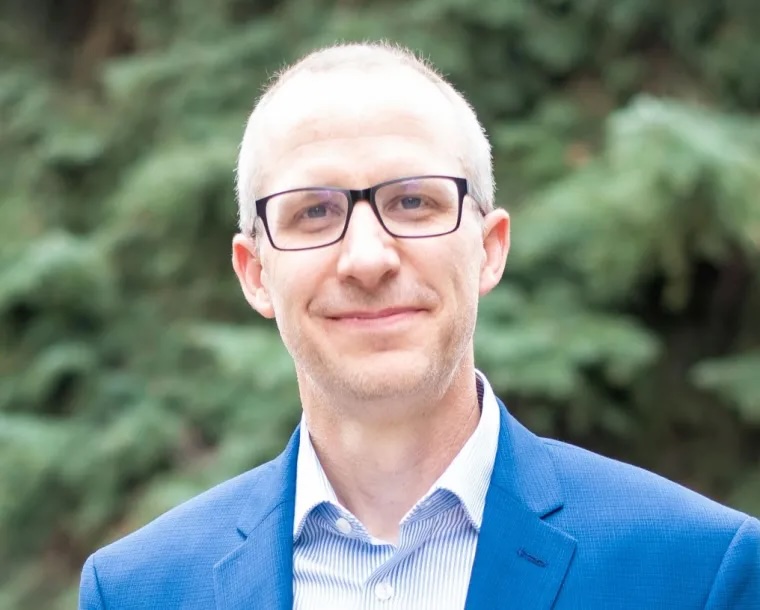
Ryan E. Smith is a Professor and Director of the School of Architecture at the University of Arizona. Professor Smith has been teaching, researching and consulting with respect to offsite construction, industrialized building, prefab and volumetric modular product R&D, factory setup and layout, design assist, and market analysis and focus group, for 18 years. Smith is author of numerous offsite construction reports, papers and books including the seminal text, Prefab Architecture (Wiley, 2010).
He is the founding past chair and current board member of the National Institute of Building Sciences, Offsite Construction Council, a fellow of the Modular Building Institute and a Senior Research Fellow in the Centre for Offsite Construction + Innovative Structures at Edinburgh Napier University in the UK. He currently serves on the board of Ivory Innovation Housing Affordability Foundation. His doctoral work focused on creating frameworks for international knowledge management and exchange in offsite construction for housing. Ryan holds a B.Arch. from the University of Arizona, a M.Arch. from the University of California, Berkeley, and a PhD from Edinburgh Napier University.