

 Apple Podcasts
 Spotify
 Amazon Music
 Youtube Music
 Goodpods
 iHeartRadio
 Deezer
 Castro
 Castbox
 PocketCasts
 Audible
 RSS Feed
 Housing Instability: Why Construction Leaders Should Care | Systems Over Structures
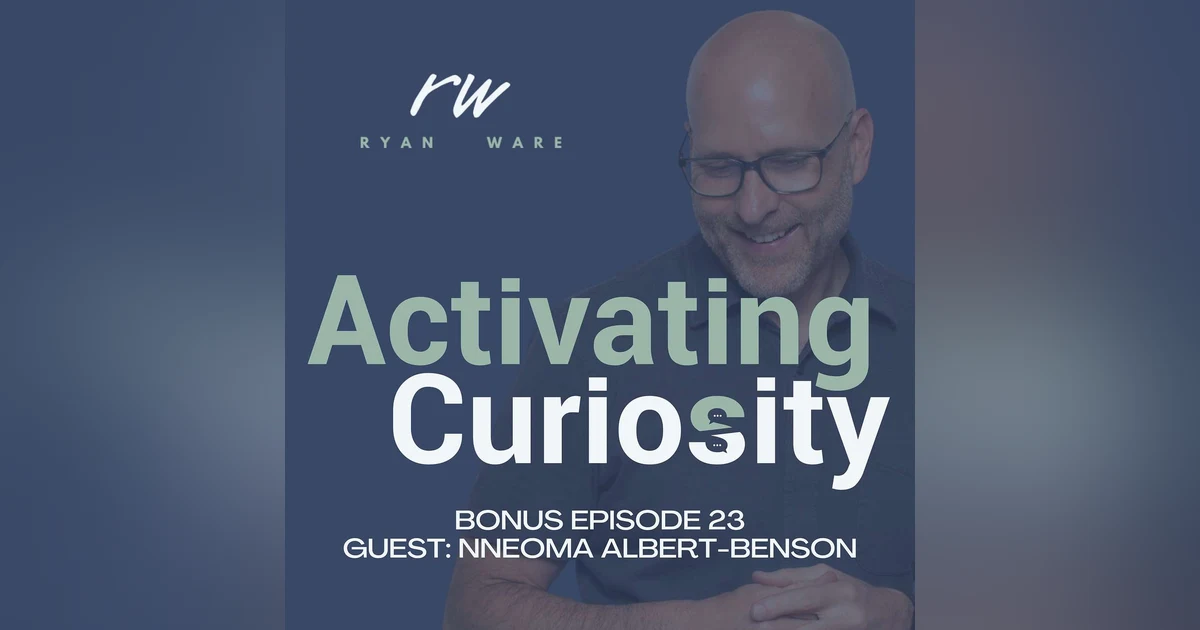

Affordable housing isn’t just about building more homes—it’s about whether people can actually sustain a place to live.
In this bonus episode of Activating Curiosity™, Ryan Ware sits down with Nneoma Albert-Benson, founder of BEFA Women and Child Care Foundation, to explore how construction leadership and change in the AEC industry must go beyond supply and into the systems that determine long-term stability.
This conversation challenges a common assumption: that homelessness is the problem. Instead, Nneoma reframes it as the result of compounding pressures—rising costs, lack of support systems, and environments not designed to catch people before they fall.
Drawing from her experience in human rights law, social impact, and construction, she introduces a new way of thinking about housing—one centered on stability by design. Through BEFA Haven, she’s building a model that integrates housing, childcare, economic opportunity, and community into a system that prevents vulnerability instead of reacting to it.
This isn’t just a conversation about sustainability in construction—it’s about redefining what it means to lead change in how we build, support, and design for people.
What you’ll learn:
- Why homelessness is often the result of system failure—not individual failure
- How “stability by design” changes the way we approach housing and development
- The hidden pressures that push working individuals and families into instability
- Why building more homes alone won’t solve the housing crisis
- How integrated systems (housing, childcare, economic support) create long-term outcomes
Who this is for:
Construction leaders, developers, architects, and AEC professionals ready to think beyond buildings and take a more human-centered approach to housing, community, and change leadership.
Chapters
1:08 - Nneoma's Journey and Vision
3:03 - Redefining Affordability and Stability
8:42 - Building Systems to Prevent Vulnerability
21:06 - Engineering Outcomes Through Construction
32:30 - Replicating the BEFA Haven Model
Guest
Nneoma Albert-Benson is an international human rights lawyer, social impact developer, and founder of BEFA Women and Child Care Foundation, a nonprofit advancing the rights and dignity of women and children facing poverty, violence, and systemic injustice.
She is also co-founder of Helichrysum Construction and is leading the development of BEFA Haven—an integrated housing model designed to support long-term stability through community, economic empowerment, and sustainable design.
https://www.befafoundation.org/
Overcast Innovations
Helping project teams coordinate building systems earlier for more predictable outcomes.
New Lyfe Accounting
Free Diagnostic ($500 value) for Activating Curiosity Listeners by NLA, to help your financial goals
Helping construction leaders simplify change, strengthen trust, and move forward with clarity.
Disclaimer: This post contains affiliate links. If you make a purchase, I may receive a commission at no extra cost to you.
Have feedback or stories to share? Drop us a note or leave a VM—we’re listening!
Follow Ryan at the following:
https://www.linkedin.com/in/ryankware/
https://www.linkedin.com/company/connective-consulting-group-llc
https://connectiveconsultinggrp.com/
https://connective-coaching.com/
https://ryanware.me/
Don't miss out on future episodes! Follow & subscribe now to our newsletter and stay informed about the latest trends and insights in the construction industry.
If this show helps you, please consider supporting it. Just $3/month helps cover production and keeps the conversations going.
⭐ “Love the show? Toss some stars my way, it’s the easiest applause ever.
Nneoma
When we approach the city of Fost Lake, where we intend to have the first beef ahead. So and the mayor said something very striking. He said, Oh, we have a shelter over there, and we have a shelter over there, and they are like very problematic. We have the police coming in all the time. I don't think we want another thing that is nonprofits, like kind of shelter kind of thing. So that assumption is exactly the problem I want to correct. So beeferhaven is not a shelter, it is the opposite of a shelter. Because a shelter is designed for temporary survival, and before haven is designed for permanent stability.
Ryan
And how she was seeing things sort of evolve throughout her career as an attorney and looking at things from a social impact, as well as being around construction her entire life due to what family members were doing in Nigeria. And today I have with me Nneoma Albert Benson. She is an international human rights lawyer. She is a social impact developer. And she is the co-founder and president of BIFA Women and Children Care Foundation, which is a nonprofit organization. And she is beginning to step back and think about the way as a society we talk about homelessness, where we talk about those who can no longer afford a home and what happens next. She's going to describe a lot of those things that she saw while living in Nigeria and what would happen if you moved to an urban area and then had to exit that area, and how villages were this area for community and working together to live amongst one another in Nigeria. And again, taking a step back and saying, how in the United States can we begin to ask different questions as it relates to housing? And how can we go beyond just the construction of building a home? How do we peel back the layers of what it truly means to be affordable for someone who is living through a crisis or has been through a crisis situation and now needs to find a day two what it means to have a home? And how do you build it in such a way that is actually a permanent, sustainable way to live? How can we begin to think about it as a village, something that goes beyond just the walls in which we live? How do we change it so that it is more supportive systems to get to a permanent stabilization of society? And how can we really get to the root cause of what sometimes we define as a problem, which is homelessness and understanding that it isn't homelessness that's the problem, it's the failure of providing systems that give individuals what is needed on a daily basis to live. Hi, Nneoma Albert Benson. Welcome to Activating Curiosity.
Nneoma
Thank you, Ryan.
Ryan
Yeah, it's nice to have you. I'm looking forward to our conversation. So I wanted to have you on today to kind of dive into the work that you've you're really focused on today. But before we get into that, why don't we step back and talk a little bit about your past, which got you into the work that you're doing with BIFA and the BIFA Haven program?
Nneoma
Thank you, Ryan. So what got me into BFA Haven? It started with my organization, BIFA Women and Childcare Foundation, which I founded back in Nigeria in 2009. And BFA was founded because I was in an environment where patriarchy had done a lot of disservice to women and children. And it got to the point where women didn't actually have any voice. And women were expected to be a certain way, women were expected to submit a certain way, and women were expected to live a certain kind of way. And that kind of suppressed the voices of women because women didn't actually have any rights at all, because women were just expected to submit themselves to however society deemed fit. So I had just gotten out of law school, and I just felt like, you know, reading all the laws that were enshrined, both in the constitution, international declaration of human rights, and everything, I just felt that those laws were seemingly like paper tigers because they just didn't have any effect on the lived experience of women in my environment. And that was what, you know, inspired BIFA because I believe that if women actually have these rights enshrined both in the constitution and human rights declarations, why are we not living this rights? Why are we not allowed to have this rights? So that was the main reason why BIFA was born. Because BIFA was actually supposed to bring justice, some kind of justice to women, and to be able to let women know, advocate for their rights and their children, and also the girl child, which had absolutely no rights at all. Because even some people in the government at the time, they just, you know, they had this quote that the rights of women ended in the kitchen. So women were just seen as people who were just supposed to be in the kitchen, cook, clean, and just take care of the family, and that was it. So BFA was born to make sure that women understood that they had rights outside the kitchen and that they were able to, you know, empower themselves and be someone and be, you know, human just like every other person else. So that was what inspired BIFA. And going on as a lawyer, I started to work, BIFA kind of started to grow because we had a lot of cases, human rights cases. We had lots of cases that had to, that bordered on domestic violence, which was seen as a family matter and not seen as a crime at the time when BIFA started. And so we were able to make, you know, criminalize people who were violating the rights of women, abusing women, and you know, bringing various forms of violence and abuse on women. So that was how BIFA was born. And then as a human rights lawyer, like advocating for the rights of women through BIFA, um, I kind of have sat across women who did everything right. You know, they worked, they endured, they survived, and yet there were like one bad moment away from losing everything. Like it was just one moment away from losing everything, not because they were irresponsible, but because the system was never designed to catch them before they fall.
Ryan
Yeah.
Nneoma
So I saw women who left abusive homes because that was what we started to advocate for. And the question was always, where do I go from here? Because there was nowhere to go. I saw mothers who were trapped in cycles of poverty simply because stability was never an option, only like survival. So, and I realized something uncomfortable, and we don't actually solve homelessness. We manage it, you know. So I started to ask a different kind of question. What would it look like to build a system that prevents vulnerability instead of reacting to it? So that question became beefer haven. So befer haven is not just housing, it's it's like an ecosystem, a place where like a working mother does not have to choose between paying rent and paying for childcare, you know, where stability is not temporary, it is designed. So it is kind of where housing is paired with economic empowerment, community, and pathways to ownership. So we wanted to move away from the conventional type of housing where you're probably comfortable today because you have a job, and then in a couple of months you're homeless because you lost your job. So we wanted to make sure that housing is more like something that is stable, even when you're going through other forms of instability in your life. Because having a roof over your head is like the first step to building some form of stability both emotionally, physically, and otherwise. So BFI Haven kind of exists because I refuse to accept that survival is the best way we can offer people. So I believe that we can do better. So that's why we're building better.
Ryan
Yeah. I mean, it's such a powerful story where you're you're focused on the law part, but you're noticing these things as you're working through it. Like, one, it's not even a crime, it's a family issue. And then as you said, like to leave the home, it's it's what's next, which is that point of you know, that stability piece of having that roof over your head is a necessity in life. We see it as generational wealth, especially here in the States. That I know is uh, you know, it's kind of that American dream that we talk about. But when you're in you're talking about Nigeria, like there are laws put in place and just women are being overlooked. And, you know, you're noticing that through your life, you're beginning to ask different questions. And something you said, I think is just so powerful is this managing homelessness. We don't solve it. And I think the word managing is like that's the easy go-to. Like, there's just tasks, and we just do A, B, and C, but it doesn't get to the root as you're discussing of like, why is it happening in the first place? And how do we prevent it from continuously happening? As you said, you can be in one moment I'm here, and the next moment I'm homeless because I'm living paycheck to paycheck. So I think taking that step back and understanding kind of your journey, and correct me if I'm wrong, but you also got into construction focusing on the construction side of it as well, beyond law and that social impact. So before we kind of get to present day and talk a little bit more about that, when did you when did the construction piece come in as part of this ecosystem like you're describing?
Nneoma
Oh, okay. You know, I have always had like, we did have a family business. My dad was, you know, a lot into doing a lot of buildings and construction. And which had already, you know, sparked my interest because yes, he was, and he did a lot of it in the humanitarian angle as well, you know, trying to help people. He was building churches, he was building homes, and he was building stuff. So I kind of that kind of piqued my interest because yes, being um working side by side with that family business, I kind of saw that most times people who came to either buy homes were people at a certain level of financial stability. So I realized that you know, building homes was not, no matter how many homes you build, was still people and certain levels of financial stability that could afford it. It having, you know, that much homes being built did not solve homelessness. It just meant like people moved from one old fine older house to a newer one, and then people were just changing. It was just still rotating in the same cycle of people. And there were still people, no matter how many homes that we had, that did not have any housing. So homelessness is not happening because I just felt like there were still people who were working very hard, and I still saw people who had jobs who were working very hard. But when you are talking and advertising about, oh, we just have a new construction, they're not interested because they look at it and say, Oh, that's not for me because I can't afford it. And so I realized that homelessness is not happening because people are lazy, it's happening because stability has become too expensive to sustain. So, what we call homelessness is usually the final stage of a long chain of pressure because the rising cost of housing and maybe lack of childcare income that does not match real life expenses, one emergency, one job loss, one medical bill, and the entire structure collapses. So, even for most times when people are able to afford the houses, maybe because they think they've gotten to some level of financial stability, and then they lose one thing, or there's one emergency, the house is put up for sale and they're going back to square one.
Ryan
Yeah.
Nneoma
So the real issue is not homelessness. So I realized it because I was working in it. Like I had a first-hand experience. We had we were able to build homes, we were building homes, and we saw that there were people who bought homes this year and next year they've put it up for sale, not because they don't like the homes anymore, but because they could no longer afford to keep it. So the real issue is not homelessness, it is the absence of that system that protects people before they fall.
Ryan
Yeah. The way you said it is the rising cost of pressure. Homelessness is the end state of rising cost of pressure, which is so such a unique way to think about it. And it's it's simple. Um, as you're describing it, and you're talking about that stability piece is how do you sustain that as you're mentioning it, right? Like it's so it's so true when we forget it, it's those daily things that we go through as humans, that pressure point of like, can I afford the food? Can I afford to pay rent? Can I afford like what am I sacrificing in in giving up so that I can afford to do this other thing? Housing, healthcare, all of those things as a society tend to be that internal pressure that we feel. I think also you mentioned they're not being lazy. They are working very hard to provide, but those those pressures are something that I don't know how you feel about this, but I think as a human, like we get embarrassed sometimes to say that we need help. And we've created a judgmental society that puts more pressure on like, don't ask for help. Like, why can't you stand on your own two feet in those cases? So, yeah, I think what you're saying is it's so important to kind of step back and remember, like, you know, these things, like that human piece of it.
Nneoma
I discovered when I came into the US, there was something of which it's my experience from Nigeria because when we build houses, people come in and they buy houses, and then when they have, like I said, some form of financial instability, they sell their homes and they move back to the village. And moving back to the village in Nigeria was that that is why we don't have as much homeless people in Nigeria like you have in the US. In fact, the homelessness in Nigeria is, I'm going to say, like 5% or less. Because, and and that is not even homelessness, that is just people who are ostracized.
Ryan
Okay.
Nneoma
Because nobody is actually homeless in Nigeria. Everybody has a home. You have a village where you come from. So if you if you if your situation is shaky, if your circumstances become unstable, you just move back to the village. And in Nigeria, moving back to the village means that there's somewhere that you come from. And everyone has a home where you come from. So there's no rent, there's no like your village, everybody has a piece of land that is given to their family. And the family manages to build something there, even if it's like a one-bedroom or two-bedroom or three-bedroom, everyone has somewhere to put their head down. And there are no property taxes, there are no like anything. We don't, there are no utility bills, nothing. You just have it's off-grade, you know. So you know that if things, even if you move to um the so um to the urban city and you start to your life starts to get shaky, you pack your things up and you go back to the village and you start afresh. But I realize that in the US, that there is no village.
Ryan
Yeah.
Nneoma
So there's no village.
Ryan
So mom and dad's basement, maybe, but yeah.
Nneoma
Yeah. If you can get unstable here on the streets, you know.
Ryan
Right, exactly. Yeah. Yeah.
Nneoma
So I realized that this is a tiny piece that we can incorporate here that can actually give people some form of stability to start over. So Beefer Haven tried to incorporate that village kind of scenery so that you know, when you believe that when things go south and things are not working well, sustainability and some form of stability actually help people to rethink their life and to rebuild better. Because I've I've worked a lot in rehabilitation and I see that there is some form of stability or emotional um stability when you have a place to start from, when you have a place to rebuild from. So, and the real issue in the United States is not homelessness, it's the absence of systems that protect people before they fall. That's what I said the first time. So, for me, the construction piece came when I realized that advocacy alone was not enough. So, just advocating was not enough. There needed to be real life intervention. So, as a lawyer, I could fight for women, I could get them out of prison, out of abusive situations, out of injustice. But where do they go after? Back into the same conditions that made them vulnerable in the first place. So, this is when it became clear to me that if you want to change the outcomes, you have to change the environment. And so construction became the tool.
Ryan
So that's where you've you've now kind of gone through from that legal side, you've talked, you know, talked to the past, kind of getting you to this point of present day, like, hey, I I've grown up around construction, I understand it. You understood from the perspective of how it worked within Nigeria and the village piece of it. But something that you just you just stated, it sounds like it's at present day now of like, hey, what happens after, right? Like, I can fight as an attorney to help women, you know, with with the justice side of it. Now they're coming out, or what, you know, whatever the circumstance is, there's no day two other than potentially homelessness or some other alternative, as you said, that's going to put them right back into those situations and experiences that you know got them, got them to where they where they were, where you needed to fight from the justice side. So now that we're at present day, BIFA Haven, as you mentioned, is this village. Now talk a little bit about this construction piece. And because I think this is where it's really powerful for us in the industry to start thinking about how you talk about construction. Talk about those villages, where you're at today, and then we'll dive into what's really needed for the future success of them.
Nneoma
Sure, thank you, Ryan. So for BeFar Haven, we're not just building houses. So what we intend to do is to build stability. So our Befar Haven is designed, like the communities are designed in such a way that people are supported, not just sheltered. So this system, we're building a system that works in their favor. And we're trying to eliminate the policies or rather the projections that hinder them from going from this step to the other, or that kind of bring them back when they have any form of financial situation. So we're trying to eliminate, we identify, you know, the things that work against people in this kind of situations, like buying a house, you know, through mortgage, and then you're not able to pay in two or three months, and then there is foreclosure, and then you're back to square one. So we're trying what Beafer Haven is about is to kind of change the environment. Because if the environment does not change, the story does not change. So we are no longer interested in temporary victories. We want permanent solutions. So we we are trying to eliminate. You know, of course, we we the whole structure is, you know, making sure that we're not involving the banks, making sure that we're not involving like making it into a mortgage where people are expected to be on a particular standard and then they lose it and then they go back without mercy. So the construction piece is actually where the vision becomes real. Because it is one thing to talk about change, it's another thing to physically design it.
Ryan
Yeah.
Nneoma
So construction for me is not just about putting up the buildings alone. It's kind of actually about engineering outcomes. So every layout, every system, every decision is intentional. And that intention is to make sure that whatever we are doing is sustainable and that whoever owns a piece or whoever lives in the haven, they are not moving out because they can no longer afford it. They are moving out because they have something better that they believe is also going to project them into more sustenance. Of which, of course, that is also a vision that we have going forward. So we're not just asking what looks good, we're asking what works for the people who live there. So in Befa Haven, construction is being used to solve problems at the roots, which is what you mentioned the first time we're talking about the root causes of the problems. And we want to make sure that we solve the problems of homelessness from the roots. So, and the question that we're asking is how do we reduce the daily financial pressure on families? How do we design proximity so that childcare, work, and home life are not in constant conflict? How do we build in a way that supports long-term stability and not temporary relief? So, this is all the questions that we ask while engineering beefer Haven and the construction. We're also thinking sustainability from the ground up, you know, so energy systems, water systems, food systems, not just as add-ons, but as part of the infrastructure of the whole um construction. So, because of course we believe that true stability means people are not constantly exposed to rising costs that they cannot control. So, all of these are all the things that we put together in Befer Haven. So that's why Beefer Haven is fully off-grid. And we're also making sure that whatever anyone puts down, like as to what we call rent, even though we don't intend to call it rent.
Ryan
Yeah.
Nneoma
But yeah, we don't intend to call it rent, but whatever anyone puts down as to what the society conventionary regards as rent is going to cover everything. It's going to cover utilities, it's going to cover childcare, and it's going to be able to make sure that it covers some form of insurance that they have in case they fall out of, you know, any job that they have and give them that period to rebuild and, you know, make sure that they are able to sustain themselves in that period of waiting.
Ryan
Yeah.
Nneoma
So that's how it's all engineered.
Ryan
Well, I think something that saying that it's not going to be rent, I think is so powerful in that you're looking at it from a standpoint of like there's day one of owning that house and then beyond of packaging this in a way where it's all inclusive, right? So the things that are required, like again, we went back to this what what as humans we sacrifice food, healthcare, you know, child care, or you know, someone's going to stay with the child and then not have the opportunity to go out in a career, or they're working multiple jobs. So I think just reframing in that way of like rent to mortgage, it's like, what is the true cost of living to make it sustainable, like you're saying, and and and how you worded it was to prevent the failures that are happening in the system that aren't provided to lift people up in order to not have them feel like the need is to move out and end up in a state of homelessness. So I think just again, that's just something in the industry. We go build. And when I, you know, we think about day one costs, just getting that building taken care of. And you're looking at this like it is the entire life cycle of ownership of these of these homes. And almost, I'm thinking almost like it's a walkable community. It's this, this, like you're saying, with the village where it's all encompassed, everything is there that they will need on a daily basis with a support system of other humans where it seems like less judgment because everyone is going through similar things. And it is really just about the humans, then at that point, not so much about like who's, you know, who's keeping up with their neighbors to be able to move out. But something else I think you said is powerful is like we don't want them to move out because they can't afford it. You're building that system so that it's it's it's preventing that from happening to where they're able to work on a career that they want, have the child care, have the systems in place to move out to another, another location that is showing that they're making it each step, um, that from their perspective, like we're surviving, we're sustaining, and we have that foundational piece put in place to move out of this community into a new community. So I I think that is again going back towards like the construction piece is only one component of it. Beef a Haven is not just that, it is an entire community that is sustaining one another in order to kind of rise all ships, like get everybody the opportunities that they deserve to have as humans. Where you are currently with the programs, you mentioned Nigeria, you're here in the you're here in the States. What is the next step that you're taking with these with these communities?
Nneoma
So at this point, we are at you know developing everything. We've identified a site, identified a site for the first beefer haven here in Illinois. So we are actually in the process of you know structuring, doing the engineering, the building plants and everything, putting everything together. So we're kind of in the pre-development phase, which is one of the most critical stages of a project like this. So we have fully developed the vision, we've done our research, the model, and the structural framework for Beafer Haven. So right now, the concept is not theatrical anymore, you know. So it is mapped out in detail. So it's no longer like a theory. So it is from the house mixing to the integrated support systems and the long-term sustainability strategy. So right now, our primary focus, which is what we're presently working on, is getting the land, which is the key that unlocks everything else. So, because once the site is secured, which we just identified, we move immediately into planning approvals, phase construction, and then early activation of the parts of the project. So we have also been actively engaging with you know community stakeholders and partners to align financial and local support. So what makes our position unique at this time is that we already have significant interests and resources aligned towards the construction. So the missing piece right now is securing the land to activate all of that. So this phase is not idle, it's strategic. It is about putting the right foundation in place so that when we build, we build efficiently, we build credibly, and we build at scale. You know, when people hear about our model, especially in the US, the first question that they ask is, How are you even going to do that? That looks like too good, that looks like everything, you know. So the truth is, like that is where my construction experience comes into play in real estate because I can tell you, Ryan, real estate is a very profitable venture. So it's like I think it still maintains like the top three or top five of you know the best investment places, like it's still real estate. So it's something that I know from experience and from being in construction for a very long time that there is so much that we can make from it that we can reinvest into beefer Haven. So saying that people are, oh, just because one person falls out and you're probably going to give a six-month period to get them back, and they're saying, Oh, how are you going to make money? There is already money. So the construction itself, especially because of how Beafer Haven is engineered, we still have, you know, we still have like, you know, shortlets, we still have, we're building the estate in such a way that people can still come in to experience it. People can still come in and pay for like, you know, a month or two weeks to live in the environment, experience it. And all those resources that we make in that, we're still going to put it into Bifer Haven. We're still going to put it into supporting people who we know that sometimes people fall out for a couple of months and they might not be able to make um the payments. And they they will still have to be in the haven. We still have to help them up, which is what the community is about. This is what the village is about. Right. So that is how we intend to make those resources, and that's where we're at at the moment.
Ryan
Yeah. So you're you've got the funding side. It's really the land acquisition then, and then getting the the local communities to understand what it is that you are going to be constructing. Is there, you know, as we think through here's present day, and we're starting to think like in the future and timeline of this first location you're talking with, Illinois. What is um BIFA Haven's sort of plan, your long-term vision for this completion of this community, and then sort of what comes next as you're thinking about other regions or other locations?
Nneoma
Okay, yes, of course. So we're building Bifa Haven in such a way that we can replicate it. So we're doing a model that can be replicated across not just in Illinois, but that's why I said we are building it in such a way that people all over the place can come and experience it and then see that, oh, this is actually something that works. And then we can be able to replicate it. So Beaver Haven is the model. So the one we're doing right now in Illinois, uh, we're planning right now, is going to be the model. So this is where we demonstrate actually that housing can be designed to eliminate vulnerability, not just respond to it. So what comes next after this is the scale. So once we establish that this works, the goal is to replicate and adapt the model across different cities and communities. So the vision is not a one size fits all solution, but is a framework that can be customized based on local needs, you know, while maintaining the core principle, which is housing must come with built-in stability. That is our core principle. So it's something that we're going to maintain even as we try to replicate it across different environments based on what their local needs are. So we also see Bifar Haven influencing how developers, lenders, policymakers think about housing. So that is what we intend to do. So if we can prove that integrating social impact with construction is not only sustainable but economically viable, then we shift the entire conversation.
Ryan
Yeah.
Nneoma
So yeah, it stops, it's we don't we stop to see it as charity and start to see it as a kind of smart development.
Ryan
Yeah. Well, I mean, I think I think that's powerful, is that, you know, the charity side, like we can think as humans like, hey, we're just we donate, we do this, we give our time here and there. And then when we do it, you feel good about yourself. But the reality is you're like, what impact did I actually just make in this situation? And I think this is so powerful. You just keep going back to the systems that get put in place. And I I can't think of a community that wouldn't be like, hey, you know, whatever the major metropolitan area is or the region is, like to be able to build a community where it's solving the problems. It's bringing, bringing things that we as humans naturally need and want. Community feeling safe, having a house and a roof over our head, that sustainability side of our lives, that we can't afford to pay, you know, pay the pills, that we are thrive when we work. We thrive when we're doing something as individuals, and that's that's where we begin to take pride first, this constant pressure that you were talking about. So I think as you're getting into that next phase, I'm thinking, and you mentioned all of it, right? You got to get everybody involved, the policymakers, the developers. So this phase one is really that model. You're gonna um was there a completion date that you're you're looking at or a goal set based off of you know getting the model complete?
Nneoma
Yes, we we do have um by have our first um um community members move in by 2029. So, which is where we expect that you know people start to move in because we have um 2027 and 2028 to you know finish up all of construction and put all the infrastructure in place. So by beginning of 2029, we expect that we have people start to move in. Although we believe that by the end of 2026, already start to have, you know, people we start to evaluate people who are eligible to move into the community, because of course we do will have criteria for moving into the community because you have to be prepared, you know, we have to understand that you have that need, you know. So it's not just for you know we're not building something that people just want to come and have it because they can afford it, no. So we're trying to make sure that it is actually the people who we believe need this intervention that get it. So that is also what we're trying to emphasize that the interventions should actually go to people who need it. Yeah. So and not just people who can afford it. So and at the end of the day, by 2029, we believe that people can come into the haven and experience it because we want to move from a world where people are constantly recovering from crisis to one where crisis is prevented by design. And that is what BIFA Haven is all about. So what comes next is not just more buildings, it is the standard, and this is a standard that we hope that by 2029 people can come in and experience it firsthand.
Ryan
Well, I think that's I mean, it's a powerful mission that you're on, and the purpose is so deep and important. It's something, you know, having lived in multiple different regions around the United States, and I've heard most of my life like people describing a result of things as like that's the problem. And it's like, no, that's not. It is, we do not have the systems in place that can lift one another up and and provide, you know, that as you keep saying, is that stability as a human. So, like you said, it's eliminating the crisis by design, providing people um aligning it with the right intervention, right? Like the the groups that you're talking to have to meet that criteria that isn't just a community um for anyone. You are really focused on helping other humans who you recognize very early on, like this isn't working. Like we're not, we're we're missing an entire you know, group of um of our society in order to help them, you know, whether it was through social justice or you know, as you're practicing as an attorney, instruction and beyond into that social impact. So I think, again, I'm excited to kind of see how you progress. I'm I'm glad that the funding is continued to come into place for you. I wanted to have the conversation because affordability is a big topic for us in the United States, as well as pretty much anywhere in the country. And we talk about supply, and it's the right supply, and you are focused on an area that is so unique compared to what we term market rate to affordability, kind of just giving it a term versus here's a real purpose, here's a real, you know, look at building a community that is beyond just the construction side of it. So I know we could go a lot deeper, Nneoma, but uh given that, just wanted to kind of start to dip our toes into this to get people more curious about the work that you're doing. Um, I am sure I didn't ask you something that would be helpful if I did, um, or something else that you want to share.
Nneoma
Yeah, thank you, Ryan. So there's something I really want to talk about because this was the first hurdle that we faced when we approached the city of Fost Lake where we intend to have the first before haven. So, and the mayor said something very striking. He said, Oh, we have a shelter over there, and we have a shelter over there, and they are like very problematic. We have the police coming in all the time, we have this and that. I don't think we want another thing that is non-profits, like kind of shelter kind of thing. So that assumption is exactly the problem I want to correct, you know. So beaver haven is not a shelter, it is the opposite of a shelter, because a shelter is designed for temporary survival, and beaver haven is designed for permanent stability. So we're not bringing in a transient population, we are building a structured mixed-income community for working individuals and families who are already contributing to society but are being priced out of stability. So the women and families we're designing for are not looking for handouts. So they are working, they are raising children, they are doing everything society asks of them. They are paying taxes. So what they lack is a system that supports their ability to stay stable. So these are the people that we're building for. And that is where beefer haven is different. So the development includes, you know, rental homes, pathways to ownership, integrated childcare, economic empowerment programs, and sustainable infrastructure. So this is long-term community building, not a temporary accommodation, not a shelter. In fact, what we're doing reduces pressure on shelters, on social services, and on local systems, because we're addressing the root causes before people fall into crisis. So the question is not why build something like this. The real question is why haven't we been building this all along? Because once you understand the model, you realize that this is not a burden to a community, it is an asset. So that's actually what I really wanted to put out there.
Ryan
Well, I'm so glad you did. I think, you know, what you just shared is so powerful again. It is, in the way you're stating it, is permanent stability for those individuals. And, you know, it goes back to the mindset piece, which is why I like having these conversations of we think something was one thing because that's what we're used to in our life. And then we put it, we project what we're hearing, you know, like, hey, this is what it is. And that's just not the case, like you're describing. This is not about temporary, you know, it could be seen as a way that's really helping people kind of get to that that next stage, but it isn't like a short-term, you know, you need it a day or two, or you need it over this time period. And reality is those humans need it more than that anyway. This is that, this is an answer to um, you know, solving something that is frankly probably going to be continuing getting worse, um, given the divide between incomes and income equality that we see you know spreading kind of across the planet. Um, and I think you know everyone can dive into the show notes and kind of see a lot of the work you're doing, how you're thinking about it, designing in a way that's sustainable, taking care of things with the utilities so that these spaces aren't driving huge utility costs up, not only for those in the community, but you know, maintaining them for long term. So I appreciate everything that you're doing. I know that you your story is amazing. I'm recommending. Everybody go out and kind of look look at your backstory. But Nneoma, I am so glad that you were willing to come on to Activating Curiosity to answer these questions to tell your story. But to really just again, I wanted to hear it because you can read it. But when you see the passion and you hear the passion in your voice of the work that you're doing and the importance of it, it needed to be shared. And I just I just wanted to do that with you today. So I appreciate you being willing to come on Activating Curiosity.
Nneoma
Thank you so much. Thank you for having me, Ryan. I appreciate you. Thank you.
Ryan
Yeah, thank you. So that's her episode with Nneoma Albert Benson. And a phenomenal conversation. I am I have been fascinated to have the conversation with her since I began following her on the work she was doing. So I hope this was impactful. I hope just kind of hearing the story was helpful and that it makes us sort of just reframe what we do in the AEC industry and how we think about building. There is actual impact on that other side as humans. And I know there are a lot of things that we can begin to look at from a design standpoint to to help these systems become something that that Nneoma and team are really saying that we as a society, especially women who have gone through tragic situations within their life, are provided the basic foundations that that is needed for them to begin to take the steps forward to home ownership and a more permanent and sustainable lifestyle. So until next time, I hope that you stay well. I hope that you continue to look at those things in your life that you want to focus on. And I hope that you continue to activate your curiosity as well as curiosity within them.
Ryan
The Activating Curiosity podcast is brought to you by Connective Consulting Group and Connective Coaching, part of the Curiosity Building Experiences. If you enjoyed today's episode, don't forget to subscribe so you'll never miss a conversation. Share the podcast with your network and help us bring more curiosity into the construction. Interested in becoming a guest or a sponsor? Visit us at ActivatedCuriosity.com for more details. Until next time, keep leading with curiosity.

Founder/President
Nneoma Albert Benson is an international human rights lawyer, social impact developer, and Founder and President of BEFA Women and Child Care Foundation, a nonprofit organization dedicated to defending the rights and dignity of women and children facing poverty, violence, and systemic injustice.
Founded in Nigeria in 2009, BEFA has provided legal aid, secured access to justice, and empowered vulnerable women to rebuild their lives with dignity. In recognition of its impact, the organization was granted Special Consultative Status with the United Nations Economic and Social Council.
Nneoma is also the Co Founder of Helichrysum Construction, a company with roots dating back to 1991, now expanding into the United States. Through her work at the intersection of construction, law, and social impact, she is leading the development of BEFA Haven, a multi-million dollar empowerment housing community designed to eliminate homelessness for working women and families by integrating housing, childcare, and economic empowerment into one ecosystem.
A Mandela Washington Fellow and a visionary advocate for systems change, Nneoma is redefining what it means to build. Not just structures, but pathways to stability, dignity, and generational transformation.