Register Now for Collective Leadership Co-op's Becoming Human Again Event Series!
Activating Curiosity™

Podcast Videos

Subscribe to our YouTube channel, and share with others.
https://www.youtube.com/@ActivatingCuriosity
June 21, 2026

Architects: Design-Build Gives MORE Control, Not Less!

Architects: Design-Build Gives MORE Control, Not Less! Construction and AEC leaders — what if the control architects are trying to protect is actually the thing they’re losing? In this clip, we break down why design-build can give architects MORE control — not less. A lot of hesitation around design-build comes from the fear of losing influence over the design process. But when architects are disconnected from coordination and field-level conversations, decisions still get made… often without their visibility. That leads to: → RFIs being resolved without architectural input → field decisions happening in isolation → final walkthrough surprises that could have been avoided The solution isn’t tighter control. It’s earlier collaboration. Design-build creates more opportunities for architects to stay connected to the space, ask better questions earlier, and maintain visibility throughout the process. 👇 Have you seen architects lose visibility by staying disconnected from the build c…
June 19, 2026

12 Months vs. 6 Years: The Timeline Construction Leaders Can't Ignore

Construction and AEC leaders — the project timeline math has flipped, and most of the industry hasn't adjusted. In this clip from Activating Curiosity, Tom Raftery and host Ryan Ware break down what the Iran conflict and Strait of Hormuz shutdown revealed about energy project timelines: → Solar park: 12 months to operation → Gas plant: 6 years → Nuclear: 30 years When electricity demand is surging right now, speed-to-power isn't a sustainability conversation — it's the deciding factor in which projects pencil out. The old assumption that fossil fuels are the "safe" bet collapses under its own timeline. Full episode of Activating Curiosity — link in channel. 👇 Drop a comment: Has your firm's energy planning accounted for these timeline differences, or is it still business as usual? #construction #constructionleadership #AEC #projectmanagement #renewableenergy #energytransition #leadership #constructionindustry #podcast
June 18, 2026

The Energy System Just Broke: Here's What Construction Leaders Need to Know

The global energy system just broke — and construction leaders need to understand what that means for their projects, supply chains, and long-term resilience. In this bonus episode of Activating Curiosity™, Ryan Ware sits down with Tom Raftery — international keynote speaker, sustainability strategist, and host of the Resilient Supply Chain and Climate Confident podcasts — to unpack what today's construction industry trends reveal about energy risk, infrastructure design, and the leadership decisions that matter most. What you'll learn: Why the Strait of Hormuz shutdown affects far more than oil — including fertilizers, helium, and global semiconductor supply How solar + battery storage is now cheaper than new gas plants in 91% of global markets — and what that means for project design Why renewables deploy in 12–24 months vs. 6 years for gas — a critical advantage for construction timelines How "total cost of ownership" should reshape how construction leaders advise project owners …
June 17, 2026

Reshore Your Energy: The 20-Year Guaranteed Price Construction Leaders Haven't Considered

Construction and AEC leaders — you've already reshored materials, components, and talent. Energy is the supply chain you haven't brought home yet. In this clip from Activating Curiosity, Tom Raftery and host Ryan Ware explain why fossil fuel dependency is the single most volatile line item in your budget — and what replaces it: → Localized renewables + battery storage come with a 20-year fixed price → No supply shocks, no foreign dependency, no price spikes → The same reshoring logic that protects your materials should protect your power The industry spent five years derisking every supply chain except the one that keeps the lights on. Full episode of Activating Curiosity — https://www.activatingcuriosity.com/ 👇 Drop a comment: Has your firm started planning for energy independence, or is it still assumed? #construction #constructionleadership #energysecurity #renewableenergy #reshoring #AEC #leadership #constructionindustry #podcast
June 14, 2026

Buildings Should Go Up Like Cars on an Assembly Line

Construction and AEC leaders — what if buildings were assembled like cars? This structural system replaces traditional stick-built methods with a chassis-based kit of parts: columns, header beams, floor cassettes, and blade walls. Four elements that reconfigure to create any architecture. 🎧 Full episode: https://www.activatingcuriosity.com/construction-productivity-manufacturing-solutions/ #leadership #constructioninnovation #changemanagement #constructionindustry#constructionleadership #offsiteconstruction #modularconstruction #industrializedconstruction#AEC
June 12, 2026

96 Years of Decline: Why Construction Gets Slower Every Year

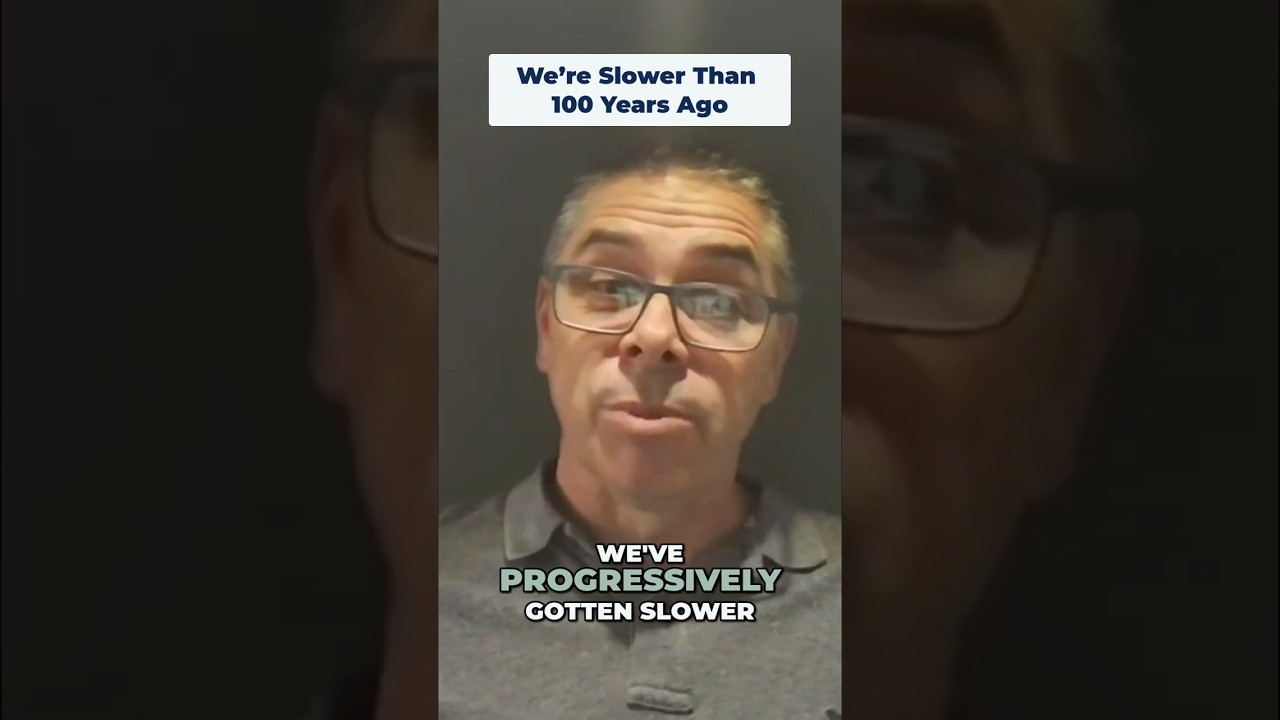
Construction and AEC leaders — for 96 years, the construction industry has progressively gotten slower at delivering buildings. Not stalled. Not plateaued. Actually declining. In this clip, Wayne Larsen of PT Blink puts the numbers on the table: → The Empire State Building — 101 floors, 13 months and 15 days. Today, that same building would take 5 to 6 years → Manufacturing gets more productive every year. Agriculture gets better. Even government services improve → Construction uses more money, more materials, and more labor to produce the same amount of housing every single year → The industry isn't just failing to improve — it's actively going backwards This isn't a temporary dip. It's a 96-year trend. And Wayne calls it what it is: a systematic productivity failure. Every other industry has figured out how to do more with less over time. Construction is doing less with more. That's not a challenge to overcome — it's a system to replace. 👇 Drop a comment: Is your firm measurin…
June 10, 2026

The First Person on Site After a Concrete Pour Is There to Cut Out Mistakes

Construction and AEC leaders — 20 to 30 percent of labor on site is rework. Rectification. Doing the job twice. The first person who shows up after a concrete pour isn't there to build — they're there to cut out what didn't get formed right. Then we adjust the next floor because the one below is two inches off. The errors compound as the building goes up, and it all costs. 🎧 Full episode: https://www.activatingcuriosity.com/episodes/ leadership #changemanagement #constructionindustry#constructionleadership #leanconstruction #constructionmanagement #constructionefficiency#AEC
June 9, 2026

We Don’t Have a Labor Shortage It’s a Construction Productivity Problem

Construction isn’t getting slower because of labor shortages—it’s getting slower because we’re solving the wrong problems. Every day, teams are busy fixing issues, managing rework, and pushing projects forward. But most of that effort is spent reacting to symptoms instead of addressing the root cause. In this Activating Curiosity™ conversation, Ryan Ware sits down with Wayne Larson, CEO of PT Blink, to explore why construction productivity is declining—and what needs to change to reverse it. Why construction is less productive today than it was 100 years ago How rework, waste, and fragmentation quietly drive cost and delays Why the “labor shortage” narrative is missing the bigger issue How time—not cost—is the most undervalued factor in construction What Design Manufacturing Integration (DMI) unlocks across the industry How prefabrication and kit-of-parts approaches change project delivery If you’re leading change in the construction industry and feel stuck in constant firefightin…
June 7, 2026

The Construction Paradox: Sustainability Is the Reason to Build Now

Construction and AEC leaders — what if the biggest risk isn't changing too fast, but changing too slowly? In this clip, Allison Dring names the paradox at the center of the construction industry: there is massive demand for sustainable materials, driven by policy, ESG expectations, and market pressure. Yet the industry continues to rely on the same traditional materials — many of which carry significant embodied carbon. Here's what makes this a paradox, not just a challenge: → Demand for sustainable materials is growing — policy, permits, and market expectations are all pushing in one direction → But the materials going into buildings right now still carry high upfront carbon emissions → Those emissions are embodied — locked in from the moment construction begins. You can't reverse them later with better operations or efficiency upgrades → The timeline doesn't allow for a wait-and-see approach — by the time you "get around to it," the carbon budget is already spent And here's the r…
June 5, 2026

You’re Already Overpaying for Construction

Construction and AEC leaders — every building being designed today is already overpriced. Not because of materials. Not because of labor rates. Because of how the project was set up before ground was ever broken. In this clip from a recent Activating Curiosity episode with Wayne Larsen of PT Blink, Host Ryan Ware explains that the industry is paying for inefficiencies it doesn't have to — starting with design decisions, delivery models, and construction methods that haven't evolved. Here's what's driving the overpayment: → Design happens in isolation — the people who build it aren't involved early enough, so the design creates inefficiencies that get baked in → Delivery models are outdated — the methodology used to get from design to construction hasn't changed to match what's now possible → Construction methods are default, not deliberate — whether it's kit of parts, volumetric, or another approach, the method should be chosen, not assumed And here's the shift Ryan points to: the …