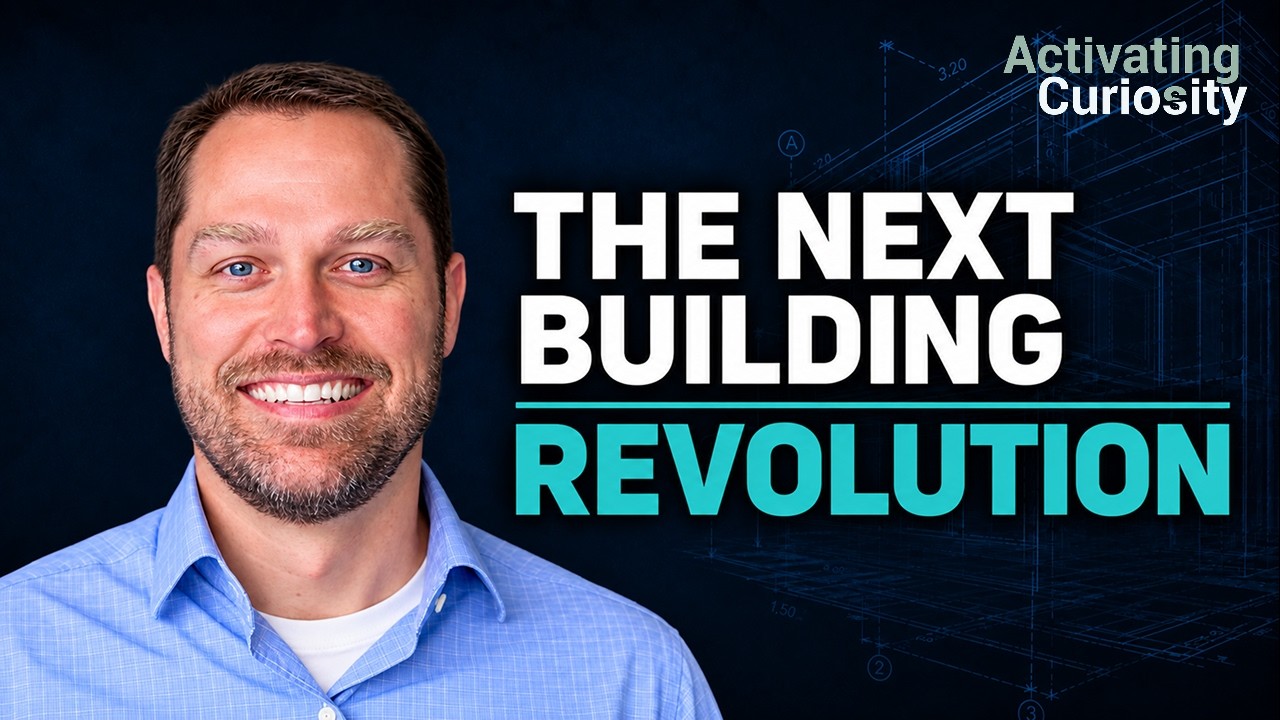
Why AI-Generated Architecture Fails in the Field (And How Cellular Fabrication Fixes It)

Generative design tools and artificial intelligence are creating fluid, complex architectural shapes that modern construction methods cannot physically build. This mismatch between digital imagination and physical execution exposes the severe limitations of conventional on-site building practices. Discover how robotic 3D printing and cellular fabrication are bridging the gap between algorithmic design and real-world construction.
Key Takeaways
- AI and advanced digital tools are currently limited by traditional construction's reliance on rectilinear shapes and manual assembly.
- The traditional 'value engineering' process often dumbs down creative architectural designs to fit standard, boring building materials.
- Cellular fabrication uses robotic 3D printing to create open, lattice-like structures that mimic nature's strength-to-weight efficiency.
- Moving from on-site printing to off-site prefabrication solves major labor, quality control, and cash flow hurdles for innovators.
- Meeting strict international building codes requires millions of dollars in testing for wind, fire, and structural performance.
The Gap Between Digital Imagination and Physical Reality
Walk into any modern architectural firm, and you will see computers generating breathtaking, organic forms. Using advanced algorithms and artificial intelligence, designers can conjure structures that look as though they were grown in a forest rather than engineered on a desktop. Yet, a frustrating reality hits the moment those digital blueprints meet the jobsite: we cannot build them.
For decades, the construction industry has relied on rectilinear geometry—straight lines, 90-degree angles, and stacked layers of heavy materials. When an architect attempts to introduce a complex, freeform curve, the project invariably runs into budget overruns and constructibility roadblocks. The traditional response is value engineering, a euphemism for stripping away the design's uniqueness until it fits into standard, familiar, and often boring construction methods. The tools of our digital age are sprinting forward, while our physical building methods remain anchored in the past.
How Nature Inspires New Structural Geometries
To overcome this creative bottleneck, forward-thinking innovators are looking away from traditional building products and turning directly to biology. In nature, strength does not come from sheer mass. Consider bones, sea diatoms, or tree structures—they achieve incredible load-bearing capacity by placing material precisely where geometry demands it, leaving empty space everywhere else.
Traditional construction does the opposite. It pours massive amounts of concrete and stacks heavy blocks, relying on dead weight for stability. This creates staggering amounts of material waste and limits architectural expression. By studying osteology and natural micro-structures, innovators have realized that buildings do not need to be solid blocks. They can be engineered like organic tissue, utilizing open cells and intricate internal lattices that provide immense structural integrity while using a fraction of the material.
The Rise of Cellular Fabrication and Robotic Printing
Translating nature's geometry into commercial construction requires a complete reinvention of manufacturing processes. Early attempts at 3D printing in construction simply mimicked traditional methods by oozing concrete out in horizontal layers, essentially acting like a slow, automated masonry crew. That approach fails to unlock the true potential of additive manufacturing.
True transformation happens when construction adopts advanced cellular fabrication. By programming industrial robotic arms through software like Rhino and Grasshopper, innovators can extrude materials directly into open space, printing a cubic cellular framework without the need for traditional formwork. Common construction materials are then integrated within and around those cells to form complete, lightweight wall assemblies. This method shifts construction away from piece-by-piece site assembly and toward true factory-controlled product manufacturing.
Navigating the Commercial and Regulatory Hurdles
Revolutionizing how buildings are made is not purely an engineering challenge; it is a brutal business and human trial. Transitioning a groundbreaking technology from a garage sketch to a viable commercial product involves steep financial risks, venture capital pressures, and the difficult reality of corporate pivots.
Furthermore, the construction industry is heavily regulated for good reason. Introducing a completely new manufacturing process means proving it against stringent international building codes. To replace standard wall panels or heavy facades, a new product must undergo rigorous, expensive testing for weatherability, fire resistance, and high-velocity wind or hurricane impacts. Scaling these hurdles requires patience, millions of dollars in testing, and a strategic shift from trying to print entire houses on-site to producing highly optimized, panelized commercial building facades off-site.
Conclusion: Building What's Next
The widening gap between what we can design with AI and what we can physically build points to a massive opportunity for leaders willing to question conventional methods. By embracing nature-inspired geometries, robotic manufacturing, and off-site prefabrication, the construction industry can finally step past its self-imposed limitations and build structures that are both efficient and breathtakingly expressive.
If you want to hear more about how pioneers are transforming architectural design through robotics, material science, and relentless curiosity, Listen to the full episode. Tune in to the Activating Curiosity podcast to explore the real stories, hidden challenges, and practical tools you need to lead change in the construction industry.
Frequently Asked Questions
Why can't traditional construction methods build AI-generated designs?
Traditional construction relies heavily on rectilinear geometry, standardized materials, and manual, piece-by-piece assembly on the jobsite. AI-generated and algorithmic designs often feature complex, organic curves and non-standard geometries that cannot be efficiently produced using conventional building techniques without prohibitive costs.
What is cellular fabrication in construction?
Cellular fabrication is an advanced manufacturing method that uses robotic 3D printing to create lightweight, open-cell lattice structures in open space. These structures mimic natural geometries found in bones and sea creatures, providing exceptional structural strength while using significantly less raw material than traditional solid walls.
How does robotic 3D printing differ from traditional layered concrete printing?
While traditional concrete 3D printing extrudes material horizontally in stacked layers—essentially automating standard masonry—advanced cellular fabrication uses industrial robot arms to print intricate, open-cell frameworks in free space. This allows for complex geometries, integrated insulation, and panelized manufacturing that can be used for commercial building facades.
Why are innovators shifting from on-site printing to off-site prefabrication?
Attempting to print entire buildings or structures directly on a jobsite introduces massive variables in weather, labor management, quality control, and regulatory compliance. Off-site prefabrication allows companies to manufacture building products in controlled factory environments, ensuring consistent quality, lower waste, and easier compliance with international building codes.

Change Management Consultant, Leadership Coach, Keynote Speaker, and Podcast Host
Ryan Ware is the founder of Connective Consulting Group and the host of Activating Curiosity®.
Ryan began his career in architecture and went on to work in construction and prefabrication manufacturing. Over more than two decades in the industry, he’s seen firsthand what happens when new ideas meet the way teams already work.
As a consultant, coach, and speaker, Ryan helps leaders and teams across architecture, engineering, and construction build stronger relationships with change. His work helps them question familiar assumptions, navigate uncertainty, and put new ideas into practice.

Data Center Embodied Carbon: Why Servers and Equipment Matter for Embodied Carbon

 Apple Podcasts
 Spotify
 Amazon Music
 Youtube Music
 Goodpods
 iHeartRadio
 Deezer
 Castro
 Castbox
 PocketCasts
 Audible
 RSS Feed