Why Design Teams Keep going to “Default Mode” with Choices—and How to Fix It
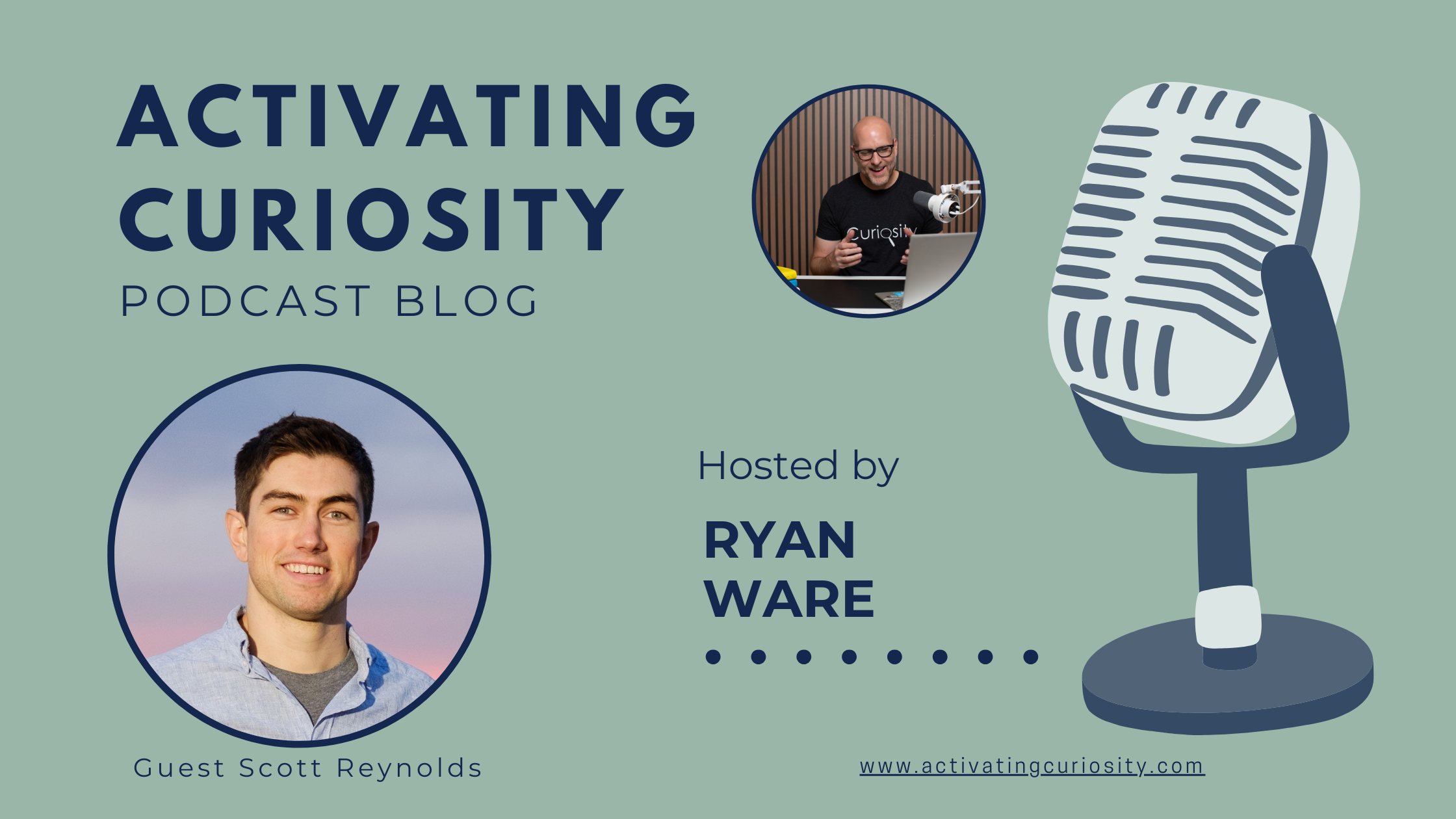
How UpCodes is stitching together the fragmented world of codes, products, and specifications to give the industry back its most precious resource: time.
Every architect has had that moment early in their career. The moment when the romance of design collides head‑on with the reality of regulation. You walk out of school full of ideas and enter your first project only to be hit with the truth: you don’t yet know how buildings actually come together. You're suddenly navigating fire codes, accessibility requirements, local amendments, and timelines that don’t care if you’ve mastered any of them.
For Scott Reynolds, co‑founder and CEO of UpCodes, this moment wasn’t just a learning curve, it was the catalyst for a mission he’s now spent a decade working on.
“We’re not struggling to stitch together this patchwork of regulation and updates and amendments… Just simplify that layer so the more interesting conversation can happen on top of that.”
The Hidden Cost of Fragmentation
Scott’s career began like many of ours, facing mountains of regulatory documents, scattered information, and inefficient workflows.
“It seemed like such an analog, very high‑friction workflow that really didn't need to exist.”
His early work in Hong Kong and New York opened his eyes to a universal truth in AEC: Even when the codes are in English, they’re still hard to use, hard to navigate, and impossible to keep updated manually.
The consequence?
- Designers lose time to administrative work.
- Projects lose momentum.
- Firms lose profit.
- Jurisdictions lose capacity.
- And ultimately, buildings lose quality.
The Core Opportunity: Give People Back Their Time
One theme kept resurfacing during our conversation:
“The cavalry is not coming.”
Jurisdictions aren’t suddenly getting dozens of new plan reviewers. Architecture firms aren’t suddenly doubling in staff. Contractors aren’t getting more estimators or engineers.
And yet the demands keep increasing.
UpCodes has taken on the burden:
“We changed on average over 12,000 sections of code every month.”
That’s more than 55,000 hours per year spent researching, validating, and structuring information so that designers, builders, and reviewers don’t have to.
Connecting Codes → Specs → Materials → Decisions
What UpCodes is doing now extends far beyond digitizing code books. They’re building an integrated ecosystem that links:
Codes → Assemblies → Products → Specifications
And the reason is simple:
“They all relate to one another… There’s a lot of these interdependencies.”
This interconnected approach unlocks huge potential:
- Finding compliant product alternatives
- Evaluating new materials
- Avoiding discontinued items
- Reducing construction RFIs
- Supporting sustainable design choices
And soon, through AI:
“Can we queue up those three options for you… give you the pros and cons… and at least the work is done so you can make the decision?”
Not automation to replace professionals, augmentation to empower them.
Why This Matters for the Future of the Industry
Without better tools for navigating information:
- Designers will continue defaulting to old solutions.
- Contractors will continue substituting products.
- Reviewers will continue drowning in admin.
- Owners will continue paying for inefficiencies.
- Innovative materials will continue to be overlooked.
- Sustainability goals will continue to fall short.
Scott summarized one of the industry’s biggest missed opportunities:
“The real shame is when a manufacturer has a new product… but the designer won’t get there because they simply don’t know about it or don’t have time to parse the documentation.”
Everyone loses in that scenario, owners, manufacturers, designers, and the environment.
Reclaiming Curiosity
One of my favorite insights from Scott was about curiosity, and how easy it is to lose in a time‑poor industry.
“You join your first job… and you realize you really don’t know how to put a building together… There are all these challenges.”
We don’t lose curiosity because we don’t care. We lose it because we don’t have time.
But when information becomes accessible and connected?
Curiosity returns. And with it, better design, better decisions, and better outcomes for communities.
If You're Curious: Where to Go Next
Whether you’re an architect, engineer, spec writer, building official, contractor, or manufacturer, the path forward is the same:
- Explore modern tools (like UpCodes)
- Share your friction points.
- Examine where your team loses the most time.
- Ask: Which decisions would be different if research took 10 minutes instead of 10 hours?
- Reclaim your ability to explore, evaluate, and choose with confidence.
The Future Will Favor the Curious
Scott and his team aren’t trying to replace expertise, they’re amplifying it.
“Our job is to take away the busy work so people can do the interesting part of the job.”
As AI accelerates and the demands on the industry grow, the differentiator won’t be how much we can memorize. It will be how effectively we can access, connect, and act on information.
And that starts by reducing friction.
Activating Curiosity Podcast is part of the Curiosity Building Experiences® and brought to you by Connective Consulting Group and Connective Coaching.

CEO/ Change Management & Leadership Coach/ Key Note Speaker & Podcast Host
Founder, CEO, and business owner with over two decades working across every segment and level of management/leadership in the construction industry. His career began in Architecture and shifting to construction and prefabrication manufacturers. These different experiences had a commonality, a struggle with change management implementations.
His passion and purpose to help the construction industry advance, combined with his experience, Ryan took to the stage to help and support as many as possible; beginning with helping his audiences build stronger relationships with change. His voice in the construction industry is one that challenges the way leaders think about change, innovation, and leadership. His speaking, coaching, and consulting mission is simple: to help the construction industry evolve by helping those that shape it better navigate change.
Leading Change in Construction: The 5 Cs That Strengthen Leadership in Uncertain Times