Before We Fix Construction's Technology Challenges, We need to Fix This.
The construction and broader AEC industry is standing at a crossroads. Workforce shortages, rapid technological change, economic uncertainty, and shifting cultural expectations are converging in ways we haven’t fully faced before. And as we step into 2026, the question isn’t if change is coming, it’s whether we’re prepared to lead it.
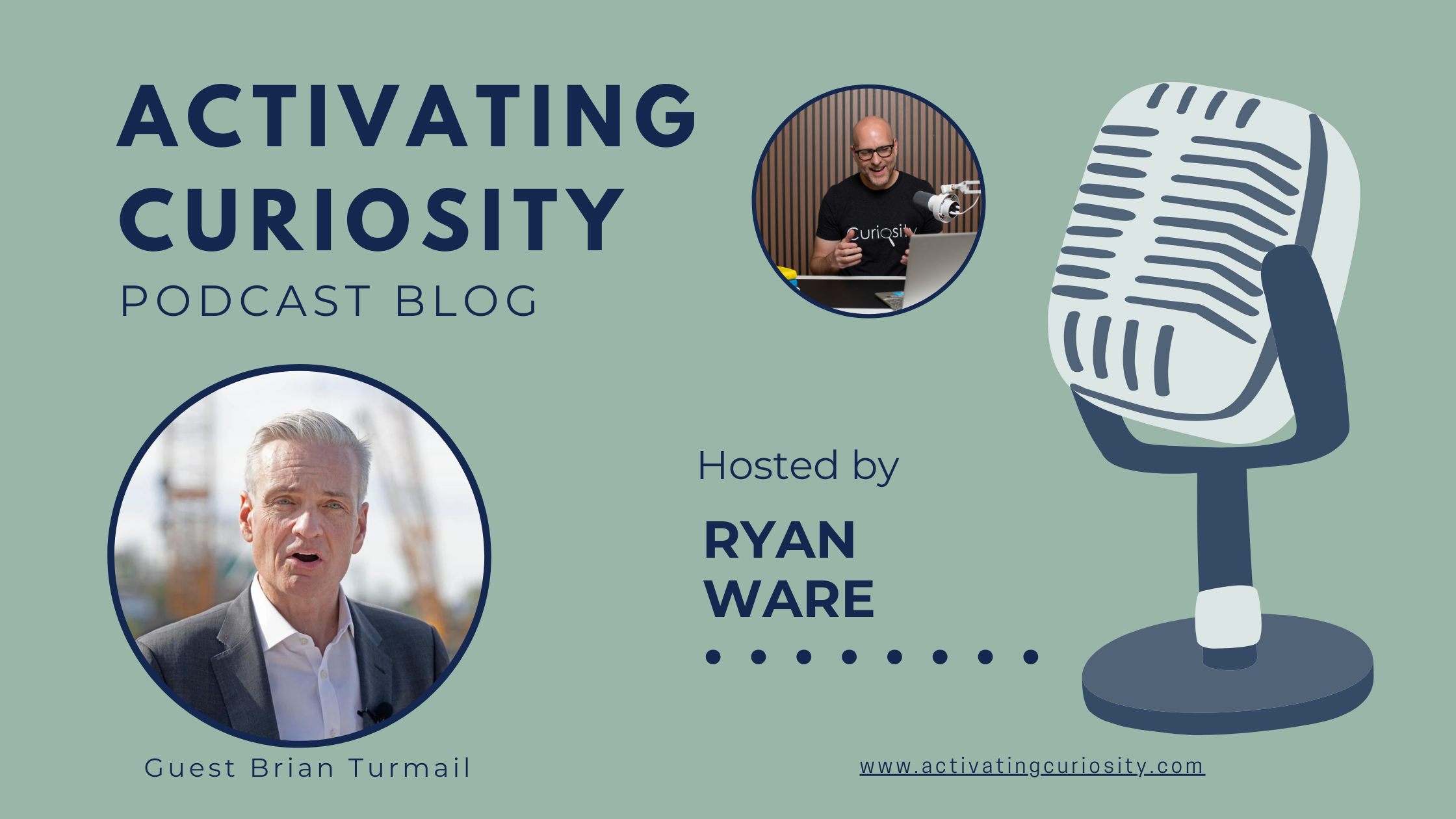
In a recent episode of Activating Curiosity, I sat down with Brian Turmail, Vice President of Image and Public Affairs for the Associated General Contractors of America (AGC), to talk about what it will take to successfully navigate the next era of construction. The answer wasn’t “more tech” or “more process.” It was something much more human.
It was culture.
1. The Industry’s Biggest Challenge Isn’t Technology — It’s People
Construction has been talking about workforce shortages for decades. We all know the numbers: fewer young people entering the trades, experienced leaders retiring, and a shrinking pool of authorized workers in the U.S.
But as Brian put it, our talent shortage is as much an image problem as a pipeline problem.
Everyone sees construction, the cones, the cranes, the fencing, but few understand the pride, craftsmanship, or career potential behind it. They don’t see the innovation happening in the trailer or the digital tools reshaping our workflows. And as a result, parents, educators, and young people still hold outdated perceptions about what construction is.
The fix? Tell a better story. Not with glossy campaigns, but through authentic, human storytelling from the people who build America every day.
2. The Tech Gap Is Real — but It’s Not About Hardware or Software
Small and mid‑sized contractors often worry they’ll be left behind by firms that can outspend them on tech. But Brian made a powerful point:
“Technology is the great equalizer — if we learn to use it well.”
The real barrier isn’t cost, it’s change fatigue, misalignment, and lack of clarity around problems we're actually trying to solve. Too many firms buy tools before doing the upstream work: diagnosing root causes, engaging field teams, and building buy‑in.
Technology will only stick if:
People understand why it matters
Leaders slow down long enough to listen
The rollout meets people where they are
The culture supports learning and experimentation
“You could have the best technology out there, but if the people don’t understand how to use it, it doesn’t matter how great it is.”
In other words: no tech transformation succeeds without culture transformation.
3. Culture of Care: The Foundation for Everything Else
The AGC’s Culture of Care initiative started as a workforce program. But it’s evolving into something bigger, a framework for strengthening the human side of construction.
Because here’s the truth: Construction is a tough environment. Long hours. Physical work. Constant demands. High stakes. Real risks.
But at its core? This industry is built on teamwork, trust, and interdependence.
And yet many workers still don’t feel safe expressing struggle, asking for help, or admitting uncertainty around new tools or processes.
Changing this isn’t “soft” work, it is strategic leadership.
A culture that:
Values empathy
Encourages psychological safety
Builds community
Supports mental health
Welcomes diverse talent
…is a culture that adapts faster, retains talent longer, and innovates better.
“Construction is the ultimate team sport — everything one individual does impacts the next.”
4. We’re Already Building the Future — the Question Is How
What we are feeling in 2026 is the result of decisions made 10, 20, even 30 years ago. Likewise, the actions we choose today will shape what construction looks like in 2036.
If we want a future with:
A stronger workforce
Higher productivity
Smarter technology use
More resilient companies
Better community impact
Then the work must start now , not when things “slow down,” not after the next project, not when the market is perfect.
Every individual, from the CEO to the newest apprentice, has a role in shaping the industry’s next chapter.
5. What Leaders Can Do Today
Here are the steps discussed to move the industry forward:
1. Invest in people before systems.
Office updates can wait. Training, mentorship, and team development cannot.
2. Bring field leaders into the conversation — early.
Many “resistors” aren’t resisting. They’re uninformed, overwhelmed, or unsupported.
3. Diagnose problems before buying solutions.
The downstream issues are rarely the real issues.
4. Build cultures that encourage curiosity.
Innovation doesn’t happen when people are afraid to speak up.
5. Advocate for policies that reflect reality.
We need workforce programs aligned with modern labor needs, not outdated assumptions.
6. Tell the real story of construction.
Show the pride, the purpose, the craftsmanship, and the humanity.
A Future We Can Build Together
Construction has never been a solo sport, not on the jobsite, not in the boardroom, and certainly not in shaping the future of the industry.
If we can shift our mindset from protection to possibility, from isolation to collaboration, and from process‑first to people‑first, we can build an industry that is more resilient, innovative, inclusive, and future‑ready than ever before.
Technology will accelerate us. But culture will define us.
Activating Curiosity Podcast is part of the Curiosity Building Experiences® and brought to you by Connective Consulting Group and Connective Coaching.

CEO/ Change Management & Leadership Coach/ Key Note Speaker & Podcast Host
Founder, CEO, and business owner with over two decades working across every segment and level of management/leadership in the construction industry. His career began in Architecture and shifting to construction and prefabrication manufacturers. These different experiences had a commonality, a struggle with change management implementations.
His passion and purpose to help the construction industry advance, combined with his experience, Ryan took to the stage to help and support as many as possible; beginning with helping his audiences build stronger relationships with change. His voice in the construction industry is one that challenges the way leaders think about change, innovation, and leadership. His speaking, coaching, and consulting mission is simple: to help the construction industry evolve by helping those that shape it better navigate change.
Bringing Care Closer: Why Micro Hospitals Deserve Our Attention